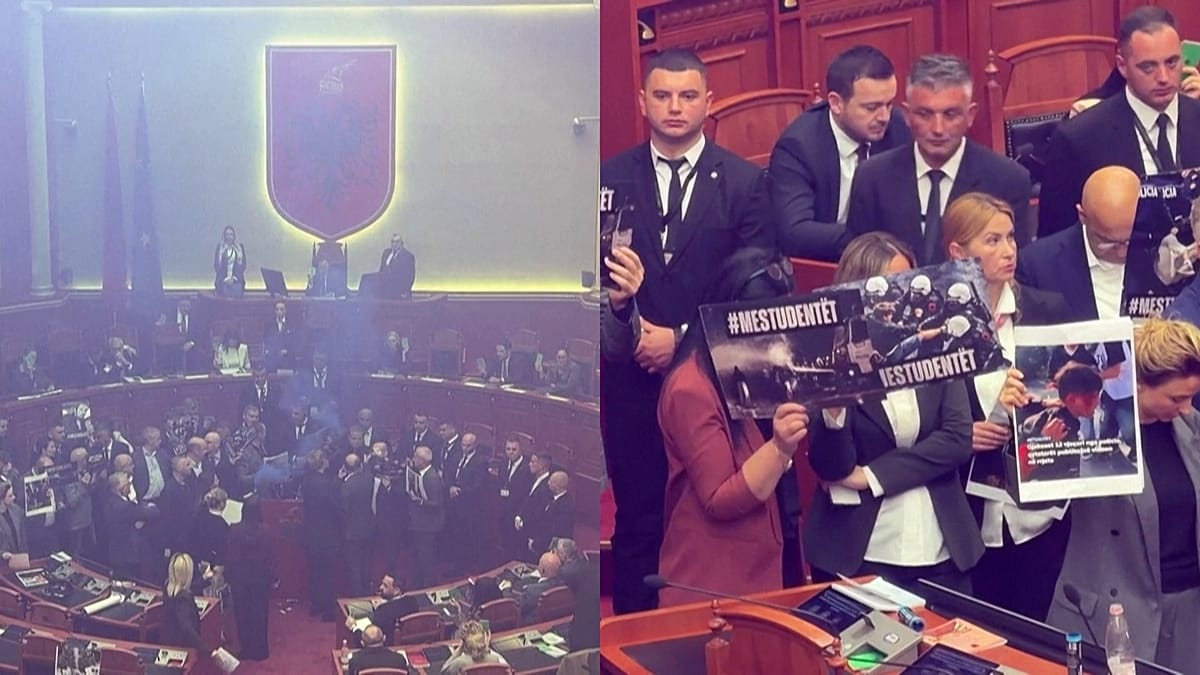
Tirana's parliament descended into chaos on Thursday as opposition lawmakers set off smoke flares and held up photographs of injured protesters, escalating a political crisis that has gripped Albania for weeks. The demonstrators, who have been camped outside the prime minister's office, are demanding the resignation of Prime Minister Edi Rama over allegations of police brutality during recent protests.
The dramatic scene inside the Kuvendi, Albania's parliament, saw MPs from the Democratic Party and other opposition groups brandishing flares that filled the chamber with thick smoke, forcing the session to be suspended. Lawmakers shouted slogans and displayed images of bloodied protesters, accusing the government of using excessive force against peaceful demonstrators.
The protests, which began in early December, were sparked by a video showing police beating a student activist. Since then, thousands have taken to the streets in Tirana and other cities, calling for Rama's ouster and early elections. The opposition has vowed to continue its campaign until their demands are met.
Police tactics under scrutiny
The use of smoke flares in parliament is the latest escalation in a standoff that has seen opposition supporters burn pillows outside the prime minister's office and clashes between MPs over student protests. The government has defended police actions, insisting that officers acted within the law to maintain order. However, human rights groups have criticized the authorities for using disproportionate force, including water cannons and tear gas.
Prime Minister Rama, who has been in power since 2013, has dismissed calls for his resignation, describing the protests as an attempt by the opposition to destabilize the country. In a televised address, he accused the Democratic Party of exploiting the situation for political gain, while reiterating his commitment to reforms and EU integration.
The European Union has urged both sides to engage in dialogue and avoid further escalation. In a statement, the European Commission called for restraint and respect for democratic institutions, while noting that Albania's progress towards EU membership depends on the rule of law and political stability.
The unrest has also drawn attention to broader issues of governance and accountability in the Western Balkans, a region where democratic backsliding has become a concern for Brussels. Albania, a candidate for EU membership since 2014, has made significant strides in judicial reform, but critics argue that more needs to be done to combat corruption and ensure press freedom.
Meanwhile, the government has imposed heavy fines on protest attendees, a move that has been condemned by opposition leaders as an attempt to intimidate citizens. The fines, which can reach up to €1,000, have been criticized by legal experts who question their constitutionality.
As the standoff continues, the international community is watching closely. The United States and the EU have both expressed concern over the escalating tensions, urging all parties to resolve their differences through democratic means. For now, the streets of Tirana remain tense, with protesters vowing to stay until Rama steps down.
The situation in Albania is a reminder of the fragility of democratic institutions in the region, and the challenges that lie ahead for countries seeking to join the European Union. With parliamentary sessions disrupted and public trust eroding, the path forward remains uncertain.