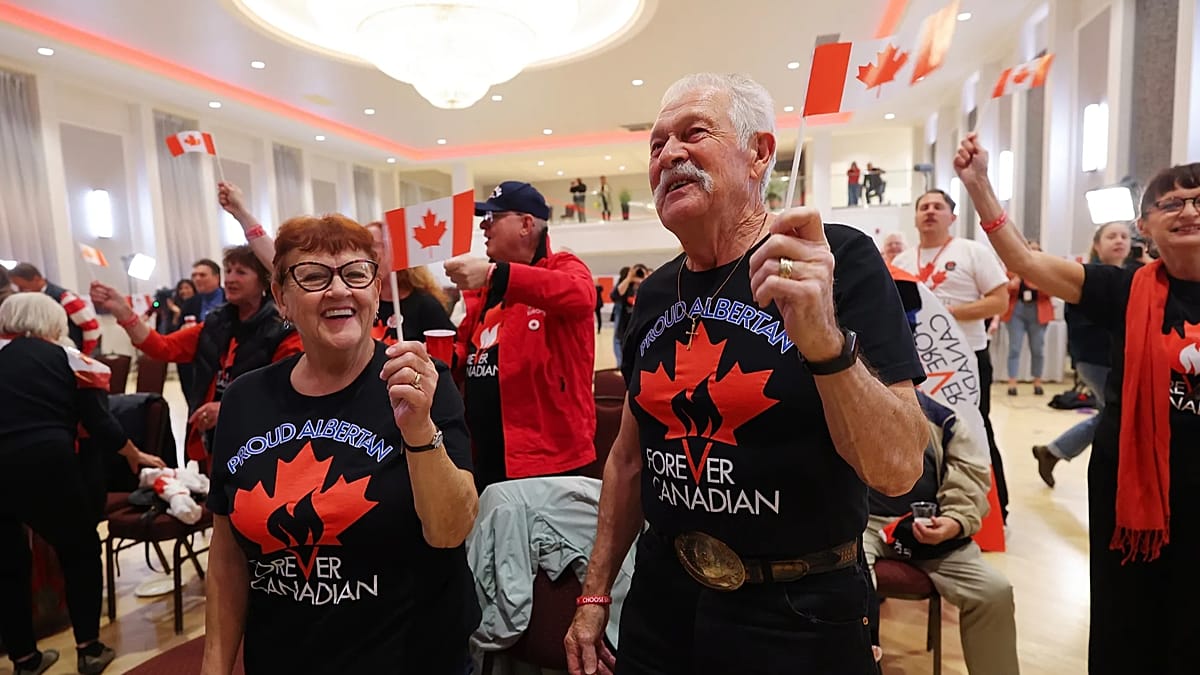
Canadian Prime Minister Mark Carney has welcomed Alberta's decisive rejection of a move toward independence, saying the province had chosen national unity at a time of mounting pressure from Washington.
"On October 19, Albertans made a clear choice. They chose unity, to build together, and to take care of each other. Above all, Albertans chose Canada," Carney said in a statement on Tuesday.
With more than one million votes counted, 77 per cent backed remaining in Canada, according to unofficial results from Elections Alberta.
Monday's vote was not a direct ballot on independence. A win for the separatists would instead have set the western province on a path toward a binding referendum on leaving Canada.
The result is a boost for Carney, who grew up in Alberta and had urged a decisive outcome as US President Donald Trump wages a trade war against Canada and threatens to make it the 51st US state.
Alberta, a conservative stronghold with the world's fourth-largest proven oil reserves, has long resented the federal government in Ottawa, largely over the management of its oil industry. Premier Danielle Smith has accused Carney's predecessor, Justin Trudeau, of trying to curb oil production to advance his climate agenda.
Separatist parties once won only 1 or 2 per cent of the vote, but anger over COVID-19 restrictions helped energise the movement.
Smith opposes independence but called the referendum under pressure from separatists within her United Conservative Party.
"Albertans have voted for a stronger Alberta in a united Canada," she posted on social media.
The separatist campaign drew interest from Trump's allies. US Treasury Secretary Scott Bessent described Alberta as a natural partner for the United States, and billionaire Elon Musk posted on X that the province should separate. Separatist leaders also met officials at the US State Department.
Thomas Lukaszuk, a former deputy premier who led the Forever Canadian campaign against separation, told supporters: "We are a solid country that's united from coast to coast to coast."
Separatists insist their cause is not finished. Jeffrey Rath, a leader of the Alberta Prosperity Project, said the push for independence would continue.
European parallels and implications
The Alberta vote resonates beyond North America, echoing similar separatist movements in Europe. In Quebec, separatists recently won an election but fell short of a majority, vowing a new referendum. Meanwhile, in Bosnia, Milorad Dodik has hailed Trump and Putin as Bosnian Serbs retain their grip on power, a reminder of how external actors can fuel secessionist ambitions.
For Europe, the Alberta result offers a counterpoint to the Brexit experience, where Russian interference was confirmed in the 2016 vote. The Alberta campaign saw similar foreign interest, with US officials and business figures openly backing separation.
Carney's victory speech stressed that unity is not just a Canadian value but a bulwark against external pressure. "We are stronger together," he said, a message that resonates in Brussels and other capitals where separatist movements remain active.