For nearly seven years, Berlin-based artist and technologist Alida Sun has engaged in a rigorous daily practice: creating a new piece of digital art through code. This discipline, spanning over 2,500 consecutive days, forms the foundation of her work, which seeks to bridge the seemingly intangible world of programming with physical, bodily experience. Her recent exhibition, RITES, presented at Method Delhi and soon to be discussed in a lecture at The Academy of Fine Arts Vienna, represents a profound material evolution of this practice.
From Screen to Loom: The Physical Ritual of Code
Sun's digital creations are characterised by geometric patterns and responsive audio, generated through a self-designed system she describes as an audio-visual instrument. The system detects light and transforms her physical movements into visuals and sound, making the act of coding a kinetic, performative ritual. "When I started on this daily coding journey, I knew I was going to have to make the process restorative and fun for me," Sun explains, highlighting her intent to counter the sedentary, screen-bound nature of traditional programming. "In a way, it’s a daily ritual of being aware of oneself - of the body - and playing."
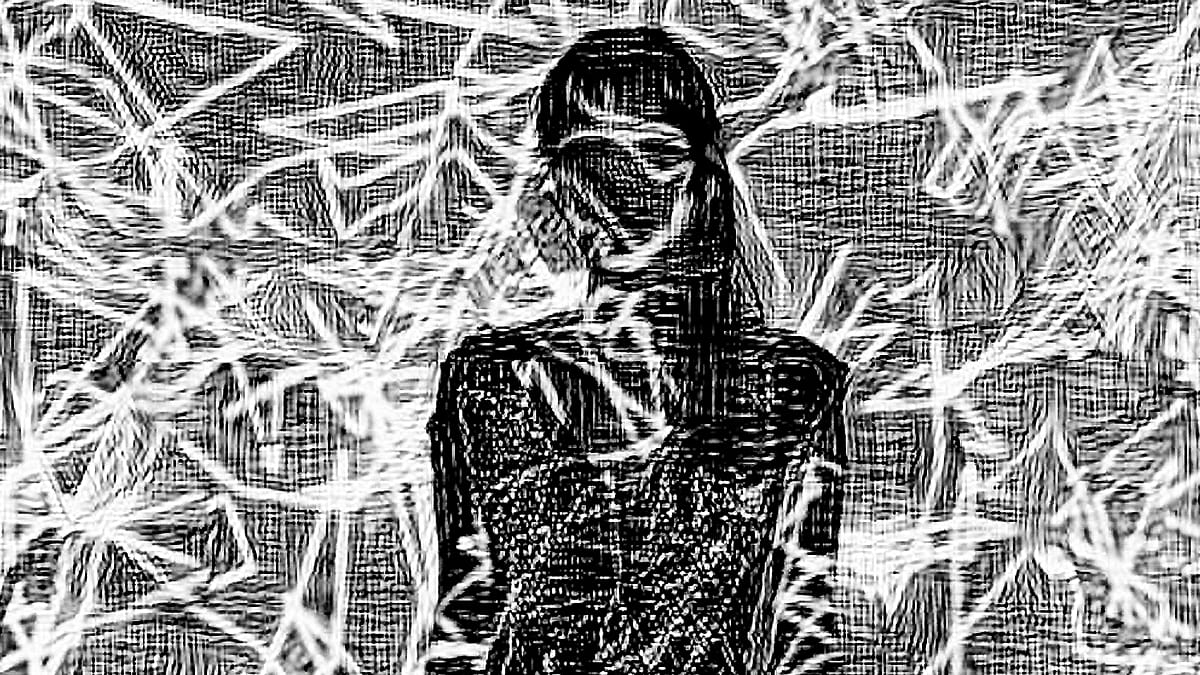
This philosophy drove the core concept behind RITES: translating her ephemeral code-based artworks into tangible, hand-woven and embroidered tapestries. The project was realised in collaboration with women artisan weavers from the Swami Sivananda Memorial Institute of Fine Arts & Crafts (SSMI), a non-profit based in Delhi. This cross-continental partnership between a Berlin studio and Indian artisans became a dialogue on craft, history, and technology.
Reclaiming a Gendered Technological History
At its heart, RITES is a reclamation project. It focuses on what Sun terms "the history that is outside of this ‘Big Tech bro-ligarchy’," explicitly highlighting women's pivotal and often erased contributions to the development of modern computing. The choice of tapestry as a medium is deeply symbolic. "Women literally wove the memory that got humanity to the moon," Sun states, referencing the women in New England who manually waved copper wire into 'core-rope memory' to store the Apollo mission software—a technology directly analogous to textile weaving.
This historical kinship between textiles and computation informed the entire collaboration. "India's history of textiles is something that I'm still learning about, but I'm consistently blown away by," Sun says. Working with the SSMI artisans, the project evolved organically. The weavers began incorporating their own patterns, including floral motifs, into the embroideries based on Sun's code. "It was this lovely dialogue that also influenced my programming," Sun notes. "I've never programmed flowers before, but once I saw what the artisans were doing, I started programming flowers into digital environments."
The exhibition forcefully challenges the hierarchical distinction between 'art' and 'craft', a division Sun argues is "deeply entrenched in patriarchy and colonialism." She points out that art forms historically associated with women's labour, such as weaving and embroidery, have been relegated to the category of 'decorative' or 'applied' arts. RITES elevates this intricate technical work, celebrating it as a foundational art form that parallels the logic and structure of coding itself.
"Code is seen as a very cerebral medium, and people often think of it as disconnected from the physical self, but I am questioning and challenging that."
Sun's work connects to a broader European discourse on art, technology, and social practice. It echoes the material explorations seen in projects like the Amsterdam Artist's Museum of Edible Earth, which also investigates substance and craft, and resonates with the politically engaged spirit of the protest anthems defining a decade from Berlin to Kyiv.
A European Artist's International Dialogue
Based in Berlin, a European hub for both digital art and critical discourse, Sun's practice is inherently international. Her upcoming lecture in Vienna underscores the project's relevance within a European cultural context, where conversations about decolonising institutions, recognising erased histories, and interrogating technology's societal impact are paramount. Her work demonstrates how European artists are forging substantive collaborations beyond the continent's borders to address global themes of labour, memory, and gender.
The intricate tapestries of RITES serve as physical archives of algorithmic patterns and a shared, feminist heritage. They stand as vibrant counterpoints to the sterile, often masculine-coded image of technology. By embodying code in thread and fabric, Alida Sun not only makes the digital tactile but also stitches together a corrected narrative of innovation—one that honours the weavers, the programmers, and the essential physical craft behind every line of code.