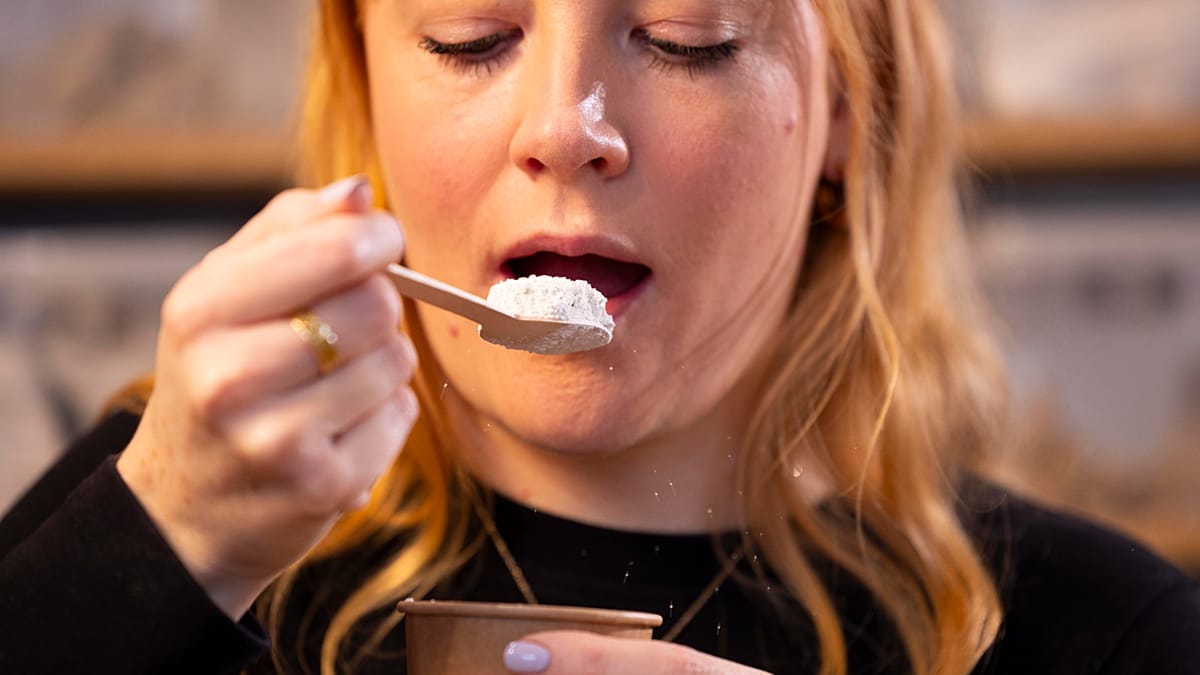
What begins as a personal craving can evolve into a global anthropological study. For Amsterdam-based artist and researcher Dr. masharu, a sudden desire to consume earth led to the creation of the Museum of Edible Earth, a nomadic project currently exhibited at London's Somerset House. The installation, featuring over 600 edible soil samples from 44 countries, invites a radical reconsideration of humanity's relationship with the ground beneath our feet.
A World Within the World
The practice, known scientifically as geophagia, involves consuming earthen materials like clay or soil. While often associated with specific cultural rituals or the eating disorder pica, masharu's research reveals it is far more widespread than commonly assumed. "It's about connection to earth and changing the notion of earth being dirty," masharu told European Pulse. "People in cities are often not as connected to soil, in the sense of touching soil, or walking the land barefoot. There's a lot of disconnection between humans and earth."
The museum, founded in 2017, blends masharu's scientific background with activism and artistry. The core of the London exhibition is a wall lined with hundreds of tiny jars containing powdery substances sampled globally, from the clays of Provence to the soils of the Carpathian Basin. A central communal tasting table allows visitors to participate directly, spooning samples under controlled conditions.
"[It includes] interactions with soil scientists, sometimes chemical engineers, sometimes anthropologists," masharu explained. "But the most important part is, of course, [people's] experiences of eating earth, which is shared with the public." The participatory element is designed to foster connection and reshape perceptions of our natural environment.
Historical Roots and Cultural Significance
Geophagia is not a modern phenomenon. Historical documentation dates back to the Greek physician Hippocrates, who noted cravings for non-foods among pregnant women. The practice has been significant in various Indigenous and African societies, often viewed as medicinal or symbolic. "Earth has been very important in many cultures, [seen] as a symbol of fertility, a life-giving force," masharu noted.
The exhibition collects contemporary and historical narratives, some of which challenge conventional medical understanding. One story features Stanislava Monstvilienė from Lithuania, who claims that eating only earth healed her from cancer—an assertion not supported by medical research. "I don't know if it is true, but this was her story," masharu recounted. "We were going into the woods with her and she was taking handfuls of earth and eating it."
These personal accounts, whether verified or not, serve as windows into a profound human taboo: consuming a substance culturally defined as dirty and dangerous. The project highlights how environmental disconnection in urbanised societies like those across Europe has altered our fundamental relationship with soil.
Health, Risk, and a Clay Cocktail Incident
While the Somerset House samples are tested for safety, masharu acknowledges the risks of consuming untested earth, which can contain pollutants or harmful microorganisms. "[Earth] can have pollutants and microorganisms, which are not as good for the human body, especially since we are not so connected to earth anymore and our microbiomes are poor," they said.
A memorable incident occurred during an event in the Netherlands where clay cocktails were served. "After this event, a lot of people felt sick with diarrhoea and vomiting, and we were like, oh no!" masharu recalled. Subsequent investigation, including detailed questionnaires, revealed the likely culprit was the event's dinner, not the clay. Intriguingly, statistical analysis suggested those who consumed more clay cocktails were less likely to vomit, hinting at clay's potential absorbent properties.
The project's timing at Somerset House coincides with Earth Day and a series of workshops exploring our planetary relationship and climate solutions. It underscores how soil sits at the intersection of urgent environmental issues, cultural heritage, and public health—a nexus increasingly relevant as the EU advances its Green Deal and member states grapple with sustainable land use.
Masharu's work also touches on themes of scientific integrity and public trust, echoing recent European debates around evidence-based policy. This is reflected in ongoing scrutiny of agricultural practices, as seen in cases like the Greek parliament stripping immunity from MPs in a farm subsidy fraud investigation, where the relationship with land is economic rather than consumptive.
Ultimately, the Museum of Edible Earth is more than a curiosity cabinet. It is a provocative inquiry into a practice that connects ancient traditions with contemporary environmental consciousness. By inviting visitors to literally taste the earth, masharu challenges deep-seated aversions and prompts a fundamental question: in an era of climate crisis and ecological disconnect, what might we regain by reconsidering our most basic element?