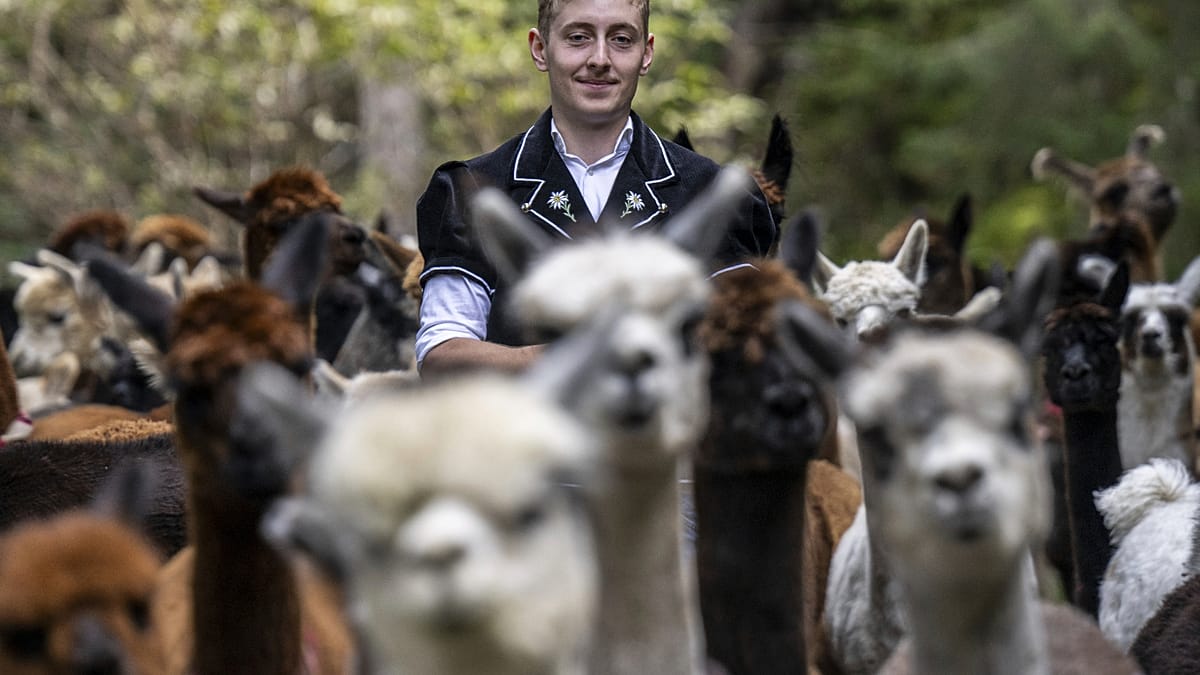
Every autumn, a distinctive procession winds down from the high meadows of Switzerland's Bernese Alps: around 70 alpacas, their woolly coats fluffed against the chill, making their way to winter quarters. This year's migration, which began in late September, saw the herd traverse narrow mountain roads and wooden bridges, guided by farmers and accompanied by a growing entourage of onlookers.
The animals spend the summer months grazing on alpine pastures near the village of Gstaad, a renowned resort in the canton of Bern. As temperatures drop and the first snows dust the peaks, their owners lead them down to a farm in the valley, where they will shelter until spring. The journey, which covers roughly 15 kilometres, is a logistical exercise as much as a local spectacle.
A tradition with practical roots
Alpacas, native to the Andes, have become increasingly common in Switzerland over the past two decades, prized for their gentle temperament and high-quality fibre. For the herd's caretakers, the seasonal move is not merely a charming ritual but a necessary part of animal husbandry. "The alpacas need to be off the high pastures before the ground freezes," explains Markus Zbinden, a local farmer who has overseen the migration for the past eight years. "It's about their safety and comfort."
The route takes the animals past traditional chalets and through small hamlets, where residents often come out to watch. This year, a group of schoolchildren from the nearby town of Saanen lined the road, waving as the herd clip-clopped by. The alpacas, known for their curious and calm nature, seemed unfazed by the attention, pausing occasionally to inspect the crowd.
The migration also draws visitors from further afield. Tourists staying in the region's hotels are often tipped off about the schedule, and some plan their trips around it. "It's one of those authentic Alpine experiences you can't find in a guidebook," says Elena Rossi, a traveller from Milan who watched the procession from a hillside. "Seeing the animals move through this landscape, with the mountains behind them, is unforgettable."
More than a photo opportunity
While the event has a festive air, it underscores broader questions about livestock management in mountainous Europe. Across the Alps, farmers face rising costs, changing weather patterns, and pressure from predators such as wolves, which have returned to many regions. The alpaca herd's journey is a reminder of the delicate balance between tradition and modernity in Swiss agriculture.
Switzerland is not part of the European Union, but its alpine farming practices resonate with those in neighbouring countries like Austria, France, and Italy, where seasonal transhumance remains a living tradition. The EU has supported such practices through its agricultural policies, recognising their cultural and environmental value. The sight of alpacas on a Swiss mountain pass may seem whimsical, but it is part of a wider European story of rural adaptation.
The animals are expected to reach their winter farm by early October, where they will be sheared and cared for until the spring thaw. For the farmers, the end of the migration marks the beginning of a quieter season. For the alpacas, it is simply the next step in a rhythm as old as the hills themselves.