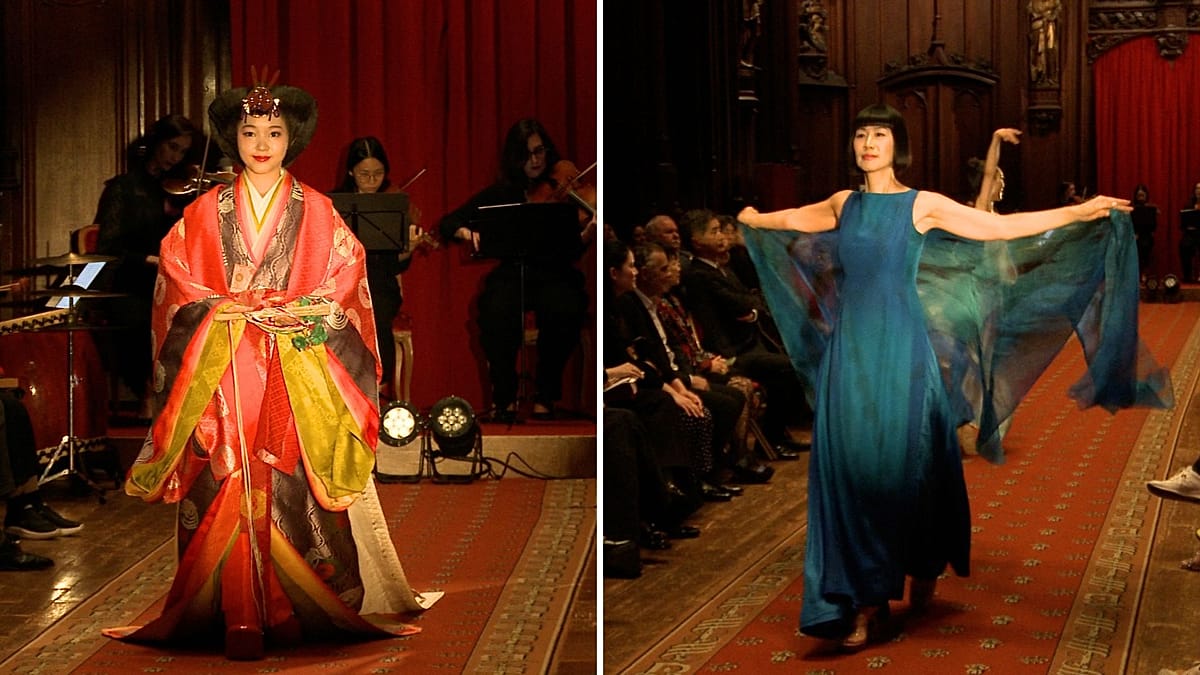
Brussels' historic 15th-century Town Hall provided the backdrop for a performance that reimagined the ancient Japanese myth of the sun goddess Amaterasu. The event, part of celebrations marking 160 years of diplomatic and cultural ties between Belgium and Japan, drew an audience keen to experience a fusion of fashion, storytelling, and mythology.
A Myth Retold Through Kimonos
The production, devised by dress designer and performance artist Eiko Kobayashi, uses kimonos as wearable art to explore memory and Japanese mythology. It is presented by the cultural non-profit organisation Be-Japon and has already toured 12 countries. The show blends choreography, music, and runway presentations to tell the story of Amaterasu, one of the most important deities in Shinto belief.
According to legend, Amaterasu retreated into a cave after a bitter dispute with her brother, the storm god Susanoo, plunging the world into darkness. To lure her back, the other deities gathered outside the cave and filled the night with music, dance, and laughter until she emerged, restoring light. The performance reimagines this tale through a series of striking kimono-inspired outfits.
During the Brussels show, the audience learned that the costume of the sun goddess is particularly special: it uses a linen jacket from over 100 years ago, covered with silk from Fukushima, the thinnest silk in the world. This attention to detail underscores the production's commitment to authenticity and craftsmanship.
The event is part of a broader programme of cultural exchanges between Belgium and Japan. For those interested in exploring more of Belgium's cultural offerings, our Belgium Travel Guide offers expert tips on castles, cuisine, and hidden gems.
The Amaterasu performance highlights how cultural diplomacy can strengthen ties between nations. It also reflects a growing trend in Europe of using traditional art forms in contemporary settings. For more on how such events are shaping European cultural landscapes, see our coverage of the Amaterasu Stage Production.
Belgium's role as a hub for international cultural events is well established. The country's central location and multilingual population make it an ideal venue for such exchanges. This performance, held in the heart of Brussels, underscores the city's status as a crossroads of European and global cultures.
The 160-year relationship between Belgium and Japan has been marked by mutual respect and collaboration. From trade to technology, the two countries have maintained strong ties. This cultural event serves as a reminder of the enduring value of such partnerships.
As Europe continues to navigate a complex geopolitical landscape, cultural events like this one offer a welcome opportunity for reflection and connection. They remind us that diplomacy is not only about treaties and trade but also about shared stories and artistic expression.