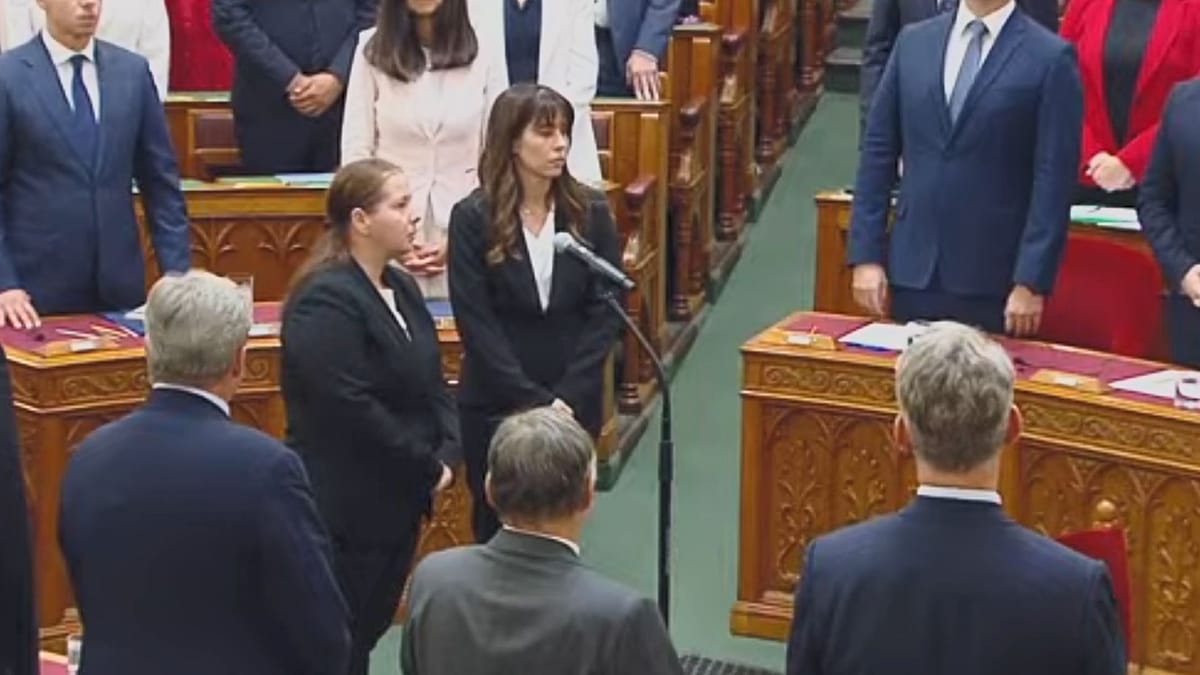
In a secret ballot on Friday, Hungary's National Assembly elected Anna Unger as the first president of the National Asset Recovery and Protection Office (NVVH), a new institution tasked with recovering state assets lost to corruption and preventing future abuses. Unger, a political scientist and lecturer at Eötvös Loránd University (ELTE), received 145 votes. Katalin Tasnádi was appointed as deputy president in charge of investigations. The office will be run by a five-member leadership, with three members overseeing specific areas of expertise, allowing the runner-up in the presidential race to take an active role.
A mandate with teeth
The NVVH is not merely an advisory or supervisory body. It can conduct its own investigations, initiate preliminary proceedings, request and cross-match data from various authorities, and, in cases involving corruption or crimes against public assets, carry out investigations itself. Crucially, it can take over pending cases before an indictment is filed if it believes it can assert the state's claims more effectively. In such instances, it can step into the shoes of the prosecution service, bring charges, and represent the case in court. This marks a significant shift, as the Prosecutor General's Office loses its previous monopoly on public prosecution, following a constitutional amendment.
The office's remit extends to examining state and municipal decisions, public procurement procedures, concessions, subsidies, EU funds, state-owned enterprises, and the financial flows and beneficial owners behind them. It can use administrative, criminal, and civil law instruments in parallel, giving it considerable power—but also raising concerns about oversight and accountability.
A contentious selection process
The path to Unger's appointment was far from smooth. Parliament's Committee on Justice and Constitutional Affairs initially shortlisted three candidates from 96 applicants: Unger, lawyer Miklós Ligeti of Transparency International Hungary, and Nicholas Sárvári, a Canadian-Hungarian businessman specializing in asset recovery. However, the Tisza parliamentary group later added Sárvári as a separate nominee, prompting questions about whether he was competing on equal terms.
Many experts considered Ligeti the most qualified candidate, given his extensive experience in anti-corruption work. His supporters described Unger's selection as "outrageous and worrying," pointing out that she lacks a background as a prosecutor or investigator. Defenders counter that the president's role is not to lead individual investigations but to build and strategically direct an institution that integrates diverse expertise.
During her hearing, Unger cautioned against unrealistic expectations, noting that it would be difficult to secure final judgments in all major corruption cases within six years. Her programme emphasized not only uncovering individual cases but also dismantling the institutional and political systems that enable corruption. The committee ultimately recommended Unger, with six votes in favor, one against, and one abstention. Ligeti received four votes in favor and four abstentions; Sárvári failed to gain sufficient support.
EU funds and credibility
The creation of the NVVH is not a formal condition for the release of EU funds, but it is closely tied to Budapest's efforts to restore trust with Brussels. The European Commission has withheld significant funding from Hungary over concerns about corruption prevention, monitoring of EU subsidies, and the investigation of irregularities. Together with Hungary's decision to join the European Public Prosecutor's Office, the NVVH signals that the new government intends not only to protect future EU funds but also to recover public money that was previously misused.
The office's effectiveness, independence, and accountability will be closely watched. As debates over frozen Russian assets continue in Brussels, Hungary's ability to demonstrate robust anti-corruption mechanisms could influence its standing in EU financial matters. The NVVH's success or failure will also be a test of the government's commitment to the rule of law, a theme that has strained relations between Budapest and its European partners.
Critics, including Fidesz and the far-right Mi Hazánk party, have voiced concerns about the NVVH's sweeping powers, arguing that they lack adequate external checks. The institution's leadership will need to navigate these tensions while proving that it can deliver tangible results. As Hungary grapples with drought-related challenges and other pressing issues, the new anti-corruption body represents a significant step in the country's efforts to rebuild trust both at home and abroad.