Apple has quietly updated its Maps application to display Lake Ontario as "Lake America" for users in the United States, making it the second major tech company to comply with President Donald Trump's executive order. The change, which took effect this week, mirrors a similar move by Google over the weekend and comes as trade negotiations between Washington and Ottawa remain stalled.
Lake Ontario, one of the five Great Lakes shared by the US and Canada, has been known by its current name for centuries. The renaming is part of a broader effort by the Trump administration to assert American nomenclature on geographic features, following the earlier redesignation of the Gulf of Mexico as the Gulf of America.
The timing is no coincidence. The executive order was signed shortly after the collapse of trade talks in late August, when the US imposed fresh 50% tariffs on roughly $20 billion (€17.3 billion) worth of Canadian goods. Ottawa has vowed to retaliate with "dollar-for-dollar" counter-tariffs, further straining a relationship that has already seen sharp exchanges over trade and sovereignty.
According to US Interior Secretary Doug Burgum, President Trump personally contacted Apple to urge the change. The president has also taken to social media, posting AI-generated videos that show him knocking over a Lake Ontario sign and replacing it with one reading "Welcome to Lake America."
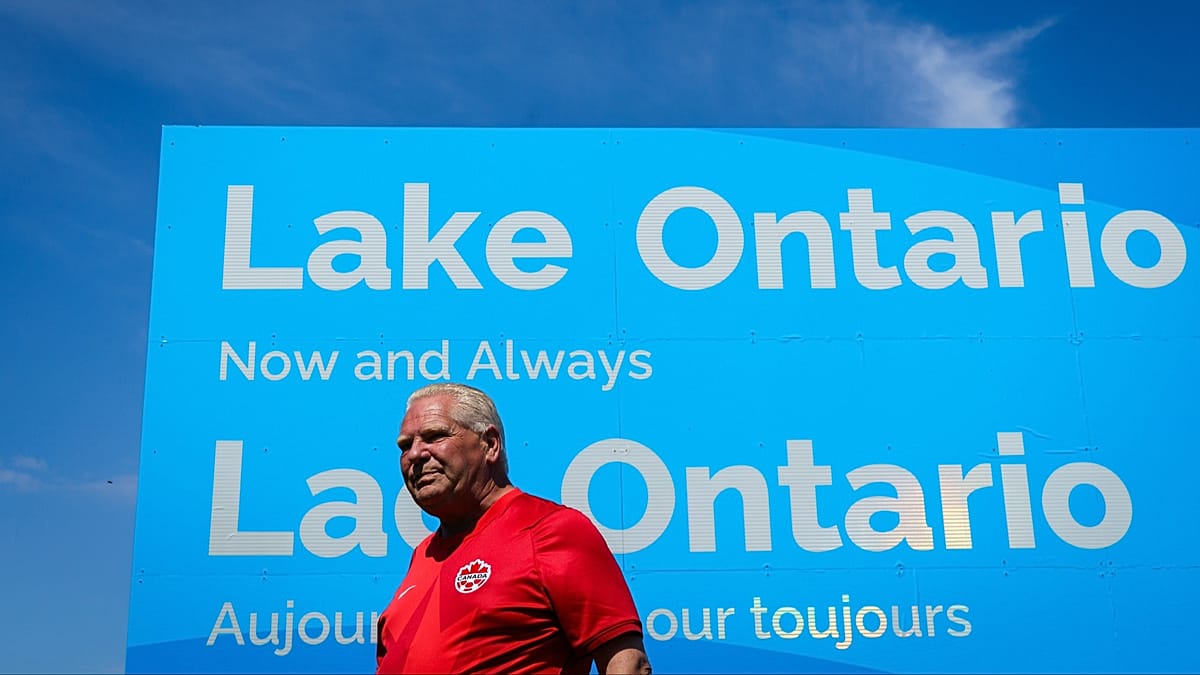
Canada, for its part, is pushing back. Ontario Premier Doug Ford was quoted by the BBC as saying: "Long before President Trump, this lake was called Lake Ontario. Long after President Trump is gone, it will still be called Lake Ontario." A new sign has been installed on the Canadian shore reading "Lake Ontario. Now and Always."
Tech giants under scrutiny
Google's decision to adopt the new name drew immediate criticism on social media, with users accusing the company of capitulating to political pressure. The company defended its move in a blog post, explaining that it updates Google Maps to reflect name changes in official government sources, specifically the US Geographical Names Information System (GNIS). As a result, US users see "Lake America," Canadian users see "Lake Ontario," and users elsewhere see both names.
Apple has not issued a public statement, but its implementation appears to follow the same pattern. The company's compliance is notable given its history of taking stands on political issues, though it has also faced pressure from the Trump administration on other fronts, including tariffs on its products.
Legal experts point out that while the president can direct federal agencies to use a new name, he has no authority to compel private companies, foreign governments, or even US states to do the same. The renaming is therefore symbolic rather than legally binding, but it carries weight in the court of public opinion.
Not all map services are following suit. MapQuest, a smaller competitor, has refused to change the lake's name, just as it declined to adopt "Gulf of America" last year. That stance has proven popular: MapQuest has surged to the top of the US Apple App Store charts, ahead of even ChatGPT, as users reward the company for its resistance.
The episode highlights the growing intersection of technology, politics, and national identity. For Europeans watching from across the Atlantic, it raises questions about the reliability of digital maps as neutral sources of geographic information, and about the power of tech giants to shape public perception through seemingly innocuous updates.
As the trade war continues, the lake's name may remain a flashpoint. But for now, the digital landscape reflects a divided reality: one name for American screens, another for Canadian ones, and a reminder that even geography can become a battleground in the age of nationalism.