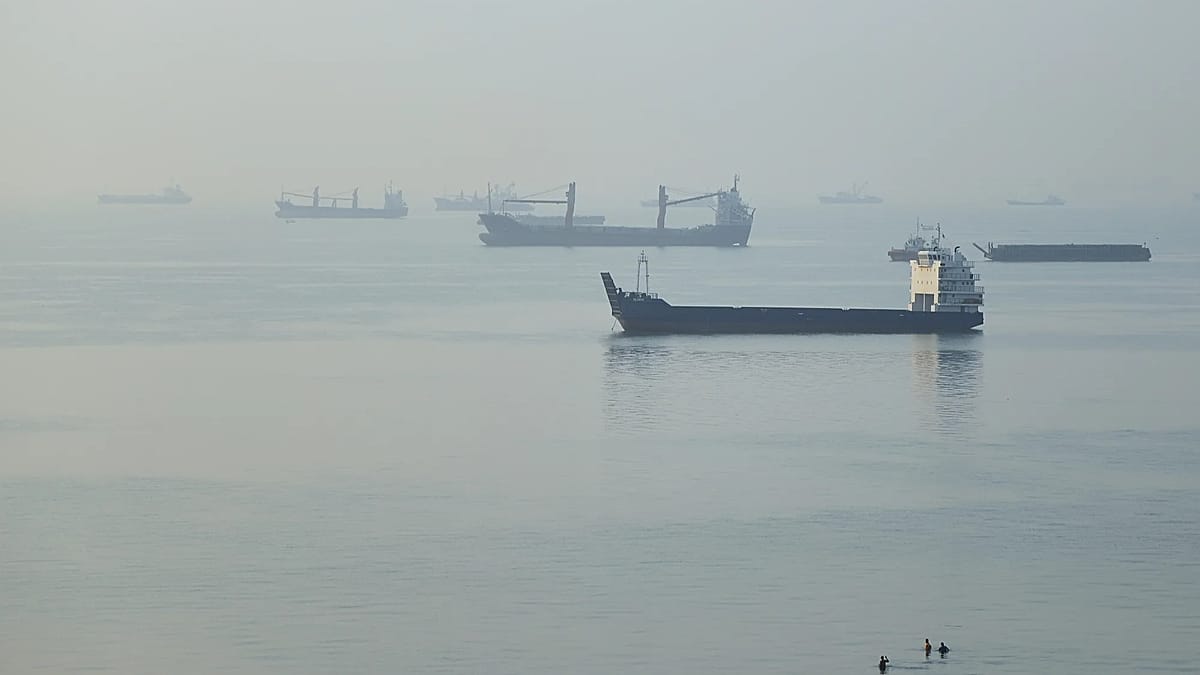
A supertanker carrying more than two million barrels of crude oil has caught fire after striking a sea mine in the Strait of Hormuz, according to Iran's Islamic Revolutionary Guard Corps (IRGC). The incident, reported on Saturday via Iranian state media, adds another layer of volatility to a waterway that handles roughly a quarter of the world's seaborne oil trade.
The IRGC's navy said the vessel hit the mine while attempting to transit an "unauthorised route" through the strait, causing a "massive explosion" and a "fierce fire." The exact location of the incident remains unclear. Iran's Fars news agency released video footage that appears to show the tanker engulfed in flames.
In a statement, the IRGC accused the tanker's crew of switching off its positioning and radar systems to evade detection. The statement went further, declaring: "The Strait of Hormuz is closed, and the consequence of defying Iranian regulations in the Strait of Hormuz is burning in the fire of trust in the terrorist US army."
The strait has been a flashpoint since the outbreak of the Iran war in late February, with Washington and Tehran trading accusations over the safety of commercial shipping. Iran effectively shut the passage after US and Israeli strikes on its territory, prompting the US to impose a naval blockade on Iranian ports. The US military has repeatedly disputed IRGC claims of control over the strait, noting that commercial vessels have continued to transit the region "despite unwarranted IRGC aggression."
Admiral Brad Cooper, commander of US Central Command (CENTCOM), said on Friday that US forces were working with regional allies and shipping industry partners to protect vessels navigating the strait. The latest incident, however, underscores the fragility of those efforts.
European stakes in the Hormuz crisis
For Europe, the disruption of the Strait of Hormuz carries profound economic and security implications. European Union member states, particularly those in the Mediterranean and Atlantic coasts, rely heavily on Gulf oil and liquefied natural gas. Any sustained closure or heightened risk in the strait would send energy prices soaring across the continent, hitting households and industries already grappling with inflation.
The European Commission has been monitoring the situation closely, with diplomats in Brussels and national capitals urging restraint. France, Germany, and Italy have all called for de-escalation, while also exploring alternative supply routes. The French Navy's recent interception of a shadow fleet tanker in the Indian Ocean highlights the broader concerns about unregulated shipping and potential sanctions evasion.
European shipping companies, many of which operate tankers in the region, are now facing higher insurance premiums and the risk of rerouting. The reported attacks in the strait have already stoked supply fears, pushing oil prices upward. Analysts warn that a prolonged closure could have a cascading effect on global markets, with Europe particularly exposed given its limited strategic reserves.
The IRGC's aggressive posture is not new. In recent months, it has expanded its operations beyond Hormuz, with warnings of wider strikes on shipping. This latest incident, however, marks a dangerous escalation, as it involves a direct attack on a commercial vessel carrying a massive cargo.
European naval assets, including those from France and Italy, have been deployed in the region as part of international efforts to ensure freedom of navigation. Yet, the IRGC's tactics—such as disabling radar and using mines—pose significant challenges to conventional naval responses.
As the situation develops, European leaders are likely to face increasing pressure to take a more assertive stance. The bloc's dependence on Gulf energy, combined with its commitment to maritime security, places it at the center of this crisis. The coming days will test whether Europe can help broker a de-escalation or whether it will be forced to absorb the economic fallout of a prolonged closure.