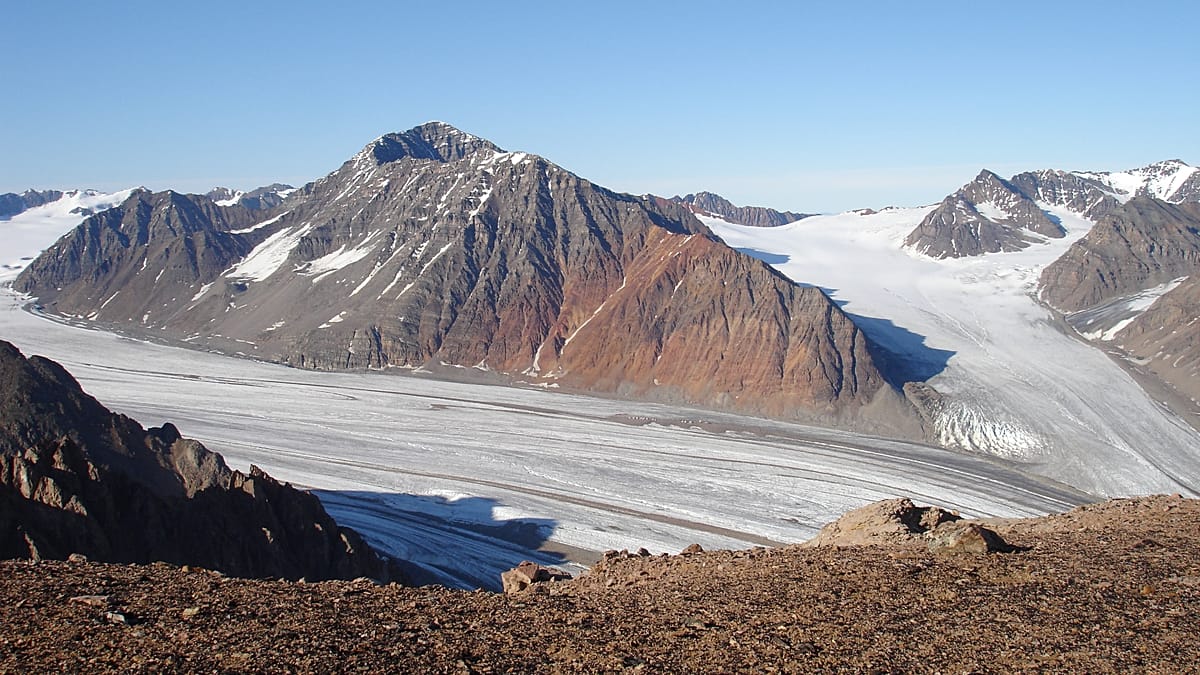
The European Union is turning its attention to the Arctic as a strategic source of critical raw materials, aiming to reduce its heavy reliance on Chinese imports for technologies that underpin both the green transition and defence. Jyrki Katainen, the EU's special envoy for Arctic affairs, told an audience in Brussels on Tuesday that the bloc's economic and military dependence on the region has grown sharply, driven by the war in Ukraine, China's expanding influence, and shifting US policy.
"We are becoming increasingly dependent on the Arctic, economically and militarily. The Arctic region provides us with a wide range of critical raw materials, which we have been importing, largely from China," Katainen said. "We have understood that this is not sustainable anymore. We have to utilise our own resources."
The EU's interest centres on rare earth elements, essential for manufacturing solar panels, batteries, and advanced defence systems. Currently, the bloc imports nearly all of its rare earths from China, a vulnerability that has become a focal point of European economic security discussions. Greenland, an autonomous territory within the Kingdom of Denmark, holds some of the world's largest undeveloped rare earth deposits, including at Kvanefjeld and Tanbreez. Meanwhile, northern Sweden, Norway, and Finland are home to active or planned projects for copper, cobalt, lithium, and other critical metals.
Katainen, who served as European Commissioner for Competitiveness under Jean-Claude Juncker, argued that relying on Beijing for materials vital to industries such as wind power is no longer acceptable, either environmentally or from a security standpoint. But he cautioned that the solution is not simply to open more mines. Europe already has mineral deposits and mining projects, particularly in the Nordic region. The real bottleneck, he said, lies in processing capacity.
According to data from Energy Solutions Intelligence, as of August 2026, the EU extracts only about 3% of its critical raw material needs, processes roughly 15%, and recycles about 10%. That leaves a structural deficit of 7%, 25%, and 15% respectively, compared with the bloc's binding targets. The gap is most acute in processing, where China dominates the global supply chain.
A 'central kitchen' for rare earths
To address this weakness, Katainen proposed what he called a "central kitchen" model, potentially located in northern Sweden or Finland. The idea is to create a European hub where raw materials from various mines across the continent could be processed and separated into individual rare earth elements. This would feed multiple industries while reducing dependence on Chinese processing facilities.
"I've been building a model which takes all the raw materials, the rocks, and separates different rare earth elements from each other," Katainen explained. "And in order to make this happen, we need to ask you to regulate prices, organise stockpiling facilities for those elements, and provide some investment support."
Such projects will require more than private capital, he warned, pointing to the InvestEU model as a template. That programme, designed to stimulate the bloc's economy by leveraging private investment, could be adapted to support Arctic infrastructure and processing ventures.
The EU has already taken steps to deepen its Arctic engagement. In 2021, it announced plans to open a diplomatic mission in the region, and in March 2024, the European Commission opened an office in Greenland. Katainen also suggested that Europe should explore new forms of public-private cooperation for Arctic infrastructure, including icebreakers. Russia currently operates more than 50 icebreakers, seven of them nuclear-powered, more than all other countries combined. Expensive icebreaking vessels could serve multiple purposes, Katainen said, supporting security operations while also acting as research platforms and collecting environmental data.
However, the strategic push into the Arctic forces the EU into a delicate balancing act. The bloc must secure resources without repeating the unsustainable extractive practices it criticises elsewhere. At Tuesday's event, a young Arctic resident challenged Katainen over what she described as the impunity with which countries such as the US, Russia, and, to some extent, China operate in the region. She questioned whether the EU's language about becoming "increasingly dependent" on the Arctic risked turning local communities and resources into instruments of European economic security.
Katainen acknowledged that Europe needs a more coherent Arctic policy precisely because its dependence is growing. He also defended the EU's industrial record, saying that European industry is "the most sustainable by far compared to other industries." He added: "It is the whole value for us. But we have to also pay attention to our economic security and sustainability in that sense."
He floated the idea of an EU-wide Arctic "neighbourhood policy," a mechanism that would give non-Arctic member states a greater say in Arctic policy while providing a framework for using EU funds in the region. Norway, Iceland, Canada, and potentially the United Kingdom could be key non-EU partners, particularly in research and infrastructure. As the EU deepens its engagement, the challenge will be to ensure that the Arctic's resources benefit both European industry and the people who call the region home.