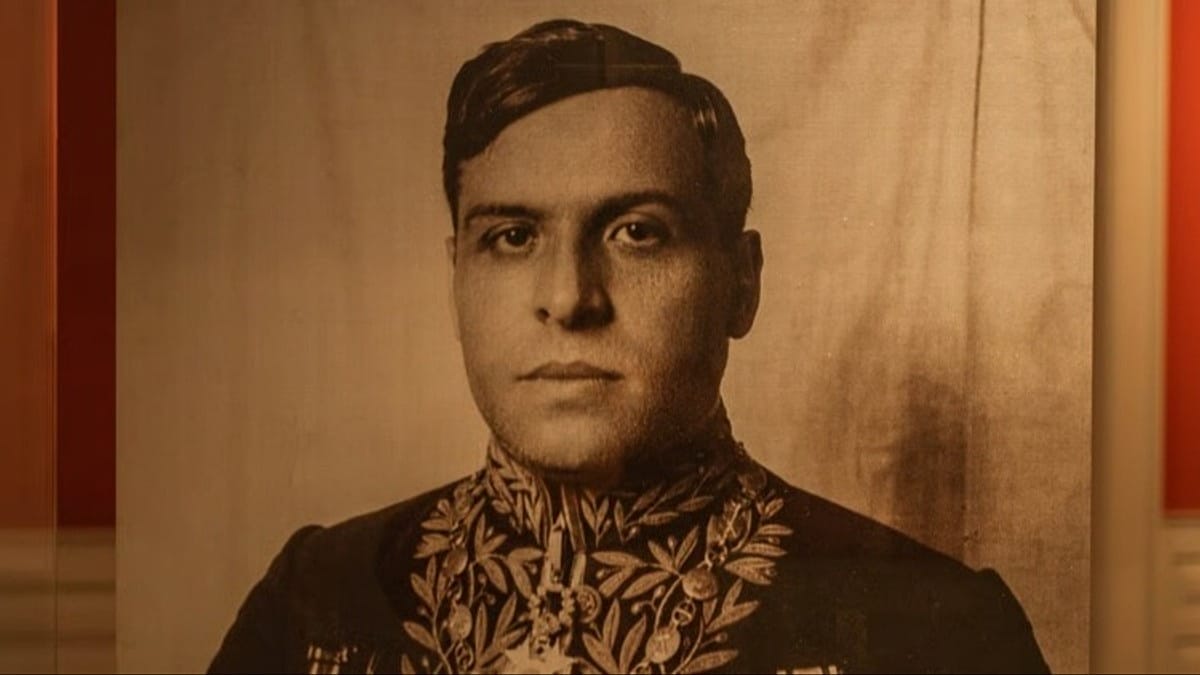
On 19 July, Portugal marked 141 years since the birth of Aristides de Sousa Mendes, the diplomat whose defiance of his own government saved tens of thousands from Nazi persecution. A museum in Cabanas de Viriato, central Portugal, now preserves his memory as one of the country's most consequential figures.
Luís Medeiros, a curator at the Aristides de Sousa Mendes Museum, describes him as "someone who changed the course of history during the darkest episode in humankind's past." The museum, founded two years ago, aims to "preserve the memory, courage and legacy" of a man who, Medeiros says, was "responsible for one of the largest individual rescue operations of Holocaust refugees."
During the summer of 1940, as Nazi troops swept into France, Sousa Mendes was serving as Portuguese consul in Bordeaux. The city became a refuge for thousands fleeing the advancing German army. Faced with the desperation on the streets, he made a fateful choice: to ignore the explicit orders of António de Oliveira Salazar, Portugal's dictator, who had issued Circular 14 forbidding consulates from granting visas without ministerial approval.
Sousa Mendes began issuing transit visas that allowed refugees to cross into Spain and then Portugal, and from there to freedom. He worked with consular staff and his own children to process the paperwork. Medeiros notes that while others helped, Sousa Mendes was the "moral author of this rescue." Estimates suggest he saved roughly 30,000 people, many of them Jews, Roma, and Sinti. Today, around 750,000 descendants of those refugees are believed to be alive.
Consequences of Conscience
The Portuguese regime did not reward his courage. Once Salazar's government learned of the unauthorized visas, Sousa Mendes was subjected to disciplinary proceedings. He was immediately stripped of his duties, and his salary was gradually withdrawn. The family, once comfortably middle-class, fell into "complete economic decline," Medeiros explains.
The punishment extended beyond Sousa Mendes himself. "The entire Sousa Mendes family was placed on a kind of PIDE blacklist," Medeiros says, referring to the dictatorship's political police. "They were completely pushed aside and ostracised, unable even to find work. They were 'undesirable people' for the Salazar regime."
For 14 years, Sousa Mendes lived in poverty, unable to afford a home or support his 15 children. He died in 1954, largely forgotten by his country. It took decades for Portugal to restore his reputation. The process culminated in 2021, when his remains were transferred to the National Pantheon in Lisbon, among the "great Portuguese" who shaped the nation's identity.
Despite this recognition, Medeiros laments that Portuguese schools still fail to teach Sousa Mendes's story. "We find it inconceivable that when ninth- and twelfth-year pupils study the Second World War, they do not mention the name of a Portuguese who was so important," he says.
The museum in Cabanas de Viriato, housed in the diplomat's former family home known as Casa do Passal, continues to educate visitors about his legacy. It stands as a reminder that moral courage often comes at a personal cost, and that the fight against tyranny requires individuals willing to defy orders.
In a continent still grappling with the memory of the Holocaust, Sousa Mendes's example resonates beyond Portugal. His story is a testament to the power of individual conscience against state-sponsored cruelty, and a challenge to European nations to honor those who risked everything to save lives.