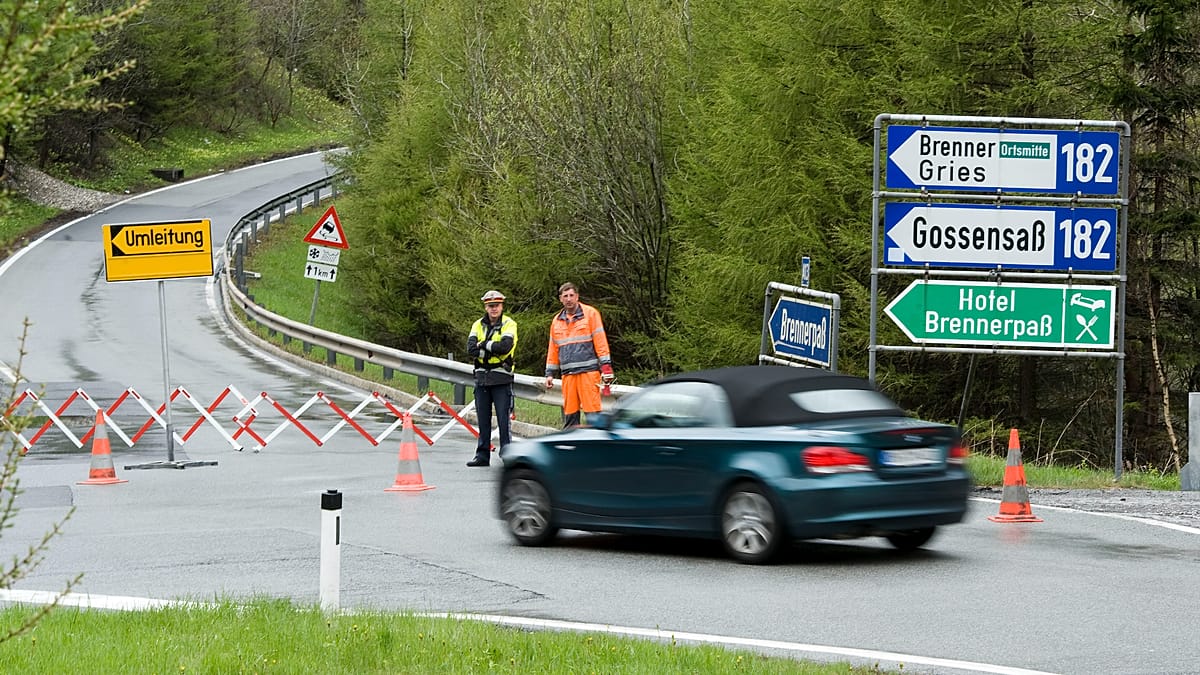
On Saturday, thousands of demonstrators in Austria’s Tyrol region shut down the Brenner motorway for eight hours, voicing anger over mounting traffic noise and pollution along one of Europe’s most vital transit corridors. The protest, which ran from 11:00 to 19:00 local time, forced authorities to close the A13 motorway and surrounding roads between the Schönberg toll station and the Brenner pass, as well as the B182 and L38 routes.
The Brenner Pass is a critical link connecting northern and southern Europe, with the Austrian stretch providing essential trans-Alpine access into Italy. Communities in Tyrol have long complained about the relentless flow of vehicles, particularly heavy trucks passing through the province. According to ASFINAG, the Austrian motorway operator, traffic has risen steadily for years, with lorry numbers more than doubling since 2000. Last year alone, nearly 11 million cars and 2.5 million vans and lorries used the route.
Local Leaders Demand Action
Karl Muehlsteiger, mayor of Gries am Brenner and one of the protest organisers, said the situation had become unbearable for local residents. “We want to send a message to Brussels, to the federal government in Vienna, that things absolutely cannot and must not continue like this with the constantly increasing traffic here,” he told reporters ahead of the demonstration. “This has been an issue for a very, very long time. It’s been dragging on for years.” Muehlsteiger added that pollution, noise and traffic jams were plaguing communities like his along the highway, making life “no longer manageable for the population.”
The protest underscores deep political friction over how to manage trans-Alpine freight. Bavaria’s transport minister, Christian Bernreiter, has advocated for a flexible toll system where freight charges rise during peak hours and fall during quieter periods. He also supports the proposed “Brenner north access route,” an underground rail line from Munich to Innsbruck designed to shift freight from road to rail while preserving the Alpine landscape. However, the project has progressed slowly for years, as the German Bundestag has yet to decide on the exact route. Muehlsteiger stressed that Bavaria must take responsibility: “We urgently need the northern access route in Bavaria. Bavaria needs to involve the population in Rosenheim in the project; only then can it become a success.”
Widespread Disruption and Diversions
The protest fell on one of the busiest travel days of the year in southern Germany, prompting warnings from Austria’s motoring club OeAMTC of possible “extensive traffic jams.” Germany’s Federal Foreign Office advised motorists against driving over the Brenner, while the Upper Bavaria South police headquarters prepared for the largest traffic operation in its history. Police spokesman Stefan Sonntag stated: “We expect to be hit by everything heading south. Several hundred police officers will be on duty.”
To prevent local roads from gridlocking, the L38 and B182 were restricted to drivers who could prove a booked destination along the route. A strict exit ban was imposed on the A8 and A93 motorways in the districts of Rosenheim and Berchtesgadener Land, meaning motorists could only leave if they had a valid destination in the area. Motoring organisations recommended wide detours, such as the Gotthard and San Bernardino tunnels in Switzerland, as well as the Reschen Pass, as the most important alternatives to keep traffic moving across the Alps.
The blockade is the latest in a series of protests across Europe highlighting the environmental and social costs of heavy road freight. Similar concerns have been raised in other Alpine regions, where communities grapple with the trade-offs between economic connectivity and quality of life. As the debate over infrastructure investment and pollution mitigation continues, the Brenner protest serves as a stark reminder of the tensions simmering along Europe’s key transit arteries.