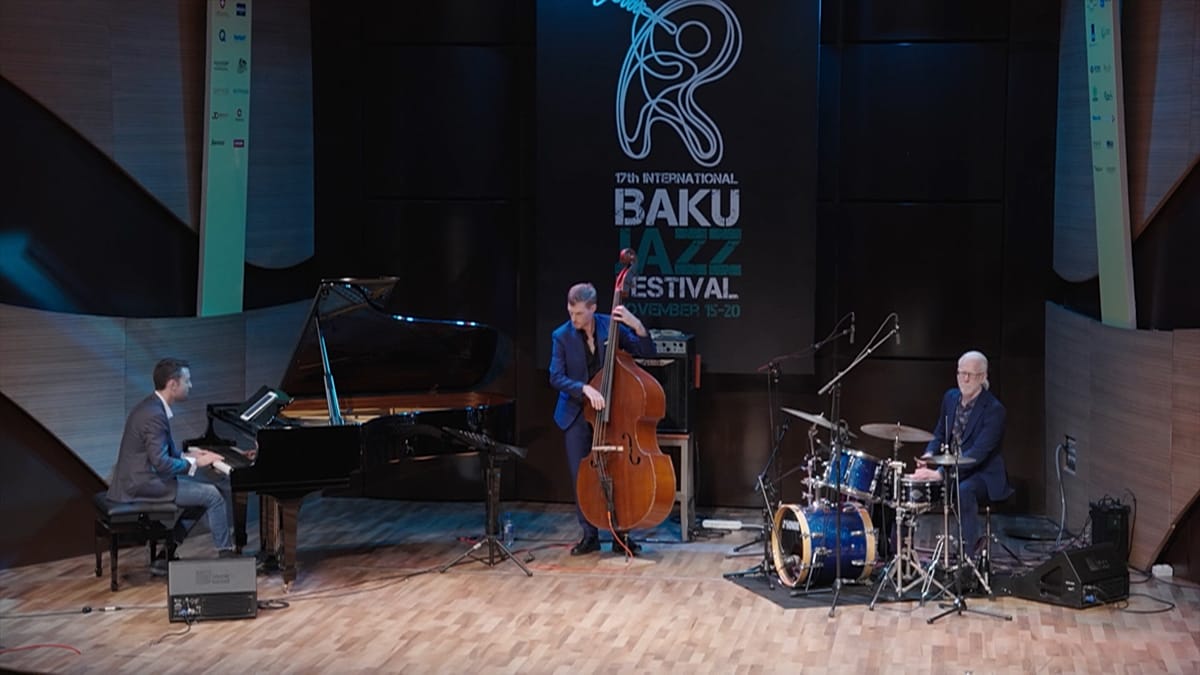
Baku, the capital of Azerbaijan, has long been a crossroads of cultures, and its jazz scene is a testament to that heritage. Unlike the jazz traditions of New Orleans or Paris, Baku's musicians have forged a distinctive sound by blending Western improvisation with mugham, the modal system that underpins much of Azerbaijani classical music. This fusion has not only defined the city's jazz identity but also positioned it as a unique voice within Europe's broader musical landscape.
A Tradition of Fusion
The roots of Baku's jazz scene stretch back to the mid-20th century, when local musicians began experimenting with Western jazz forms. But it was the integration of mugham—with its intricate scales, microtonal intervals, and emotional depth—that gave Baku's jazz its character. Pianist and composer Vagif Mustafazadeh, who emerged in the 1960s, is often credited as a pioneer of this style, blending the rhythmic freedom of jazz with the melodic structures of mugham. Today, his legacy lives on in the work of artists like Shahin Novrasli and Isfar Sarabski, who continue to push the boundaries of the genre.
“The combination of jazz and mugham is not just a gimmick; it's a natural expression of our musical heritage,” says Novrasli, whose albums have garnered international acclaim. “When I improvise, I'm drawing on centuries of tradition, but also on the spontaneity that jazz demands.”
Festivals and New Talent
Baku's jazz scene has been energized by a series of festivals that attract both local and international musicians. The Baku International Jazz Festival, founded in 2005, has become a key platform for showcasing this fusion. Held annually in the city's historic venues, it features workshops, jam sessions, and concerts that highlight the interplay between mugham and jazz. The festival has also helped nurture a new generation of musicians, many of whom are now gaining recognition beyond Azerbaijan's borders.
Young artists like pianist Elvin Hoxha Ganiyev and saxophonist Rauf Farajov are among those reshaping the scene. Ganiyev, who studied at the Baku Music Academy, incorporates electronic elements into his compositions, while Farajov draws on the improvisational techniques of American jazz greats like John Coltrane. Their work reflects a broader trend: Baku's jazz is not static but evolving, influenced by global trends while remaining rooted in local tradition.
This cultural dynamism is part of a wider pattern across Europe, where cities like Tallinn and Riga are also using music to bridge historical divides. For instance, young Estonians and Latvians are bridging a border that no longer exists through collaborative projects, much like Baku's musicians are connecting East and West through sound.
Challenges and Opportunities
Despite its vibrancy, Baku's jazz scene faces challenges. Funding for the arts in Azerbaijan can be inconsistent, and the country's political climate sometimes limits artistic expression. Yet musicians have found ways to adapt. Many rely on international collaborations and digital platforms to reach audiences abroad. The Baku Jazz Center, a nonprofit venue, has become a hub for experimental performances, offering a space where artists can take risks without commercial pressure.
The scene also benefits from Azerbaijan's location on the Caspian Sea, which has historically made Baku a meeting point for traders, travelers, and ideas. This cosmopolitan legacy is evident in the city's jazz clubs, where you might hear a pianist from Georgia jamming with a drummer from Turkey. Such cross-border exchanges are a reminder that jazz, at its core, is a music of dialogue.
As Baku continues to develop its cultural infrastructure—with new concert halls and music schools—the city's jazz scene is poised for further growth. The fusion of mugham and improvisation is not just a local curiosity; it's a model for how European cities can preserve their heritage while embracing innovation. For those interested in how music shapes identity, Baku offers a compelling case study.
In a continent where cultural boundaries are increasingly fluid, Baku's jazz musicians are proving that tradition and modernity can coexist. Their work is a reminder that Europe's musical diversity is one of its greatest strengths—and that the best improvisations often come from listening to the past.