In the twin town of Valga-Valka, where Estonia and Latvia meet, a century of division has left a legacy that Schengen membership alone could not erase. The physical border vanished in 2007, but habits of separation persist: different schools, different languages, different daily routines. Most residents, especially young people, rarely cross to the other side except for shopping. That is the problem Hack the Border was designed to address.
The choice of tool — a hackathon — might seem unusual for a community-building project. Traditionally, hackathons are where startups are born: intensive, time-limited events where developers and entrepreneurs prototype business ideas. But the organisation behind this initiative, Garage48, based in Tallinn, has spent over a decade adapting the format for social challenges. Laura Gredzens, project manager at Garage48, explains the shift: “Usually we do hackathons for startups and to get business results, but here it’s more like a social project — a hackathon as a community platform. We bring different kinds of people together, put them into teams, and then they try to find solutions for different kinds of challenges.”
From Ice Cubes to Friendships
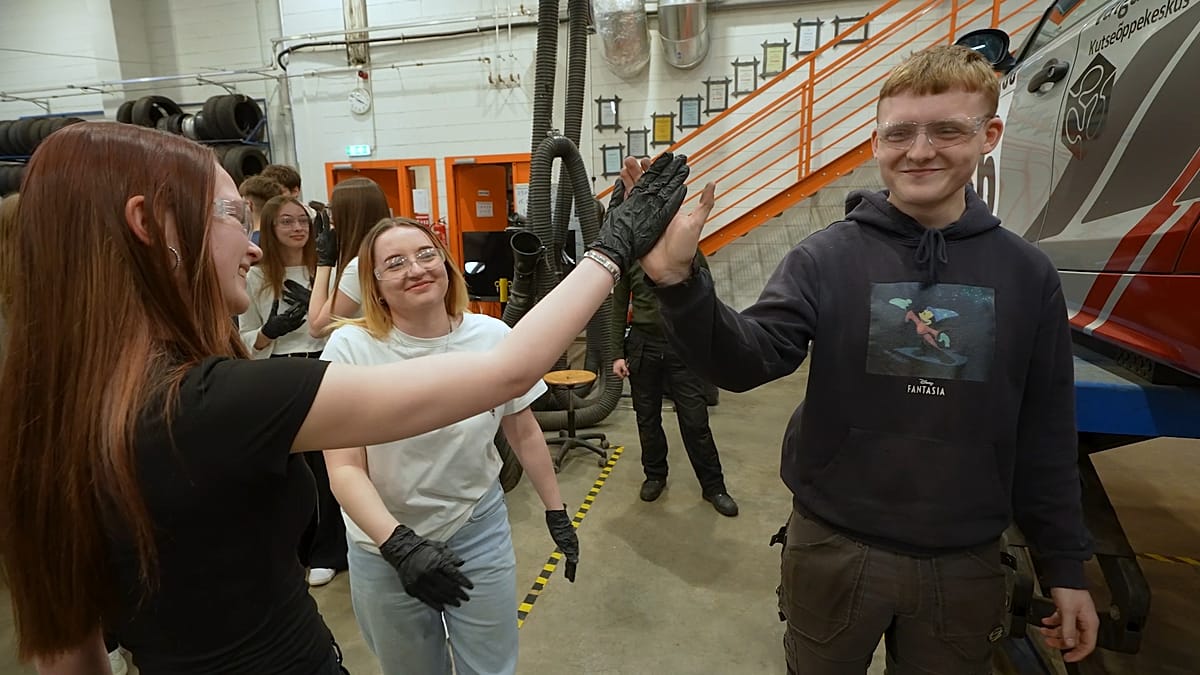
The core mechanics, Gredzens argues, are transferable. “A hackathon is like a network — people come together and build long-lasting friendships, maybe even find potential business partners. When the Estonians and Latvians came to the hackathon, they were like ice cubes. But by the end, the ice had melted. Everyone had become friends.”
The specific challenge in Valga-Valka was not a lack of goodwill — it was a lack of contact. Young people on both sides had simply never been given a structured reason to meet. Thomas Danquah, a mental health trainer and one of the project’s mentors, saw the impact clearly. “Valga-Valka is a twin town: two countries, one city. But what we found is that the youth on both sides didn’t really integrate. They didn’t talk. So the idea of Hack the Border is to get the youth to work together and create something that’s going to be beneficial for the city itself.”
The hackathon gave them that reason. Mixed Estonian-Latvian teams were formed and asked to think about what would make life better in their shared town. The results were telling. “We got them to start thinking about things they could do to improve life for young people,” Danquah recalls. “A lot of the ideas focused on better social events, more communal spaces for hangouts. When they saw that the Estonians had the same ideas as the Latvians, they thought: ‘Well, we could put them together.’ And that’s where some of the magic happened.”
The two-and-a-half-day event, held at Kääriku in October 2025, was only the opening act. The project, funded by the EU’s Interreg VI-A Estonia-Latvia programme with a budget of €83,775, runs through to August 2026. After the hackathon came workshops, mentoring sessions, and study trips on both sides of the border, building on the connections made during those first intense days together.
Some results are already visible. One team developed the idea of ‘Together We Sound’, a youth music festival held at the R-12 Rocket Base, a former Soviet nuclear missile installation near Valga now used as a cultural venue. The event was conceived, planned and delivered by the students themselves. Such initiatives show how a short, intensive event can spark lasting change in a region where borders once divided communities.
The broader context is Europe’s ongoing effort to integrate its regions, as seen in initiatives like the WUF13 conference tackling urban growth, or the first cross-border trade in years between Armenia and Azerbaijan. In the Baltic, the NATO scrambles that intercept Russian aircraft underscore the strategic importance of this region. Yet here, in a small twin town, a hackathon is quietly building the kind of human connections that no treaty can mandate.