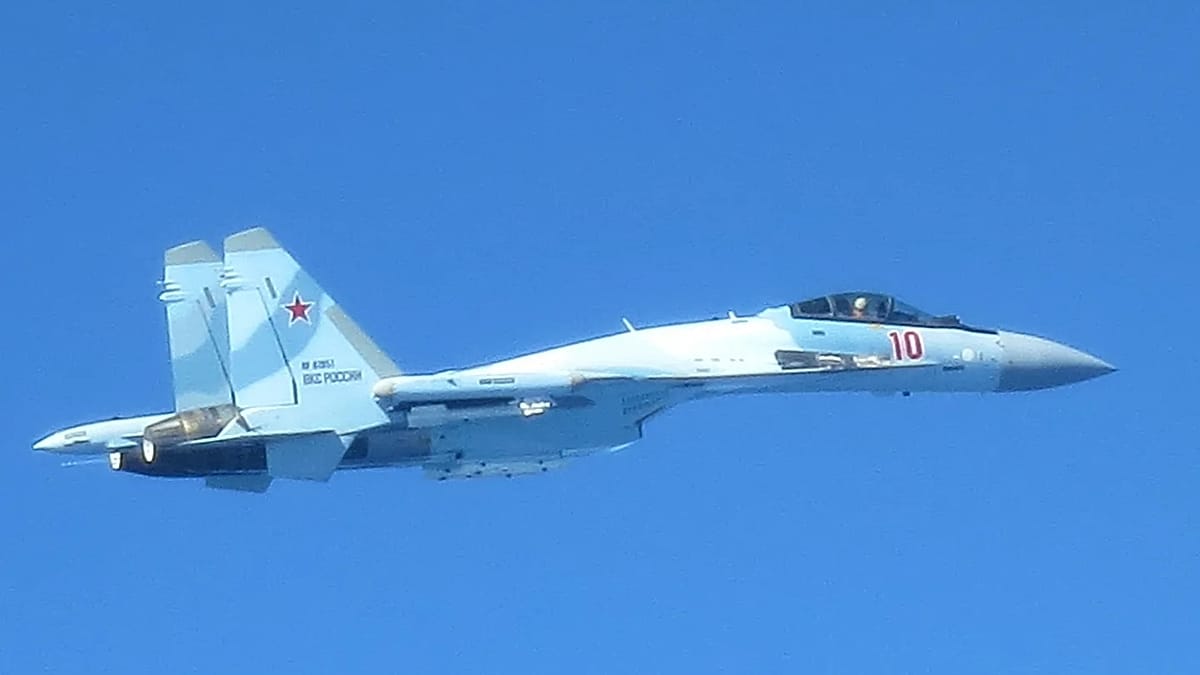
On Monday, NATO fighter jets intercepted a formation of Russian strategic bombers and fighter aircraft over the Baltic Sea, in a routine but muscular display of air power along the alliance's eastern flank. The operation, led by French Rafale fighters stationed at Šiauliai Air Base in Lithuania, involved aircraft from Sweden, Finland, Poland, Denmark, and Romania, according to a statement from the French detachment.
The Russian mission included two supersonic Tu-22M3 strategic bombers, escorted by a rotating group of roughly ten Su-30 and Su-35 fighters. The Russian Defence Ministry confirmed the flight on Telegram, stating it lasted more than four hours and took place over the neutral waters of the Baltic Sea. "At certain stages of the route, the long-range bombers were accompanied by fighters of foreign states," the ministry added, noting that all flights comply with international airspace rules.
Baltic Air Policing and the Kaliningrad Corridor
Many of the Russian flights monitored by NATO's Baltic air policing mission are transits to and from the Russian exclave of Kaliningrad, sandwiched between Poland and Lithuania. The mission has been in continuous operation since Estonia, Latvia, and Lithuania joined the alliance in 2004. Even before Russia's full-scale invasion of Ukraine, NATO was intercepting Russian aircraft around 300 times per year, predominantly over northern European waters.
Lithuania's defence ministry reported that NATO jets were scrambled four times between 13 and 19 April to intercept Russian aircraft that violated flight rules, including switching off transponders and flying without a filed flight plan. NATO routinely highlights that such Russian flights often lack communication with air traffic control and fail to file flight plans, posing risks to civilian aviation.
The intercept comes amid heightened tensions on the alliance's eastern flank, even as global attention shifts to the Middle East. The Russian Defence Ministry did not immediately respond to a request for comment on Tuesday, but it regularly reports similar bomber flights over the Baltic, including at least four such incidents last year and one in January 2026. NATO's Allied Air Command also declined to comment.
The incident underscores the persistent challenge of monitoring Russian military aviation near NATO airspace. For a deeper look at how European nations are tightening security measures, see our report on Estonian PM Calls for Lifetime Schengen Ban on Russian Soldiers.
While the intercepts are routine, they also highlight the broader context of European defense cooperation. The involvement of Swedish and Finnish jets—both recent NATO members—demonstrates the alliance's expanded reach in the Baltic region. Meanwhile, the reliance on French Rafales stationed in Lithuania reflects the rotational burden-sharing among member states.
For more on how European energy and logistics are affected by regional tensions, read about Europe's Jet Fuel Crisis Threatens Summer Flights as Airlines Cut Routes.



