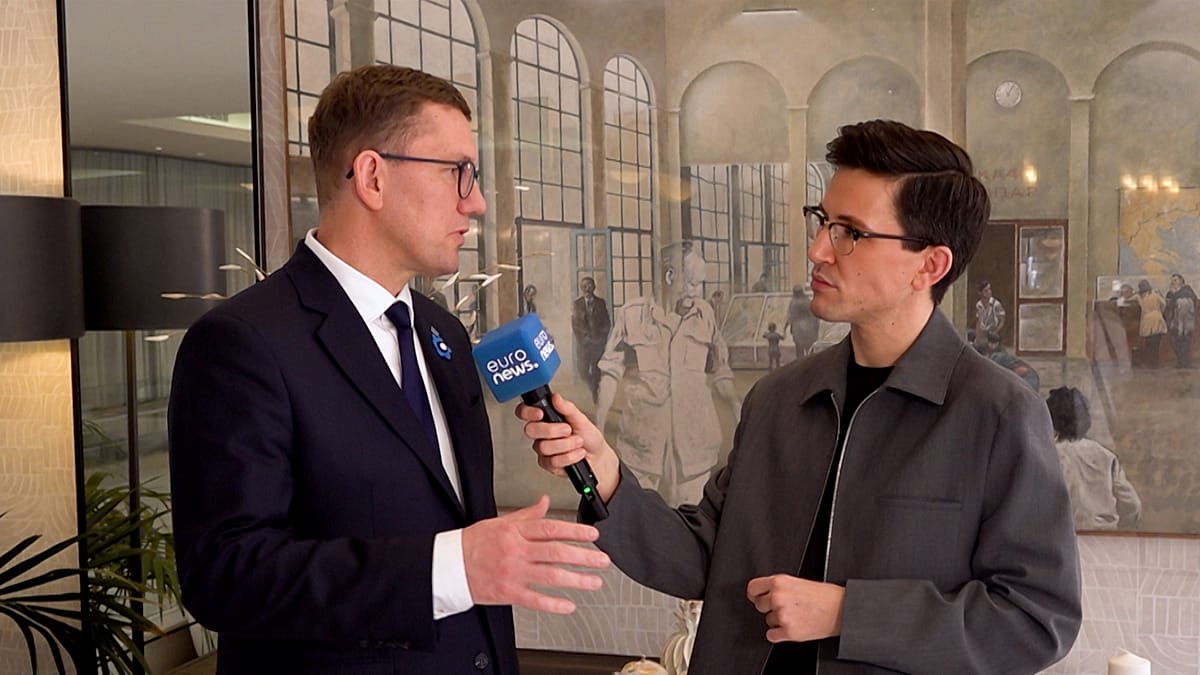
Estonian Prime Minister Kristen Michal has called for a lifetime ban on Russian soldiers who participated in the full-scale invasion of Ukraine from entering the Schengen area. In an interview with Euronews on the sidelines of an EU meeting in Cyprus, Michal argued that most of these soldiers are criminals and should be permanently excluded from the passport-free zone that encompasses most EU member states.
“Do you want these guys near your home? No, you don't,” Michal said, framing the proposal as a necessary security measure. He warned that former combatants could form private armies like “Wagner II, Wagner III” and operate across Europe, Asia, and Africa.
EU Momentum Builds
Estonia has been promoting the Schengen ban since early this year and has gradually gathered support from other member states. The European Council included the project in its formal conclusions at the March summit, tasking the European Commission with providing an “assessment on possible ways to address this issue, without prejudice to member states' competences in this domain.” High Representative Kaja Kallas has indicated that a formal proposal will be ready by the June summit.
Currently, each EU country decides visa issuance individually, but common rules ensure consistency once a visa is granted, allowing free movement across Schengen. Michal emphasized that the scale of the problem—potentially involving hundreds of thousands of soldiers—requires a coordinated EU-wide approach. “Estonia has already banned about 1,300 Russian fighters,” he noted. “We can do more, we can do 10 times that, but we cannot do a million on our own. We need everybody's help.”
The proposal comes amid ongoing concerns about Russian disinformation and hybrid threats. For instance, pro-Russian networks have deployed AI-generated soldier deepfakes to undermine Ukrainian morale, highlighting the broader information warfare context.
Mutual Assistance and NATO Dynamics
Michal spoke ahead of an informal EU leaders’ gathering in Cyprus, where President Nikos Christodoulides initiated a political reflection on Article 42.7 of the EU treaties, which obliges mutual assistance in case of armed aggression against a member state. Cyprus, one of the few EU countries outside NATO, cannot rely on the alliance’s Article 5 collective defense clause. Michal argued that both clauses can “exist together” without contradiction, emphasizing that the need for allied support is paramount.
The debate on mutual assistance is particularly relevant as US President Donald Trump has revived threats to withdraw from NATO. However, Michal dismissed concerns that such rhetoric diminishes Article 5’s deterrent value, pointing to NATO’s interventions last year to protect Estonian and Polish airspace against Russian incursions. “At that moment, Trump's message was quite clear that America is standing to protect the Baltics and Poland,” he said.
Estonia has long advocated for stronger EU defense capabilities, as highlighted in previous calls for a defense buildup to avoid testing NATO’s core commitments. The Schengen ban proposal is part of a broader effort to address security risks posed by Russia’s expanded mobilization, which has seen hundreds of thousands of soldiers deployed to Ukraine.
Michal’s comments underscore a growing consensus among EU member states that former Russian combatants represent a long-term threat, even after hostilities end. The proposal, if adopted, would mark a significant tightening of Schengen rules, reflecting the bloc’s evolving security posture in response to the war in Ukraine.



