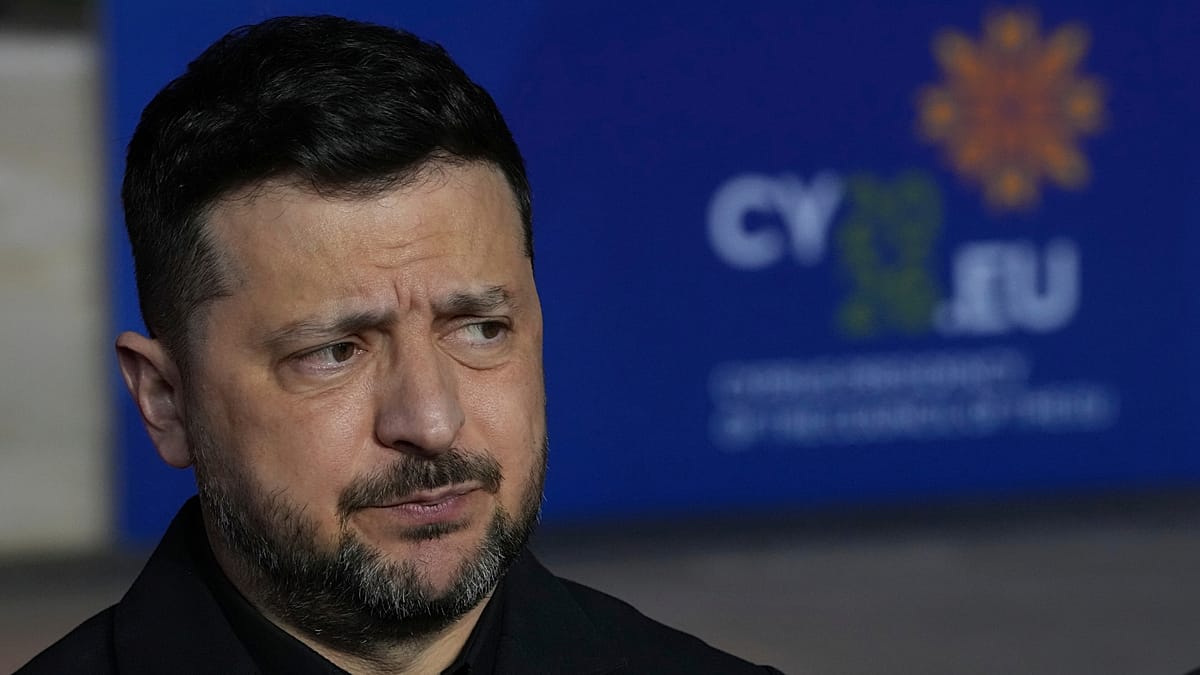
EU leaders concluded a second day of informal talks in Cyprus on Friday, marking a historic shift after Hungary’s election defeat removed a key obstacle to European support for Ukraine. The summit, the first without outgoing Hungarian Prime Minister Viktor Orbán, saw the adoption of a €90 billion loan for Kyiv and a fresh sanctions package against Russia.
Ukrainian President Volodymyr Zelenskyy, attending in person, used the opportunity to press for accelerated EU accession. He rejected any notion of symbolic membership, telling reporters via WhatsApp: “Ukraine does not need symbolic membership in the EU. Ukraine is defending itself and is definitely defending Europe. And it is not defending Europe symbolically – people are really dying.” He called for full membership with a clear start date.
Estonian Prime Minister Kristen Michal echoed that sentiment, stating: “Ukraine's future is in Europe. The question is only when, not if.” The summit’s informal nature meant no binding decisions on accession, but the absence of Orbán—long a disruptor—cleared the air for frank discussions.
EU Approves €90 Billion Loan After Hungary Drops Veto
The loan, approved on Thursday, had been blocked by Budapest since February over a dispute involving the Druzhba oil pipeline, which supplies low-cost Russian crude to Hungary and Slovakia. The pipeline’s repair, confirmed by Zelenskyy two days earlier, allowed Hungary to lift its veto. Cyprus, holding the EU Council’s rotating presidency, swiftly added the loan to the agenda.
Commission President Ursula von der Leyen said: “While Russia doubles down on its aggression, we are doubling down on our support to the brave Ukrainian nation, enabling Ukraine to defend itself and putting pressure on Russia’s war economy.” The funding will help sustain Ukraine’s resistance to Russia’s invasion.
New Sanctions on Russia, Maritime Ban on Hold
The EU also agreed on a 20th sanctions package targeting Russia, including 46 vessels linked to Moscow’s “shadow fleet,” regional banks, and crypto platforms, as well as restrictions on metals, chemicals, and critical minerals. However, a full ban on maritime services for Russian oil tankers remains on hold pending G7 agreement, after objections from Greece and Malta. These maritime states fear the ban would damage their economies and strengthen Russia’s shadow fleet—ageing vessels used to circumvent Western sanctions.
For more on the sanctions, see our report: EU Approves New Russia Sanctions but Delays Maritime Ban Amid Greek and Maltese Opposition.
Iran Conflict and Energy Security
Leaders also turned to the escalating Iran conflict, which has spread across the region, including the recent killing of two French soldiers in Lebanon. Discussions focused on the EU’s Article 42.7 mutual defence clause, particularly after a Shahed drone struck a British military base in Cyprus. Nicosia is among the few EU countries not covered by NATO’s Article 5, making the clause politically sensitive as leaders avoid signalling to Washington that Europe no longer relies on NATO protection.
The Iran war is also affecting energy markets, with the Strait of Hormuz blockade and rising prices high on the agenda. The European Commission presented options to mitigate the impact, but no immediate decisions were taken. Friday’s session includes broader talks with Egypt, Lebanon, Jordan, Syria, and Kuwaiti H.E. Jasem Mohamed AlBudaiwi, Secretary-General of the Gulf Cooperation Council.
EU Budget Negotiations Loom
Another thorny issue is the EU’s seven-year budget. Talks focus on its size and own resources, with the traditional “frugal” group—Austria, the Netherlands, and Sweden—joined by other net contributors including Germany, Finland, France, Belgium, and Ireland, all aiming to keep national contributions under control. The goal is an agreement by end-2026, a challenging timeline likely to involve long nights of negotiations.
Zelenskyy’s firm stance on membership reflects Ukraine’s determination to secure full integration, not just symbolic gestures. As he put it, “Ukraine is defending itself and is definitely defending Europe. And it is not defending Europe symbolically—people are really dying.” For more on his position, read our story: Zelenskyy Rejects Symbolic EU Membership, Demands Full Integration for Ukraine.



