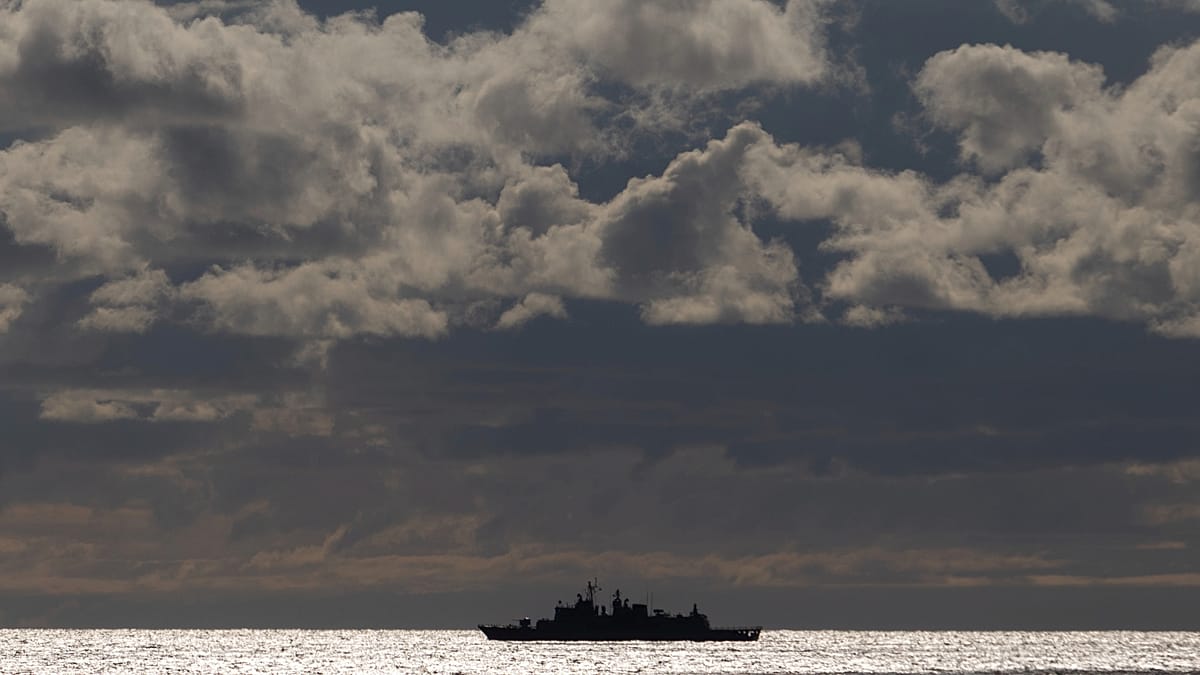
Just six kilometres from the Polish port of Świnoujście, within sight of the German holiday island of Usedom, lies what could become one of Poland's most consequential energy finds in decades. The Wolin East oilfield, discovered last year by Canadian company Central European Petroleum (CEP), is estimated to contain around 22 million tonnes of crude oil and five billion cubic metres of commercially recoverable natural gas.
The discovery came from exploratory drilling in July 2025 at a depth exceeding 2,500 metres. CEP's chief executive, Rolf G. Skaar, called it a "historic moment" for the company and for Poland's energy sector. For Warsaw, the field represents a tangible step toward reducing reliance on imported hydrocarbons and strengthening supply security.
Poland's chief geologist, Krzysztof Galos, said in July 2025 that regular production could begin as early as 2028 or 2029. Over several years, the deposit could meet roughly four to five percent of Poland's annual oil demand—a modest but meaningful contribution to the country's energy mix.
Environmental concerns on both sides of the border
In Świnoujście, however, enthusiasm is tempered by worries about the impact on tourism and the natural environment. Local authorities and residents insist that the region's appeal must be preserved, and that any extraction must not come at the cost of the Baltic's fragile ecosystem.
Across the border in Germany, opposition is far more vocal. A coalition of environmental groups—including the BUND (German Federation for the Environment and Nature Conservation) in Mecklenburg-Western Pomerania, Deutsche Umwelthilfe (DUH), WWF, and the citizens' initiative Lebensraum Vorpommern—has formed an alliance calling for a general ban on new oil and gas projects in the Baltic Sea. By the end of July, the campaign had collected some 88,000 signatures, with a petition due to be submitted to the European Commission in Brussels in September.
The groups warn of underwater noise, pollutant discharges, and the risk of an oil spill in protected marine areas. They argue that the Baltic is particularly vulnerable, and that new fossil fuel extraction off Usedom would be an unacceptable gamble.
Sascha Müller-Kraenner, DUH's federal managing director, is pressing for a coordinated response from Berlin, Schwerin, and Brussels. "So far, the exploratory well has not led to an authorised production project, and that must remain the case," he said. "The federal government, the Mecklenburg-Western Pomerania state government and the European Union must jointly send a clear message: there must be no new oil and gas extraction directly off Usedom."
With a state election looming in Mecklenburg-Western Pomerania, Müller-Kraenner also urged political parties to take a clear stance on how they intend to protect the coast from a new fossil industrial project.
The dispute highlights a broader tension within the European Union between energy security and climate commitments. While Poland has been diversifying its energy sources—including a growing role for unconventional infrastructure projects—the Baltic region remains a sensitive environmental zone. Germany's objections are not merely local; they reflect a wider push by environmental groups to halt new fossil fuel exploration across the continent.
For now, the fate of Wolin East remains uncertain. The Polish government has yet to approve a production plan, and the German-led opposition shows no sign of easing. The coming months, particularly the state election in Mecklenburg-Western Pomerania, could prove decisive in shaping the project's future.
As the debate unfolds, the Baltic coast—already a popular destination for tourists from both countries—finds itself at the centre of a modern energy dilemma. Whether the region will see drilling platforms or protected waters may depend as much on politics as on geology.