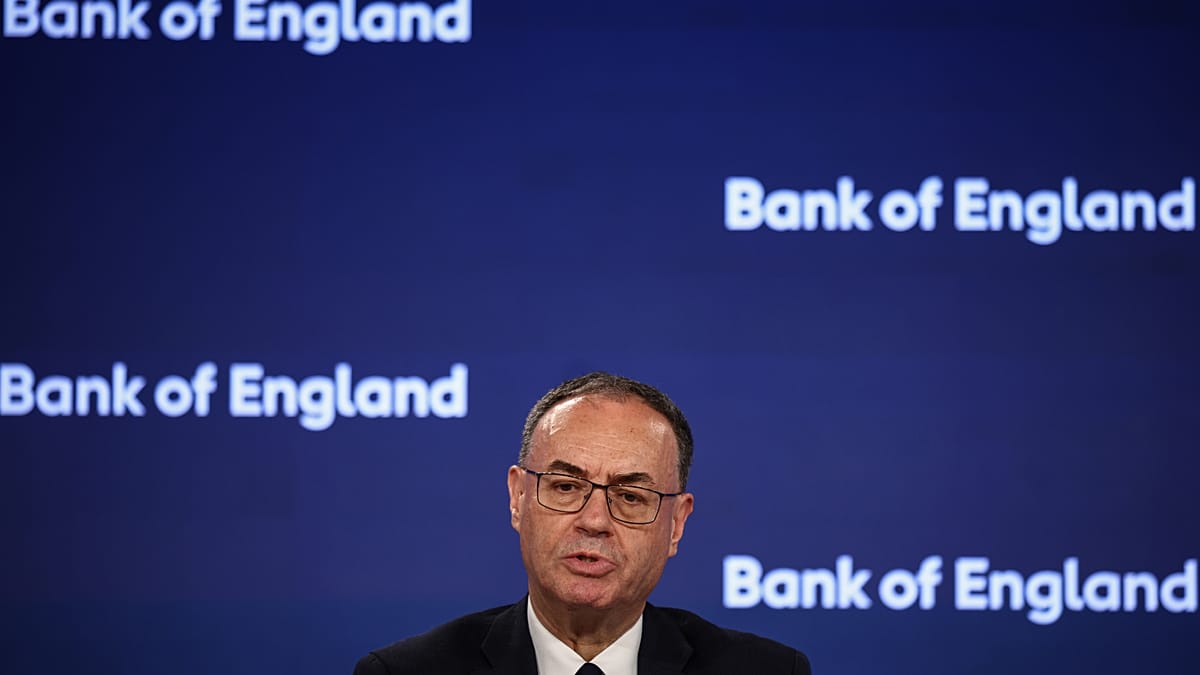
The Bank of England has decided to keep its benchmark interest rate at 3.75%, but the decision was far from unanimous. In a 6-3 vote, the Monetary Policy Committee (MPC) chose to hold borrowing costs steady, while a minority of three members pushed for an increase to 4%.
The move sets the Bank apart from the Federal Reserve and the European Central Bank, both of which have tightened monetary policy within the past week. The Fed raised its rate to a range of 3.75%-4% on Wednesday, its first hike since 2023, and the ECB lifted its deposit rate to 2.5% last week.
Inflation outlook worsens
The Bank's decision comes as inflation reached 3.1% in August, a five-month high, driven by the energy shock from the Iran war. The MPC acknowledged that price pressures are likely to intensify, stating that inflation "is likely to rise further over coming quarters." Crude oil and wholesale gas prices have climbed significantly since July, with Brent crude at $106 a barrel and UK gas at 207 pence per therm on 14 September.
Despite the hold, the Bank's statement pointed to the risk of second-round effects. "There has been little evidence so far of material second-round effects in price and wage-setting," the committee noted, but warned that the risk grows the longer high energy prices persist. The MPC added that risks to the inflation outlook are "tilted to the upside, and more so than at the time of the July Monetary Policy Report."
The decision reflects a delicate balance. Economic activity has held up slightly better than expected, but the labour market is softening, and higher borrowing costs are expected to weigh on households and businesses over time. The Bank's stance contrasts with the more aggressive actions of its peers, as it waits to see whether energy-driven inflation becomes entrenched.
The week's central bank actions conclude on Friday with the Bank of Japan, where markets anticipate a hike. If that materialises, the Bank of England will be the only major central bank to have held rates this week—though Thursday's vote shows it was a close call.
For more on the broader monetary policy landscape, see our coverage of the Fed's recent rate decision and the political pressures surrounding it.