A demonstration for housing rights in Barcelona on Monday descended into serious unrest in the city centre, leaving 13 people arrested—including a minor—and 30 Catalan police officers (Mossos d'Esquadra) with minor injuries, according to figures released early Tuesday.
The march, called by the tenants' union Sindicat de Llogateres and other housing advocacy groups, drew around 20,000 people according to the Guàrdia Urbana, while organisers put the figure at 120,000. Originally scheduled for the weekend, the protest had been postponed due to a red weather alert and heavy rains that battered Catalonia.
Setting off from Plaça Urquinaona at about 7:30 pm, the procession wound through central Barcelona before ending at the junction of Passeig de Gràcia and Gran Via. Demonstrators denounced soaring rents and property speculation, demanding concrete measures to guarantee access to housing. One of the rally's central calls was for a general strike over housing, with Sindicat de Llogateres spokesperson Carme Arcarazo telling the crowd the aim was to trigger a mobilisation capable of "paralysing the country" in coordination with other sectors.
The protest took place against a backdrop of political turmoil. Just days earlier, the Spanish government's housing decrees had been voted down in Congress, prompting Prime Minister Pedro Sánchez to call a snap general election for 29 November. The timing underscored how housing has become a defining issue in Spanish politics, with economic pressures testing Sánchez's coalition before the vote.
Clashes erupt after the march ends
The march itself passed without serious incident until it was officially called off around 9:30 pm. Police then used loudspeakers to urge people to leave the area around Passeig de Gràcia and Gran Via, but some refused. Objects were thrown at the police deployment, and the situation escalated when groups of hooded individuals began hurling stones, paving slabs, and glass bottles at officers. Barricades were erected using bins, barriers, bicycles, and materials from nearby construction sites.
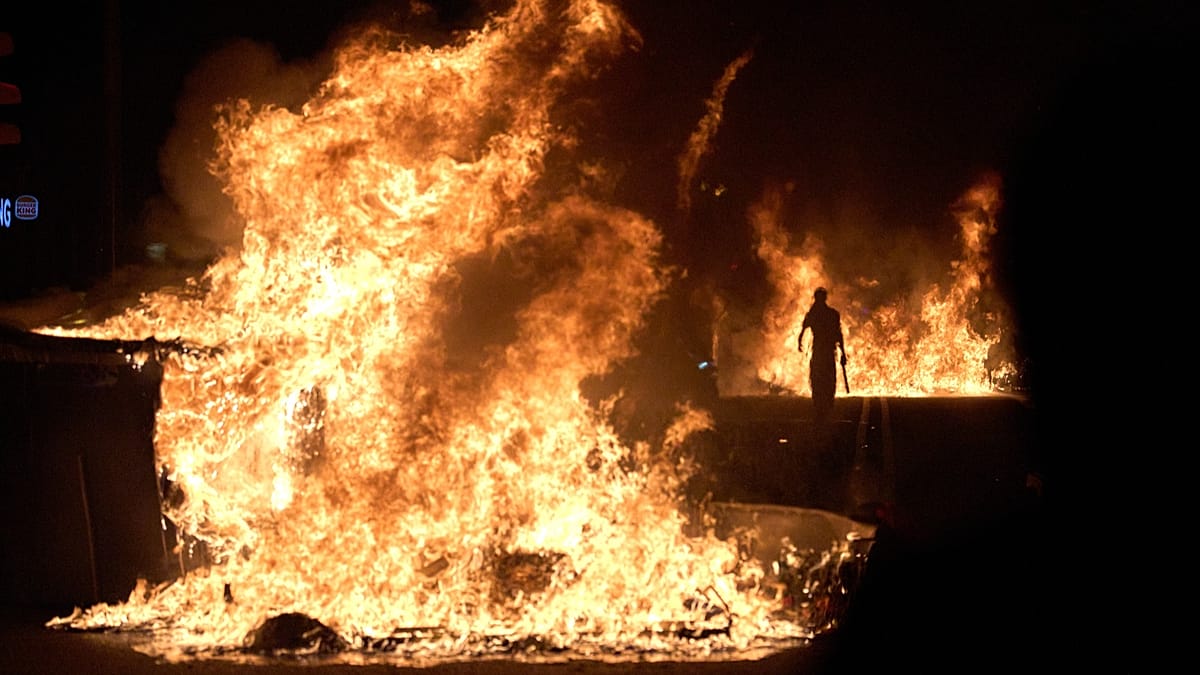
At around 10:15 pm, Mossos officers charged to disperse the groups, and the unrest shifted towards Plaça Catalunya and La Rambla, where bins and other materials were set alight. Police used foam projectiles during the clashes. The disturbances continued until roughly midnight, with the Mossos reporting 28 barricades and 22 fires. Barcelona firefighters intervened to extinguish the blazes, escorted by police.
The violence reflects a broader pattern of frustration across Spain, where housing costs have spiralled out of reach for many, particularly younger people. Similar protests have erupted in Madrid, where half a million people rallied earlier this year. The issue has also resonated beyond Spain, with housing affordability becoming a pressing concern in many European cities.
Authorities have not yet confirmed how many demonstrators were injured. The arrests and injuries highlight the growing tension between citizens demanding affordable housing and authorities struggling to maintain public order. As Spain heads into an early election, the housing crisis is likely to remain a central flashpoint, with parties on all sides scrambling to offer solutions.
The events in Barcelona also come amid wider European unrest over living costs and social inequality. In France, student protests have escalated, with schools being set ablaze and clashes with police. The parallels suggest a continent-wide reckoning with the consequences of unaffordable housing and economic strain.
For now, Barcelona's streets have returned to relative calm, but the underlying anger remains. The Sindicat de Llogateres has vowed to continue its campaign, and further protests are expected in the coming weeks. Whether the Spanish government can address the housing crisis before the election—or whether the unrest will deepen—remains to be seen.