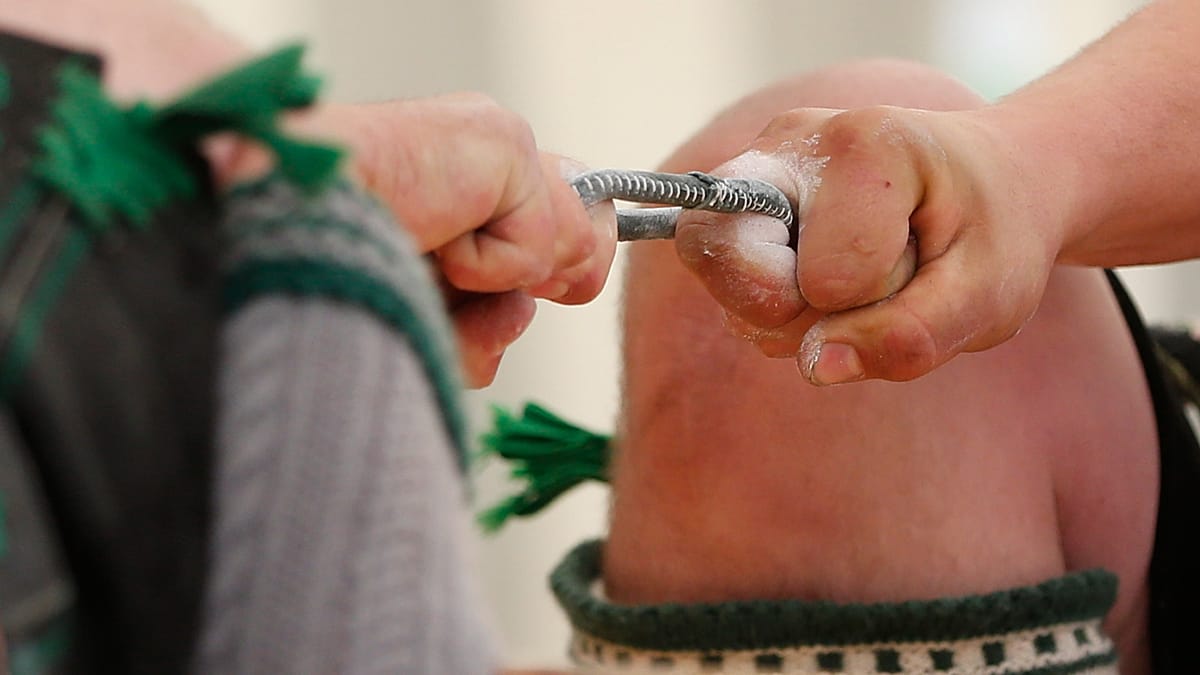
In the quiet Bavarian village of Pflugdorf-Stadl, a peculiar sporting event draws competitors from across Germany: the national finger wrestling championship. This traditional Alpine discipline, known locally as Fingerhakeln, pits two opponents against each other in a raw test of strength, technique, and sheer tolerance for pain.
The rules are simple. Each competitor hooks a middle finger into a small leather loop, and at the signal, pulls with all their might, attempting to drag the other across the table. A match can be over in a flash or stretch out for nearly a minute, but every second demands intense physical effort.
A sport that leaves its mark
Despite its modest appearance, finger wrestling is not for the faint-hearted. The strain on the fingers and hands is immense, and competitors must warm up meticulously before stepping up to the table. The friction and pressure can cause painful injuries to the skin, leaving calluses and raw patches that are a badge of honour for seasoned athletes.
Ferdinand Seitz, the senior champion, does not mince words when describing the sensation. “It’s excruciating,” he admits, though he is quick to point out that other sports can be just as brutal. For Seitz and his fellow competitors, the pain is part of the appeal—a test of mental fortitude as much as physical prowess.
The championship is more than just a competition; it is a celebration of a tradition that has deep roots in the Alpine regions of Germany and neighbouring countries. Similar contests can be found in Austria and Switzerland, where Swiss wrestling holds a comparable place in local culture. These events are a reminder of the continent’s rich sporting heritage, where strength and skill are honoured in their most elemental forms.
For the village of Pflugdorf-Stadl, hosting the championship is a point of pride. The event draws spectators from nearby towns and cities, turning the quiet community into a hub of excitement for a day. It is a scene that echoes across Europe, from the pig-squealing championship in Trie-sur-Baïse to the Palio in Siena, where local traditions bring people together in shared celebration.
As the matches unfold, the atmosphere is a mix of tension and camaraderie. Competitors shake hands before and after each bout, respecting the effort their opponents have put in. The crowd cheers, winces, and applauds as the leather loop strains and the table shakes under the pressure.
For those who take part, finger wrestling is not just a hobby—it is a way of life. Training involves not only building finger and grip strength but also honing the mental resilience needed to push through the pain. Many competitors start young, learning the techniques from family members who have competed for generations.
The championship also highlights the broader appeal of such niche sports in Europe. In an era of high-tech entertainment and professional leagues, these grassroots events offer a connection to the past and a sense of community that is increasingly rare. They are a testament to the enduring human spirit of competition, in its most direct and unadorned form.
As the final match concludes and the winners are crowned, the village of Pflugdorf-Stadl returns to its usual quiet rhythm. But the memories of the day—the cheers, the grimaces, and the triumphant smiles—will linger, as will the calluses on the competitors’ fingers, until the next championship calls them back to the table.