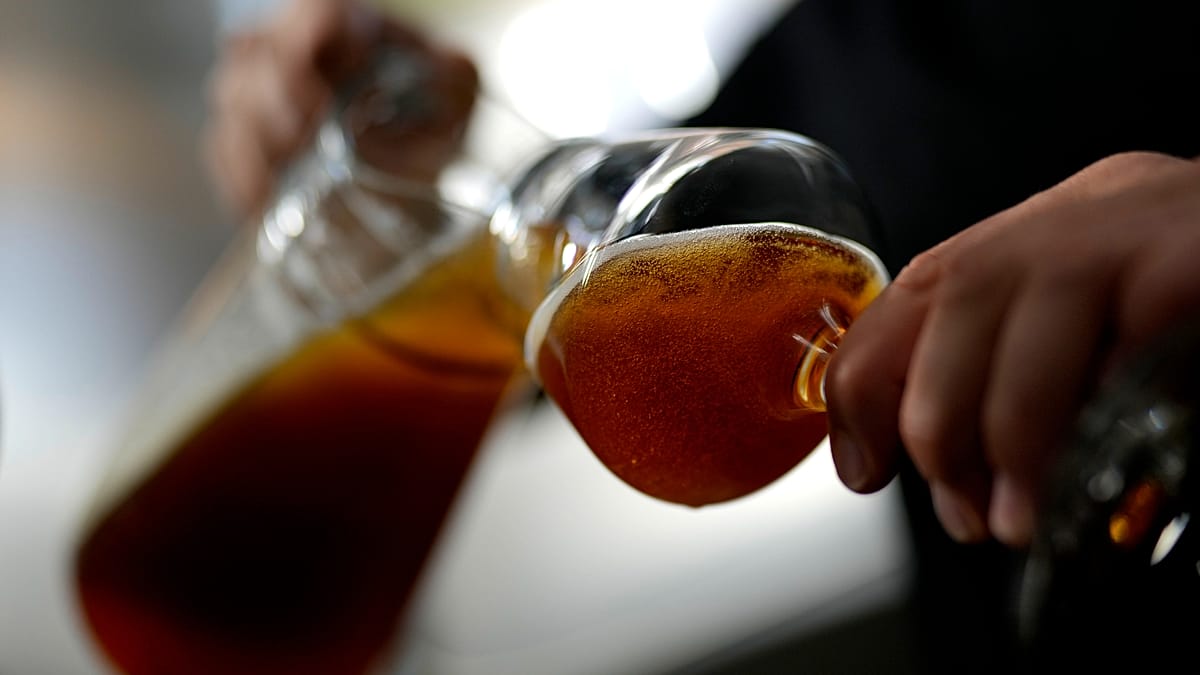
Beer, with a history spanning more than 10,000 years, has evolved far beyond a casual drink. Its cultural depth, the diversity of over 160 recognized styles, and its potential for gastronomic pairings are slowly gaining appreciation, even in markets traditionally dominated by wine, such as Portugal.
International Beer Day, celebrated on the first Friday of August, serves as an invitation to explore this vast and ever-changing world. The date originated in 2007 in Santa Cruz, California, when a group of friends decided to create a day to bring people together over one of the world's most consumed beverages. The initiative quickly went global, and today it is marked in more than 50 countries.
Filipa Santos, a beer sommelier and brand manager for Sagres, explains that interest in beer often begins with discovering its complexity. From the ingredients to the various brewing schools, beer offers a spectrum that ranges from classic European styles to contemporary interpretations from the so-called "New World." Santos, who has worked in marketing for two decades and in the beer sector since 2011, took a sommelier course because she "felt the need to really know the product she worked with." What fascinated her most was "the diversity and richness of the beer world."
The four essential ingredients
Beer is traditionally made from just four natural ingredients: water, malt, hops, and yeast. The way these are combined and handled gives rise to an enormous variety of styles.
Water, which makes up about 93% of beer, can directly influence flavor depending on its mineral composition. "If we want a pilsner, which is a low-bitterness, versatile beer, very easy to drink, we use soft water," Santos explains. "Here the water is not going to dominate and we will have a beer in which the malt can provide good balance. If we want a more intense, more complex beer, such as a Guinness, a stout, then we should use hard water, because we need the minerals to help the malt take on a bigger role, to really stand out."
Malt—usually barley, but also wheat or other cereals—determines the color and cereal notes, which can range from fresh bread to toasted bread. Hops contribute bitterness and aromatic notes of tropical or citrus fruits. "They can range from herbal and floral to fruity, including tropical and citrus notes, rose and so on," says Santos. Yeast, the invisible ingredient that converts sugar into alcohol and gas, is also decisive. "There are beers in which yeast is the protagonist, for example Belgian beers. In those we can find notes of clove, spicy notes, and banana notes as well."
Old World traditions
From these four elements emerge more than 160 recognized beer styles. Yet Portugal remains a market dominated by one particular style. "We are a country of pilsner beer – light, easy-drinking and refreshing," notes Santos. But that is only a small part of the beer universe. Among the best-known styles are IPA (India Pale Ale), marked by intense hop aroma; stout, dark beers with notes of coffee or chocolate; and weissbier, wheat beers with softer, fruitier characteristics.
The diversity reflects different geographical traditions—the so-called brewing schools, divided between the "Old World" and the "New World." In the Old World, the most classic styles can be found—"the true archetypes of beer," says Santos. In Germany, Austria, and Czechia, tradition places particular value on working with malt and wheat beers, often producing cloudy, smooth styles with slightly sweet notes and characteristic aromas such as banana. Typical German styles include witbier, with a straw-yellow to pale golden color, and Weissbier, which ranges from gold to amber. Both are unfiltered and appear cloudy. Pilsner, now dominant in many markets, was born in the city of Pilsen, in present-day Czechia.
England, Scotland, and Ireland also have a strong malt tradition, partly because they are historically whisky-producing countries. The hops used there have their own identity: "The English have very earthy hops and I think that has a lot to do with their history in terms of tea," Santos explains.
Belgians and the French "are very given to irreverence, originality and make bold blends." Their production includes techniques such as spontaneous fermentation, where tanks are left open and micro-organisms in the air participate in the process. The result is more unpredictable and complex beers, often with marked acidity or added fermented fruit, as in kriek, made with cherry or sour cherry.
New World reinterpretations
In contrast, the so-called New World—notably the United States, Brazil, and Japan—has brought a fresh approach, reinterpreting classic styles. One clear example is India Pale Ale, originally British but profoundly transformed by North American brewers, who introduced hops with more tropical and citrus-forward profiles. This innovation has inspired brewers across Europe, from London to Berlin, to experiment with new hop varieties and flavor combinations.
As beer's complexity gains recognition, it is increasingly finding a place at the table, pairing with a wide range of cuisines. In Portugal, for instance, chefs are beginning to explore beer pairings alongside wine, a trend that mirrors broader European interest. For those looking to expand their palate, the world of beer offers a sensory journey that goes far beyond the standard lager.