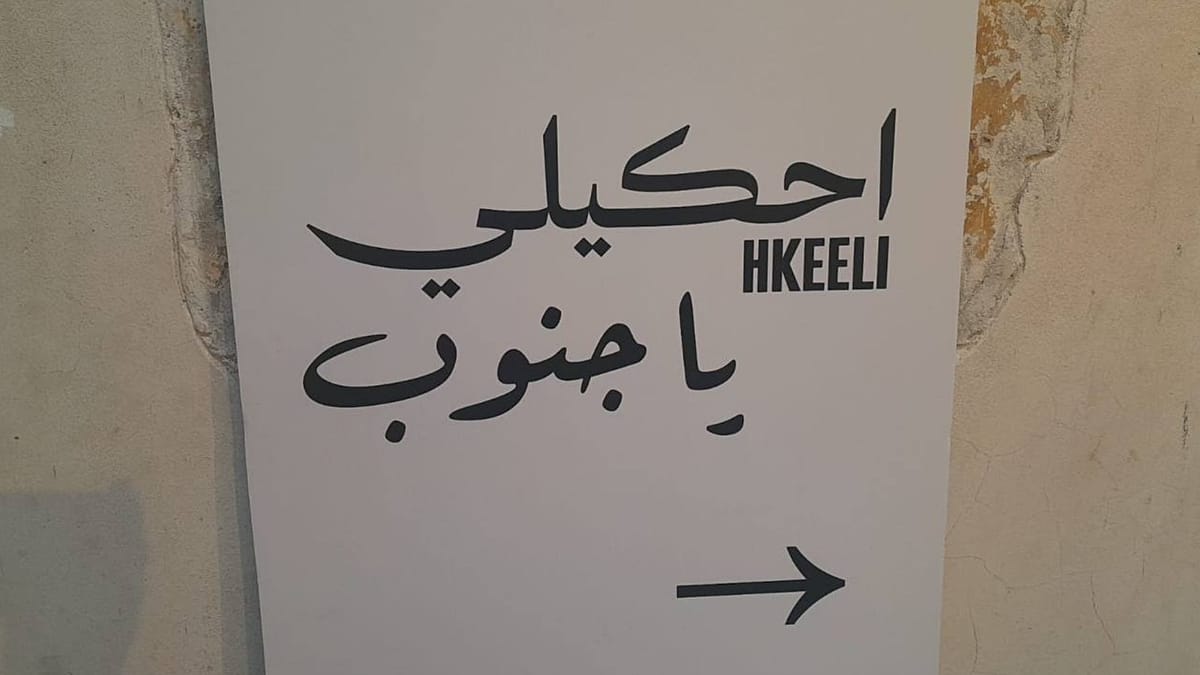
In the Sodeco district of Beirut, the Beit Beirut museum has become an unexpected focal point for collective memory. Since its opening in May, the exhibition "Tell Me, South" has drawn a steady stream of visitors, drawn by its intimate display of family photographs, handwritten letters, and personal testimonies from Lebanon's southern region.
The exhibition's premise is deliberately counter-narrative. Rather than reducing South Lebanon to images of destruction and conflict, it seeks to present the region through the everyday lives of its people. "The aim is to show South Lebanon through its people, far from an image that reduces it to devastation," explains Delphine Abi Rached, executive director of the "Tell Me" initiative. "We want the South's past not to slip into oblivion, and war not to wear it down to death in the memories of its sons and daughters."
A project born in crisis
The exhibition was conceived under extraordinary circumstances. The decision to launch it was taken just three weeks before opening, while the latest war still weighed heavily on the region. The team faced an immediate, uncomfortable question: was this the right moment to hold an exhibition about a region whose wounds had not yet healed?
Abi Rached acknowledges the anxiety that accompanied the project. "For people working in culture, it felt like the only response we could offer," she says. "But we were especially worried about how people from the South would receive it, for fear they might feel their experience or loss was being reduced to what fits inside an exhibition space."
Those fears proved unfounded. The exhibition has welcomed more than 7,200 visitors without a single negative reaction. Visitors have left over 130 messages, 90 drawings, and hundreds of stories that have themselves become part of the display. "What happened was the opposite of all those fears," Abi Rached notes.
Bridging divides within Lebanon
The organisers deliberately aimed the exhibition not only at southerners but also at Lebanese whose knowledge of the region comes primarily from nightly news bulletins. Abi Rached believes that "Lebanese people have lived the war in different ways, and the South has been present in public debate, but the experiences of its inhabitants have not truly been listened to."
The family album photos from southern villages could be photos of any family in Lebanon, she points out. The core idea is not to separate "us" and "them" but to find common ground. "Talking about the South becomes a way of talking about Lebanon as a whole," she says.
This approach resonates beyond Lebanon's borders. Across Europe, from the wildfires in southwest France to the ongoing challenges of migration, communities grapple with how to preserve identity amid crisis. The exhibition offers a model for using cultural memory to bridge divides.
An evolving archive
The exhibition is designed as an interactive, growing entity. Spaces are set aside for visitors to write messages and memories, turning the audience into active contributors. Curator Nour Nasr explains that more than 130 messages have become part of the exhibition itself. "Many visitors wrote to their villages in South Lebanon, to homes that no longer exist, or to loved ones who have left this world," she says. "This embodies the idea behind 'Tell Me, South' from the start: that it should not be a finished, definitive exhibition, but one that is constantly growing through the memories and contributions of its visitors."
Abi Rached argues that such efforts to preserve memory should extend to all parts of Lebanon. "Archives, keepsakes, and artistic documentation constitute a recognition of people's histories and experiences, and safeguard roots, identity, and shared memory," she says. The project documents the exceptional beauty of South Lebanon, the intimate relationship between residents and their land, and the traditions that gave meaning to everyday life—alongside the shocks and repeated losses endured over decades.
As the exhibition pauses for a month-long break from August, its impact is clear. It has become a space where personal and collective memory intersect, offering a counterpoint to the dominant narratives of war. In Abi Rached's words, "We find ourselves suspended between past, future, and present, with the future seeming as though it has already been written, while history is still incomplete and continues to unfold in front of us."