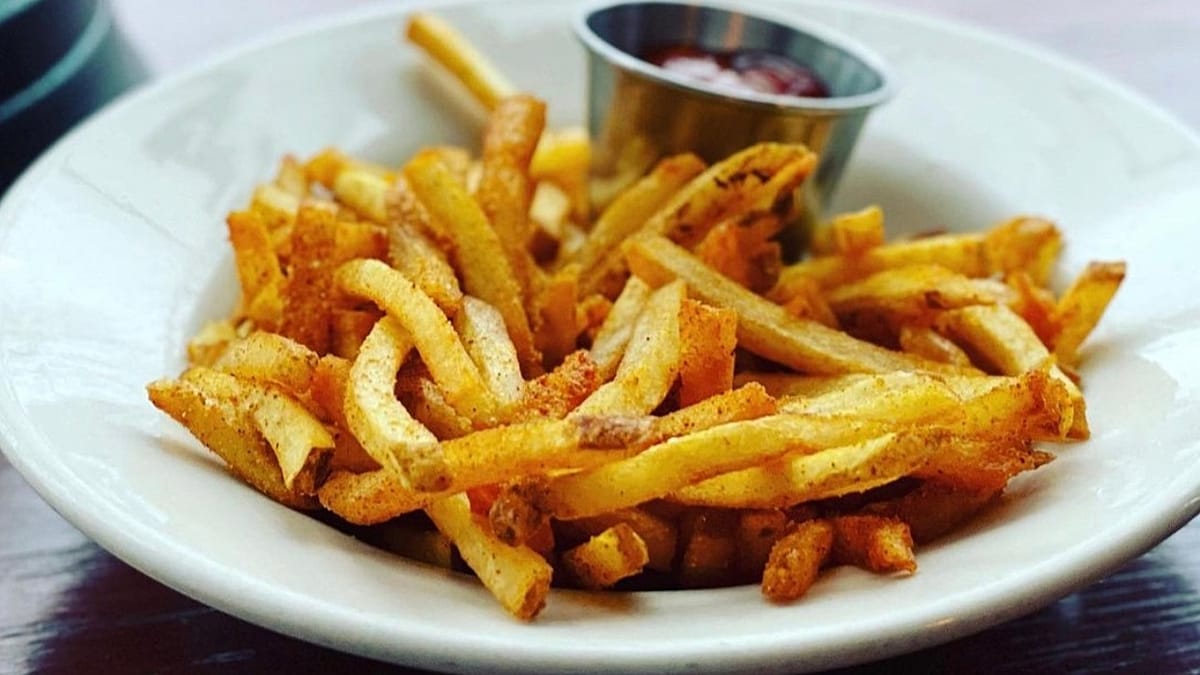
Belgian potato farmers are sounding the alarm: this year's harvest may be too small to keep the country's beloved fries on the menu. After a spring of heavy rain and storms followed by an exceptionally hot, dry summer, the tubers emerging from the ground are far smaller than usual, threatening both domestic fry shops and the nation's position as the world's largest exporter of frozen fries.
In Amay, near the eastern city of Liège, farmer Mathieu Comijn is pulling Bintje potatoes from parched soil that are barely the size of ping-pong balls. “You can see the soil is extremely dry,” Comijn said. “Normally, they should be at least four times this size. At the moment we can't make fries with these potatoes.”
The Comijn family cultivates around 500 hectares of potatoes and has contracts to deliver agreed volumes to processors. To meet those commitments, they plan to draw on stocks from last year's unusually abundant harvest. But that buffer may not be enough to offset the shortfall across the sector.
A national staple under pressure
Belgium's potato-processing industry handles more than six million tonnes annually, and around 90% of the frozen fries it produces are exported to more than 120 markets. The country's dominance in the global frozen fry trade means any disruption here ripples far beyond its borders.
At Brussels' well-known Maison Antoine fry kiosk, owner Pascal Willaert explains that large, elongated potatoes are ideal for making fries. “But right now, with the seasons varying so wildly, it's hard to find the perfect potato for fries,” he said.
The shortage could eventually feed through to consumers. Belgium's national association of fry vendors, representing around 4,500 shops, has warned that tighter supplies could push prices higher. For a country where fries are a cultural institution, that is a sensitive issue.
The problem is not unique to Belgium. Across Europe, extreme weather is becoming more frequent and more disruptive to agriculture. In Greece, for instance, record tourism surges are straining infrastructure, while farmers elsewhere grapple with drought and heat. The potato, a cool-weather crop, is particularly vulnerable to such swings.
Climate scientists point to a broader trend: rising temperatures and erratic precipitation are making harvests less predictable. For Belgium, the world's top frozen fry exporter, the stakes are high. The industry supports thousands of jobs and generates billions in export revenue.
Processors are already adapting, seeking alternative sources or adjusting their product lines. But the immediate outlook is uncertain. If the harvest remains small, consumers may see higher prices at the fry kiosk and in supermarkets, and Belgium's reputation as the fry capital of Europe could take a hit.
For now, farmers like Comijn are hoping for a late-season recovery, but the window is closing. “We need rain soon,” he said, “or the crop will be lost.”