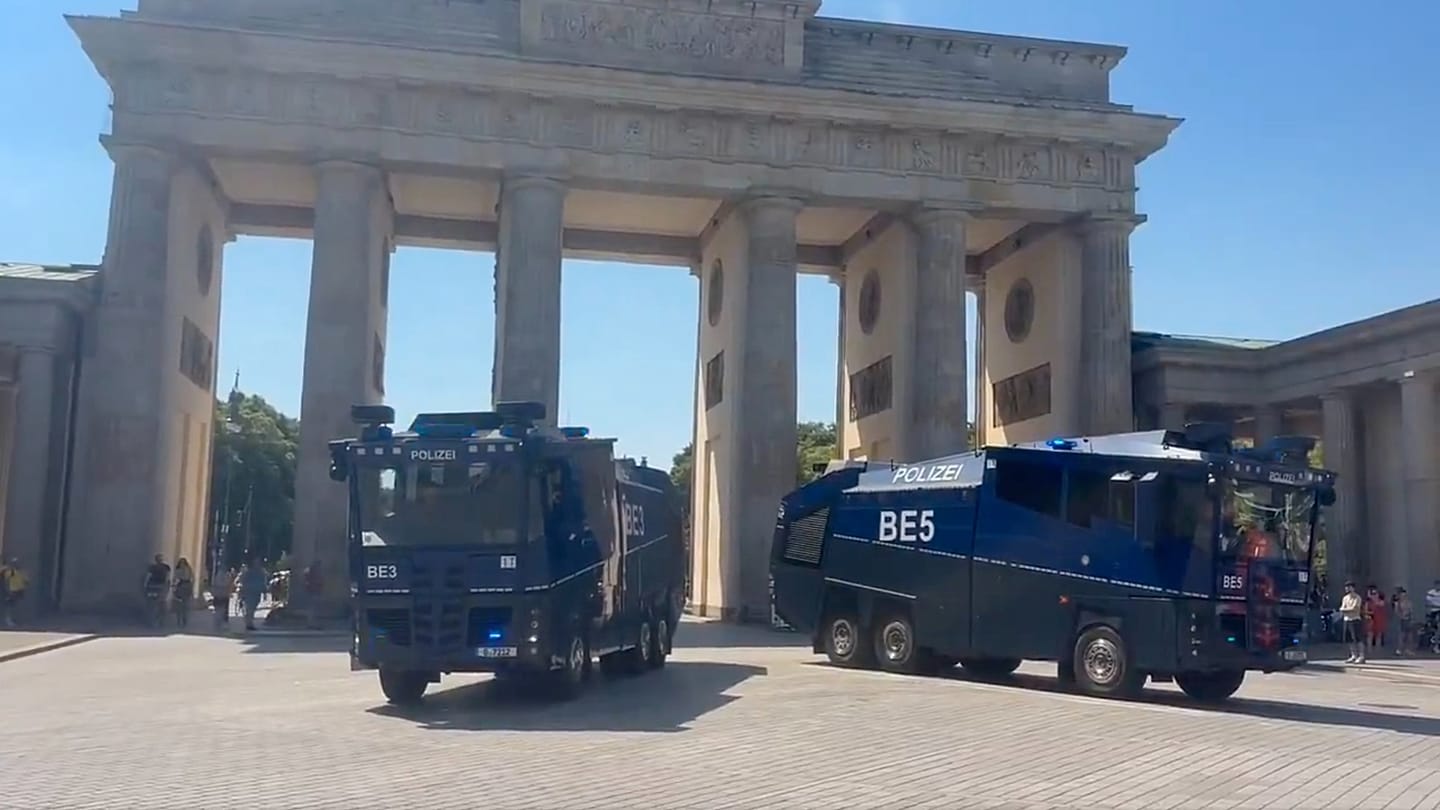
As Germany swelters under its first significant heatwave of the year, Berlin police have taken an unconventional approach to public cooling. On what meteorologists confirmed as the hottest day so far in 2024, two water cannons—normally reserved for dispersing protests—were deployed on city streets to spray cooling mist over residents and visitors.
The move underscores the growing urgency for European cities to adapt to extreme temperatures, a trend that has become more pronounced across the continent. Berlin's decision follows similar initiatives in other European capitals, where authorities are increasingly turning to creative solutions to mitigate the health impacts of heatwaves.
Record Temperatures and Public Health Concerns
Germany's national weather service, the Deutscher Wetterdienst, recorded temperatures exceeding 38°C in parts of Berlin on Wednesday, with the city center reaching 39°C. The heatwave has prompted health warnings across multiple Bundesländer, with hospitals reporting a rise in heat-related emergencies, particularly among the elderly and those with pre-existing conditions.
Berlin police stated that the water cannons were deployed in high-traffic areas such as Alexanderplatz and the Kurfürstendamm, where they provided a temporary respite for pedestrians. 'Our priority is public safety,' a police spokesperson said. 'Given the extreme conditions, we adapted our resources to help citizens cool down.'
The cannons, which can spray up to 1,200 liters of water per minute, were set to a fine mist to avoid discomfort. This marks a rare instance of police equipment being used for non-security purposes, highlighting the severity of the heatwave.
Broader European Context
Berlin's heatwave is part of a larger pattern affecting Europe. Southern Europe has faced prolonged high temperatures, with Spain's meteorological agency AEMET warning of a return to extreme heat across most of the country this weekend. Meanwhile, a recent analysis by the Copernicus Climate Change Service emphasized that Europe must adapt to extreme heat or face deadly consequences, as the continent warms faster than the global average.
The situation in Germany also raises questions about water management. As Europe's water crisis deepens, countries like Germany are grappling with balancing public cooling needs against water conservation. Berlin's water utility has assured that the cannons use non-potable water from the Spree River, minimizing strain on drinking supplies.
Innovative Responses Across Europe
Other European cities have implemented similar measures. Paris has installed misting stations in public parks, while Vienna has opened 'cool rooms' in municipal buildings. In Italy, Milan has extended the hours of public swimming pools and fountains. These efforts reflect a broader recognition that heatwaves are no longer exceptional events but recurring challenges requiring systemic adaptation.
Research has also highlighted the psychological and social impacts of extreme heat. A study cited by European Pulse noted how extreme heat alters brain chemistry and fuels aggression across Europe, a factor that may influence public order and policing strategies during heatwaves.
Berlin's use of water cannons is a practical, if unusual, response to an immediate crisis. But it also serves as a reminder that Europe's infrastructure—from police equipment to urban planning—must evolve to meet the demands of a warming climate. As the Copernicus director recently warned, adaptation is not optional; it is a matter of survival.