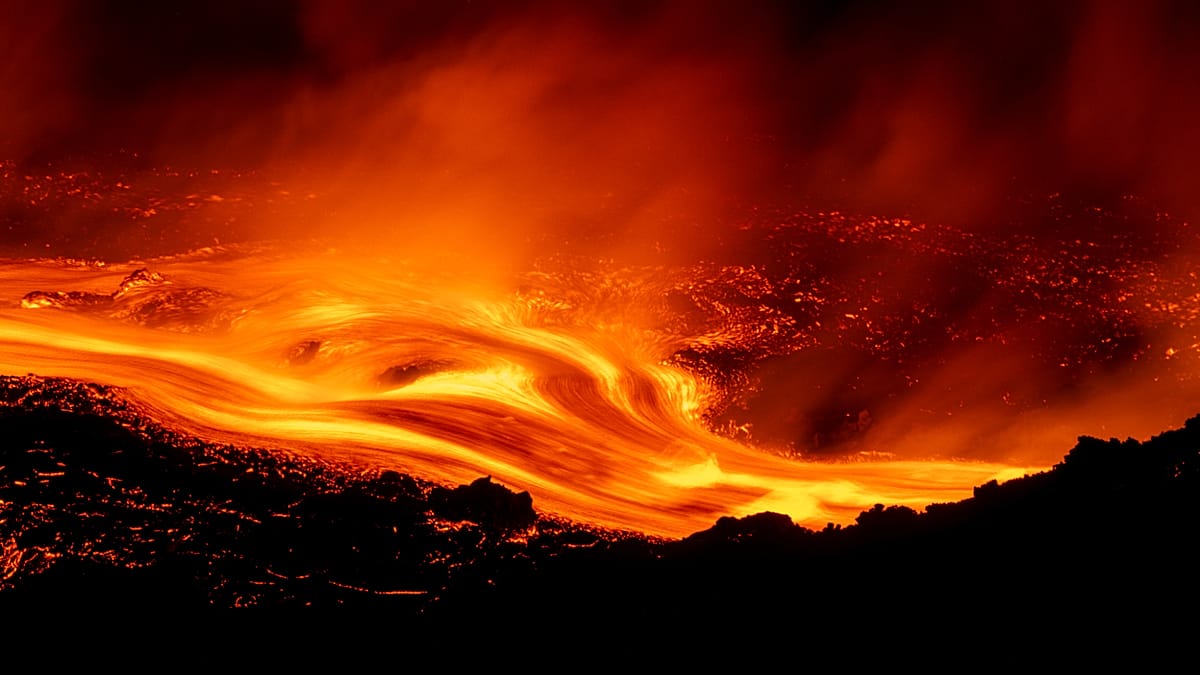
Mount Etna, Europe's most active volcano, is in the midst of an eruption that has now lasted a full week—a duration that volcanologists say has not been observed in decades. The prolonged activity has disrupted air travel in eastern Sicily at the peak of the summer season and drawn thousands of onlookers to the mountain's slopes.
Catania's Vincenzo Bellini Airport has extended its suspension of flights until 08:00 on 14 August, as volcanic ash continues to blanket the runway and surrounding airspace. The decision follows days of intermittent closures that have stranded travellers and forced airlines to reroute or cancel services across the region.
An eruption of unusual persistence
According to Salvo Gambino, director of the Etnean Observatory in Catania, part of the National Institute of Geophysics and Volcanology (INGV), the current eruptive phase is remarkable not for its style but for its endurance. "Similar phenomena were seen in the late 1970s," Gambino told European Pulse. In recent decades, Etna has produced lava fountains and flows on numerous occasions, but "these processes generally lasted for a very limited time, from a few hours to half a day. In this case we have seven days of continuous activity, which is a distinctive feature of the current eruption."
Gambino suggests that the prolonged nature of the eruption may be linked to "magma rising from greater depth and richer in gas." The activity is affecting several sectors of the volcano simultaneously. At the Voragine crater, explosive activity and lava fountains continue, accompanied by a steady emission of ash, while in the Valle del Bove, multiple vents are feeding an expanding lava field. For now, Gambino stresses, the flows do not pose a direct threat to inhabited areas.
The greatest disruption comes from the ash cloud. Southerly winds have pushed it towards Catania and beyond, even reaching as far as Libya. "The biggest problem at the moment is mainly linked to the continuous plume coming from the Voragine," Gambino explained. "This plume is clearly a cloud that is dispersed in the atmosphere and in recent days the wind has been blowing towards the south, which has complicated matters, in the sense that this cloud is being pushed towards the airport area and causing disruption."
Italy's Minister for Civil Protection and Sea Policies, Nello Musumeci, weighed in on the situation on Wednesday, remarking that "it is not the volcano that is out of place, but the airport." Catania's airport sits in close proximity to Etna, making it particularly vulnerable to ashfall during eruptions.
Etna draws unprecedented crowds
Despite—or perhaps because of—the ongoing activity, Etna has become a magnet for visitors. Local guides report chaotic scenes on the mountain's roads and trails, with cars parked haphazardly and people pushing towards viewpoints dangerously close to the action.
Cristian Alessi, a nature guide with EtnaAway, described the situation as overwhelming. "There are too many people and too many cars parked in a chaotic way," he said. To convey the scale of the crowds, Alessi compared them to the busiest tourist spots in the region: "It feels like being in Taormina or Catania on a Saturday."
Alessi has observed visitors venturing onto the rim of the Valle del Bove, "on that very unstable slope," just a short distance from the area affected by volcanic activity. "It is wonderful to see, but it has to be done safely, with guides," he cautioned.
The Alpine Rescue service has also urged caution, having responded to several call-outs on Etna during the current eruption. The combination of rough terrain, volcanic gases, and the risk of sudden explosions makes unauthorised excursions particularly hazardous.
How to visit Etna safely
For those determined to witness the spectacle, Gambino advises sticking to designated viewing areas and avoiding unnecessary risks. "Go to areas where it is possible to watch without venturing too far," he said, and wear appropriate clothing, including hiking boots and long trousers. After sunset, a torch is essential, as the mountain's paths become difficult to navigate in the dark.
The eruption has also reignited discussions about the balance between tourism and safety on Etna, a UNESCO World Heritage site that attracts millions of visitors each year. Local authorities are working to manage the influx, but the sheer number of people poses a challenge.
As the eruption continues, scientists are monitoring the situation closely. The INGV's observatory in Catania is tracking seismic activity, gas emissions, and ground deformation to assess whether the current phase will persist or gradually subside. For now, Etna—affectionately nicknamed "Her Majesty" by locals—shows no signs of calming down.
For those planning to travel to Sicily, it is worth checking the latest flight status and considering alternative arrangements. The suspension of arrivals at Catania airport has already caused significant knock-on effects for holidaymakers and business travellers alike.
While the eruption is a natural spectacle, it also serves as a reminder of the volatile forces that shape the Mediterranean. As Gambino noted, the current event is a rare opportunity for scientists to study Etna's behaviour in real time—and for the rest of us to appreciate the power of nature from a safe distance.