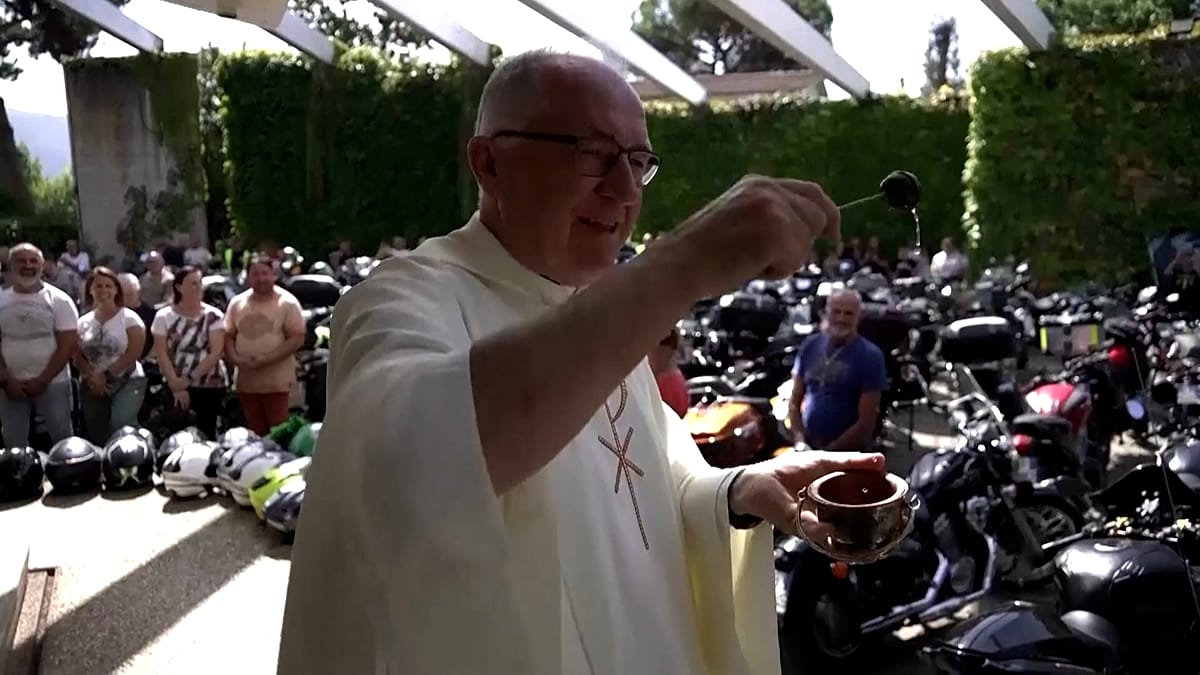
On a sunlit morning at Lake Castel Gandolfo, the quiet papal town south of Rome echoed with the rumble of engines as around 200 motorcyclists converged for the annual blessing of bikes and riders. The event, steeped in tradition and camaraderie, drew participants from across Italy and beyond, turning the lakeside into a sea of leather jackets, polished chrome, and colorful helmets.
Father Tadeusz Rozmus, a Polish-born priest who has become a familiar figure in the Italian biking community, led the ceremony. In his address, he emphasized the values that bind riders together: brotherhood, mutual respect, and a shared commitment to road safety. “Every rider knows the thrill of the open road, but also its dangers,” he said. “We ask for protection not just for ourselves, but for all who share the asphalt.”
A tradition rooted in community
The blessing at Castel Gandolfo has grown steadily over the years, evolving from a small gathering into a significant event on the European motorcycle calendar. For many participants, it is as much about the social bond as it is about the spiritual gesture. “I come every year,” said Marco, a rider from Milan. “It’s a chance to meet old friends, make new ones, and start the season with a clear mind.”
The choice of location is symbolic. Castel Gandolfo, perched on the Alban Hills overlooking Lake Albano, has long been a place of retreat and reflection. The papal palace there, a summer residence of the popes, adds a layer of solemnity to the proceedings. For the bikers, the blessing is a moment of pause before the rush of summer rides and long-distance journeys.
Father Rozmus, who has been involved with the motorcycle community for over a decade, stressed that the event is open to all, regardless of faith or background. “This is not about conversion,” he said. “It is about acknowledging that we are all vulnerable on the road, and that we have a responsibility to one another.”
The ceremony included a brief prayer, the sprinkling of holy water over the assembled motorcycles, and a moment of silence for riders who have lost their lives in accidents. Many participants wore black armbands in memory of fallen friends, a poignant reminder of the risks inherent in the sport.
Road safety remains a pressing concern across Europe, where motorcycle fatalities account for a disproportionate share of traffic deaths. According to the European Transport Safety Council, riders are about 20 times more likely to die in a crash than car occupants per kilometer traveled. Initiatives like the blessing aim to foster a culture of caution and mutual care among riders.
The event also highlighted the growing popularity of motorcycle tourism in Italy, a country renowned for its scenic routes and winding mountain passes. From the Amalfi Coast to the Dolomites, riders flock to the peninsula each year, contributing to local economies and celebrating the freedom of two wheels. For those seeking inspiration, Europe's most winding scenic roads offer a guide to the continent's most thrilling drives.
As the ceremony concluded, the bikers revved their engines in a collective salute before setting off on a procession around the lake. The sight of hundreds of motorcycles moving in unison was a testament to the spirit of the event—a blend of individuality and solidarity that defines the riding community.
For Father Rozmus, the blessing is more than a ritual; it is a call to action. “We ask for safer roads, but we also have to be the change,” he said. “Respect for other road users, adherence to speed limits, and never riding under the influence—these are the real blessings we can give ourselves and others.”
The gathering at Castel Gandolfo is part of a broader trend of motorcycle blessings across Europe, from Spain to Poland, each with its own local flavor. While the settings differ, the message remains the same: ride with care, ride with heart, and look out for one another.
As the last bikes disappeared into the hills, the lake returned to its usual tranquility. But for those who took part, the memory of the day—and the promise of safer roads—will linger long after the engines have cooled.