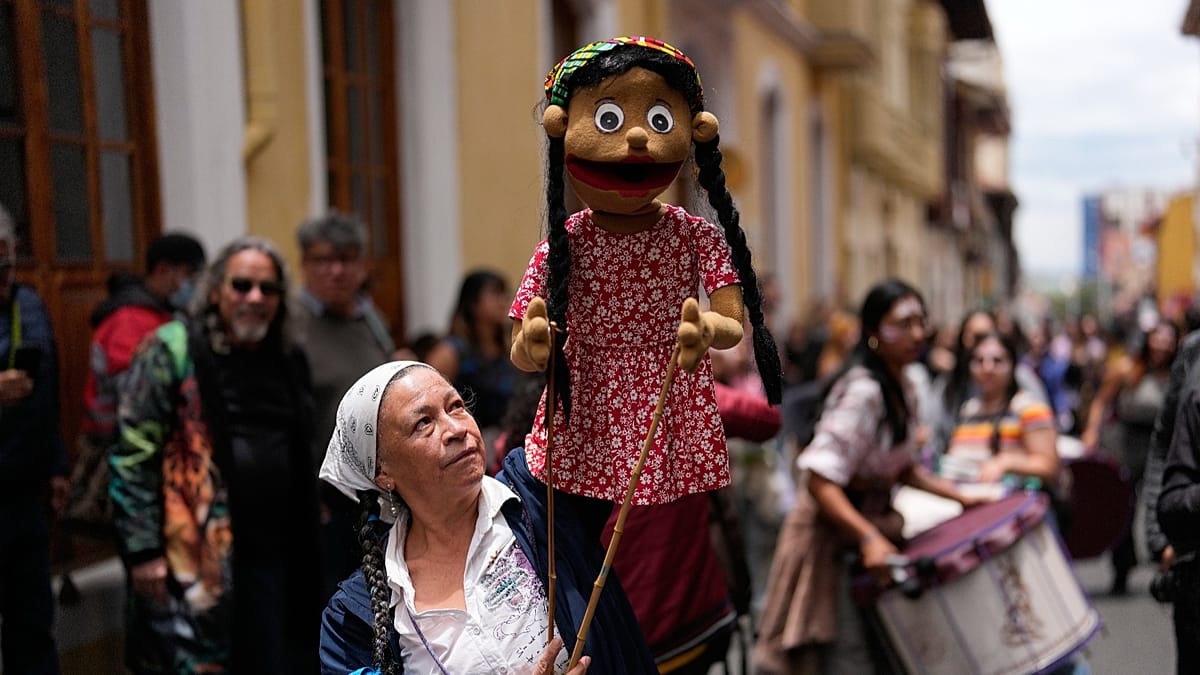
Hundreds of artists, musicians, and performing arts students filled the streets of Bogotá on Wednesday, turning a protest against proposed cultural budget cuts into a vibrant, defiant spectacle. With drums, choreographed routines, and oversized puppets, the demonstrators made their case not just with slogans but with the very art they fear is under threat.
The protest targeted the Colombian government's plan to reduce spending on culture and to suspend several national arts grants. For many in the crowd, the cuts are not an abstract policy debate but a direct threat to their livelihoods and to the country's creative future.
A sector already stretched thin
Colombia's cultural sector has long operated on modest public support, and the proposed reductions come at a time when many artists are still recovering from the economic shocks of the pandemic. The suspension of grants, in particular, has alarmed students and emerging creators who rely on state funding to complete projects or simply to make ends meet.
"We are not asking for luxury; we are asking for the basic recognition that culture is a right, not a privilege," said one demonstrator, a theatre student from the National University of Colombia, who spoke on condition of anonymity. "When you cut the arts, you cut the voice of the people."
The protest route wound through the city's historic centre, passing landmarks such as the Teatro Colón and the Museo del Oro. At several points, performers broke into impromptu shows, turning the march into a mobile festival that drew curious onlookers and honks of support from passing cars.
Puppets and dance as political language
The choice of puppets and dance was deliberate. Organisers said they wanted to show that culture is not a decorative extra but a fundamental part of social life and political expression. "Art is how we process what is happening in our country," said Carolina Méndez, a Bogotá-based choreographer who helped coordinate the event. "To cut it is to silence us."
The demonstration comes amid broader debates across Latin America about the role of public funding for the arts. In Colombia, the government has argued that budget constraints require difficult choices, but critics counter that culture is often the first casualty when fiscal pressure mounts.
Similar tensions have played out in Europe, where austerity measures have repeatedly squeezed cultural institutions. In recent years, protests in countries like Italy and Spain have highlighted the vulnerability of the sector, even as some governments have moved to protect it. The Bogotá protest echoes those concerns, underscoring a shared challenge for artists worldwide.
For now, the Colombian government has not reversed its position, but the visibility of Wednesday's march may add pressure. Organisers have promised further actions if the cuts are approved, including a possible national day of cultural strikes.
As the sun set over the capital, the last of the puppets were packed away, but the message lingered: culture is not a line item to be trimmed—it is the fabric of a society.