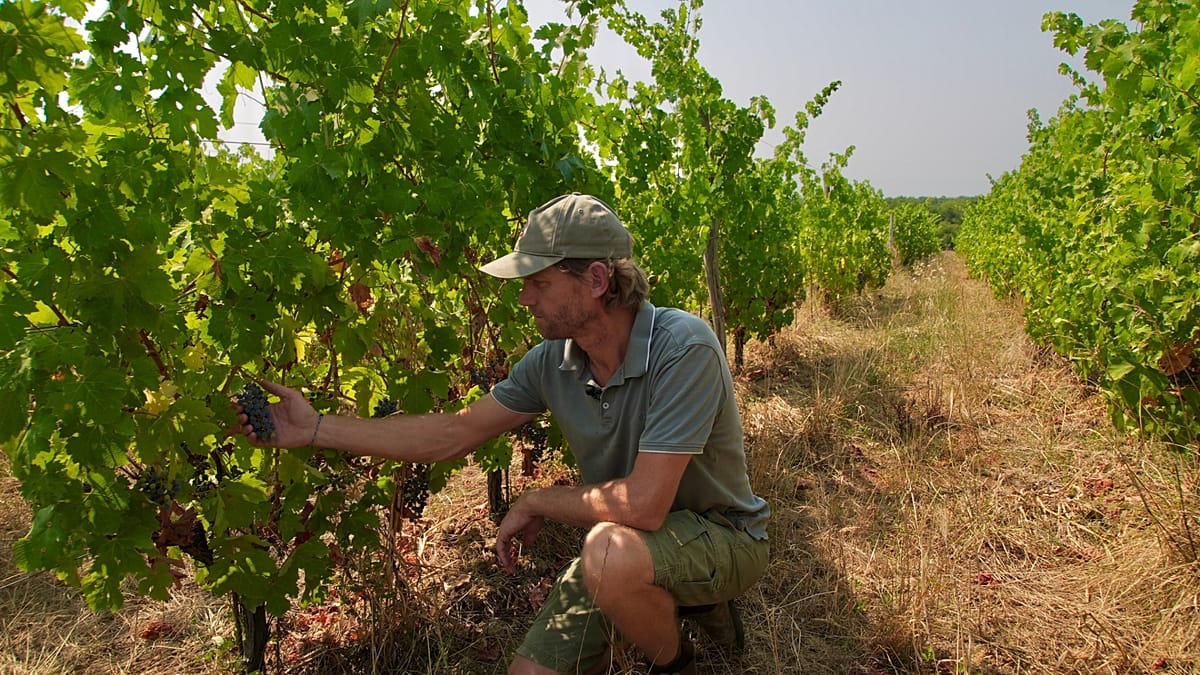
For nearly a week, a massive wildfire has been tearing through the Gironde department in southwestern France, consuming 42,000 hectares of forest and forcing 220,000 people to flee their homes. While the flames have so far spared the vineyards themselves, the smoke drifting across the region is raising serious concerns among winegrowers about the quality of this year's harvest.
Grapes are currently in their veraison phase, the critical stage when they change colour and begin to accumulate sugars and aromas. If smoke particles settle on the berries, they can impart a 'smoke taint' that ruins the wine's fruity character. Although some wines naturally carry smoky notes, an overpowering ashy flavour can force producers to downgrade their entire vintage or sell the grapes in bulk to distillers.
“If we’d been closer to the grape harvest, which is due to start in three weeks, it could have been far more serious,” Séverine Bonnie of château Malartic-Lagravière, located just 20 kilometres from the flames, told Le Figaro. Édouard Moueix, who owns several châteaux in the region, added that the timing offers some hope: “In Bordeaux, not only are we still at the veraison stage, but we can also hope for thunderstorms to wash away any berries that may have been affected.”
An industry already under pressure
The wildfires arrive at a particularly fragile moment for Bordeaux's wine sector. Consumption of the region's legendary reds has been falling for years as younger drinkers turn to craft beer, spirits, or wines from emerging producers in Australia, Chile, and South Africa. The imposition of tariffs by the Trump administration added further strain, squeezing margins for exporters already grappling with rising inflation and shifting tastes.
“The wine business has been in crisis for several years now, and it’s worsening with the geopolitical problems, the now widespread problems of inflation and the fact that wine is falling out of fashion among younger people,” said Edouard Le Grix de la Salle, owner of the Grand Verdus wine estate. His property lies about 35 kilometres from the fires, on the opposite side of the Garonne River. “Tourism was really the only dynamic part of the business that was still growing, both for us and, more generally, for Bordeaux wines. And now this comes along as a brake.”
The French government's appeal for people to avoid the region has caused particular consternation among winemakers who rely on wine tourism as a lifeline. “It’s incredible that they’ve said such a thing, especially when wine tourism is becoming more and more important,” Le Grix de la Salle said. “How did they not think about protecting that sector? And the cultural sector, too. There’s so much to visit in Bordeaux. There are so many museums, there are châteaux. It’s unbelievable.”
The Gironde is a major hub for defence and aerospace industries, hosting facilities of Airbus, Dassault, and Thales. The local chamber of commerce estimates that 39,000 businesses have been affected by the fires and evacuations. Patrick Seguin, the chamber's president, described the situation as a double catastrophe: “It’s a physical apocalypse when you see all these sites where there’s nothing left aside from burnt homes and forests, and then there’s the economic apocalypse.”
The fires have also emptied prime tourist spots along the Atlantic coast, including the oyster-rich Arcachon Bay and the historic city of Bordeaux, a UNESCO World Heritage site. The region's soft-sand beaches, pine forests, and winemaking châteaux usually draw millions of visitors each summer. Now, many of those attractions lie within evacuation zones or are shrouded in toxic smoke.
European coordination on wildfire response has been activated, with the EU helping to coordinate aid for France and Spain as a heatwave threatens to spread the blazes further. The fires in Gironde are part of a broader pattern of increasingly severe wildfires across the continent, prompting experts to warn about the rise of so-called sixth-generation wildfires that are more intense and harder to control.
For Bordeaux's winegrowers, the immediate concern is whether the grapes can be saved. If thunderstorms arrive as hoped, they could wash away the smoke residue. But the reputational damage may already be done. Even if the harvest proves clean, the image of a famous wine region engulfed in flames will linger in the minds of consumers and tourists alike.