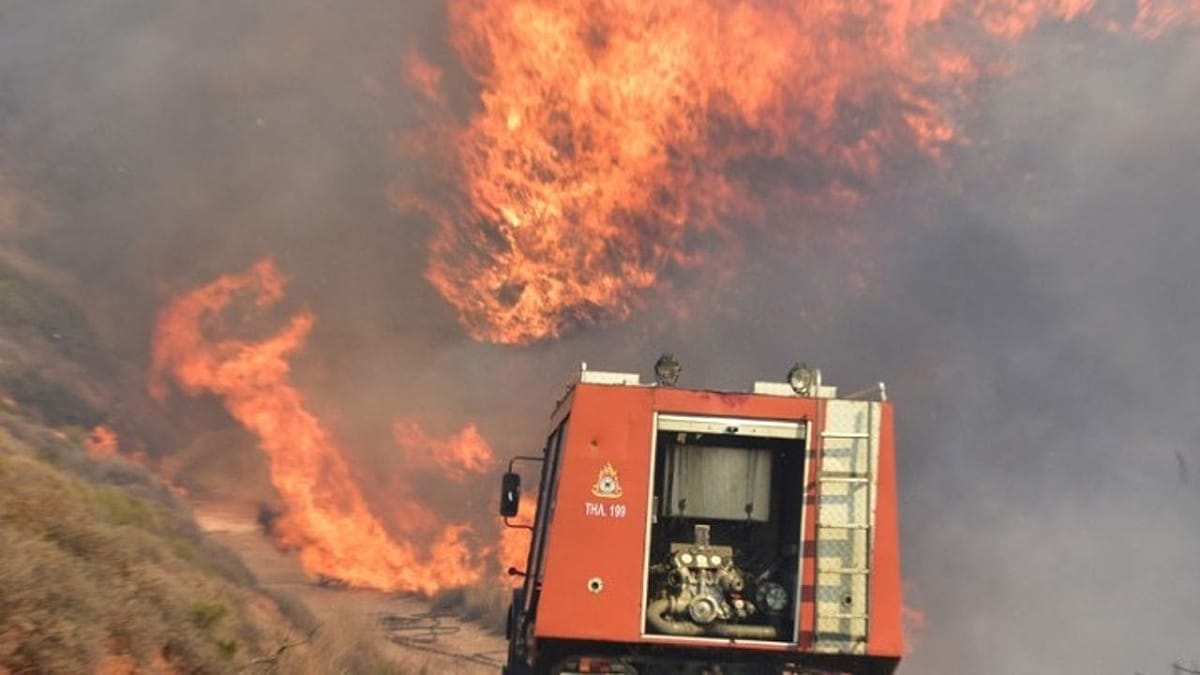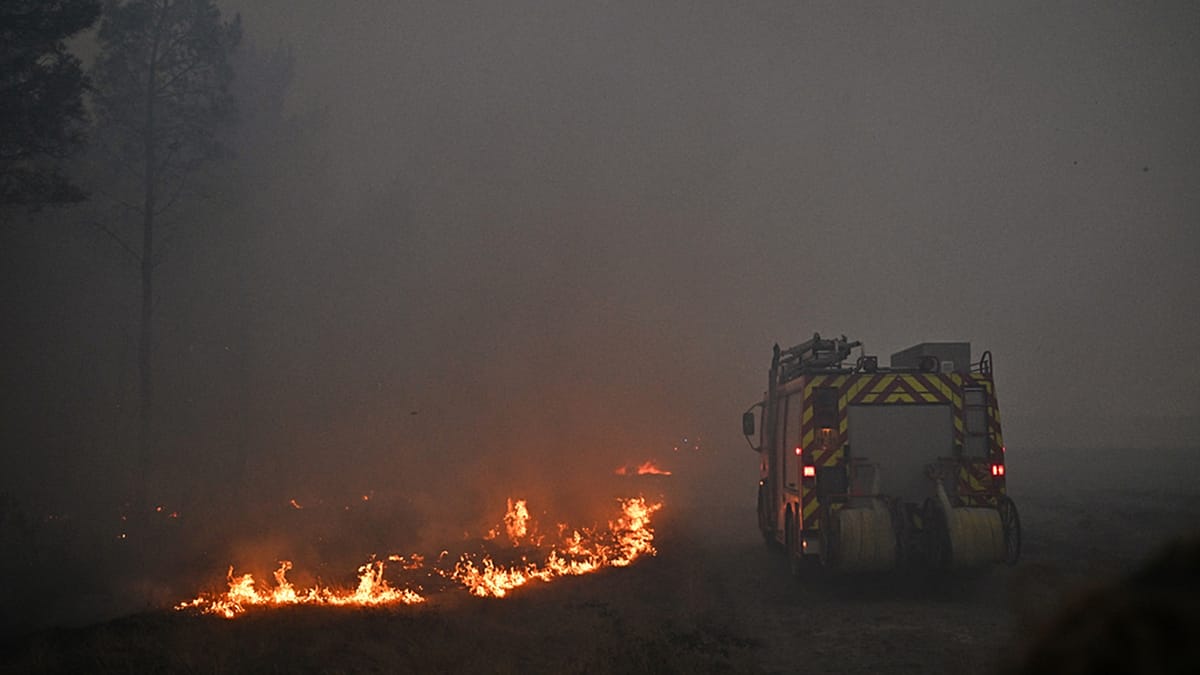
Over the past week, wildfires in France and Spain have burned more than 115,000 hectares and forced over 320,000 people to evacuate. French authorities acknowledge that extinguishing these blazes could take months. These fires are the latest examples of what scientists and operational teams have, since the late 2010s, termed “sixth-generation wildfires” — a phenomenon first identified after the deadly Pedrógão Grande fires in Portugal in 2017 and the 2018 fires in Greece, each of which killed more than 100 people.
Domingos Xavier Viegas, a professor at the University of Coimbra’s Faculty of Science and Technology and a specialist in rural fires, explains that climate change is driving this shift. Higher temperatures, reduced rainfall, and lower humidity dry out soil and vegetation, creating conditions that favour ignition and allow fires to spread across larger areas. The result is a new pattern of fire behaviour that is not confined to southern Europe: in recent weeks, Germany, Switzerland, and Norway have also struggled with wildfires, underscoring the continent-wide reach of the problem.
What makes a sixth-generation wildfire different?
The destructive power of these megafires comes from the energy they release — often exceeding ten megawatts per metre. At that intensity, flames can reach ten metres in height, and direct firefighting becomes ineffective. Xavier Viegas notes that some fires now reach intensities three to six times higher, producing flames up to 60 metres long. Such thermal loads make the fires self-feeding: they no longer merely respond to local weather but actively alter it, generating dense smoke clouds that carry enormous heat, change wind direction, produce lightning, and hurl embers kilometres ahead, igniting new blazes.
This behaviour has been observed not only in Europe but also in Chile (2017 and 2024), Australia (2019–20), the west coast of the United States (2020), and Canada (2023). In Europe, the pattern is becoming more frequent and less seasonal. The Pedrógão Grande fires, for instance, began in June and again in October, outside the traditional summer window. Fires are also appearing in regions where they were historically rare, such as Portugal’s Alentejo and coastal areas, and across central and northern Europe.
Xavier Viegas stresses that this is a global phenomenon requiring an integrated approach to prevention. Even tourists need to be aware, he says, pointing to the recent fire in Almería, southeastern Spain, which killed 14 people, 12 of them foreign nationals. “They were not familiar with that reality,” he notes.
How can these fires be fought?
Ground crews and even the heaviest aircraft cannot stop the front of a sixth-generation wildfire. Instead, Xavier Viegas recommends attacking the fire from the rear or the flanks. Firebreaks can be created using natural features such as rivers or areas without vegetation, or by cutting vegetation with tracked machinery and widening the strip with a backfire — a technique only authorities can safely execute. However, strong winds can render such efforts futile, as ember projections may jump the barrier. “Sometimes an ember projection jumps that barrier and, as it were, all the effort goes down the drain,” he warns.
In such circumstances, pragmatism is essential. “In general, people expect firefighters to put out any fire, wherever it may be, and they do not realise that there is a part of the fire that cannot be suppressed,” Xavier Viegas says. “We should not want firefighters to risk their lives, not least because it is a hopeless fight.”
These fires are especially devastating in forests, where combustible material like vegetation and trees fuels the flames. As the continent faces a hotter, drier future, Europe’s unpreparedness is becoming increasingly evident. Some countries are exploring novel solutions, such as using beavers as allies in wildfire prevention, while Spain has created a scientific panel to guide climate policy in response to record blazes. The economic toll is also mounting: Spain’s wildfire season alone costs up to €3.275 billion in firefighting efforts.
The rise of sixth-generation wildfires demands a fundamental rethinking of fire management across Europe. As Xavier Viegas concludes, the fight against these megafires is not one that can be won with traditional tools alone — it requires a shift in strategy, public awareness, and a recognition that some fires are simply beyond our ability to suppress.