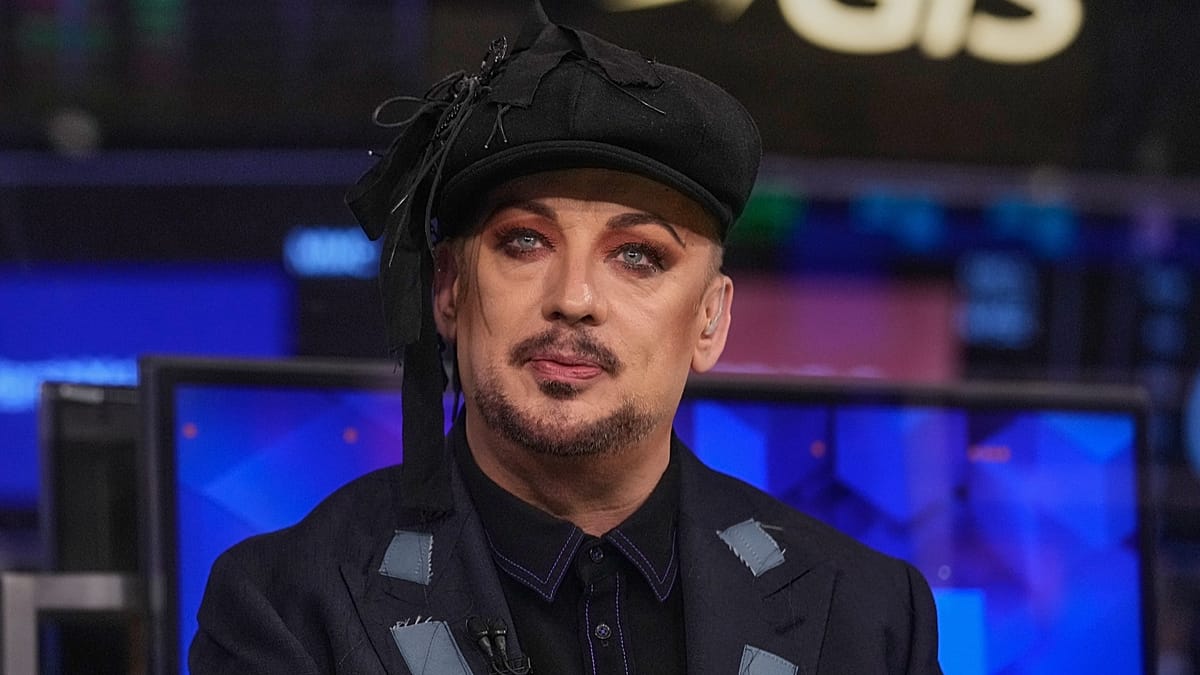
British singer Boy George, best known as the frontman of Culture Club, has ignited a fierce online backlash after releasing a song that denies a genocide is taking place in Gaza. The track, titled 'Od Nirkod (We Will Dance Again)', was posted on his X account with the caption 'Shalom' and has not been made available on streaming platforms.
The song's title references the 7 October 2023 Hamas attack on the Supernova Sukkot Gathering festival, which killed 378 people and triggered Israel's military campaign in Gaza. The lyrics include lines such as: 'You say genocide / I say war / When you're attacked / That's what the army is for / Does it get ugly? / You bet it does / When I know you want to kill / Every last one of us...'
This denial directly contradicts findings from Amnesty International, Human Rights Watch, and the United Nations. A recent report by a UN independent commission concluded that 'Israeli authorities and security forces have deliberately targeted Palestinian children, resulting in genocide and atrocity crimes in the Gaza Strip and war crimes in the West Bank.' The commission also noted that the scale and systematic nature of Israeli operations have led to unprecedented death, injury, and trauma among Palestinian children.
The song also includes lyrics that accuse critics of selective memory: 'Young girls raped against trees / Murdered brutally / You condemn the Jews / With selective memory / Musicians holding flags / Mouthing like sheep / Propaganda fuelled by the internet / Feels so weak.'
Online fury and personal history
The reaction on social media has been overwhelmingly negative. One X user wrote: 'Don't you know over 20,000 children have been slaughtered, ethnically cleansed a population into a concentration camp, destroyed over 80% of the infrastructure, destroyed and ethnically cleansed thousands in the West Bank, shame on you.' Another called the song 'depraved repellant Zionist propaganda designed to justify the slaughter of over 80,000 Palestinians.'
Critics have also pointed to Boy George's 2007 conviction for falsely imprisoning a male escort, handcuffing him to a wall, and beating him with a metal chain. One commenter wrote: 'He has sold his soul, so disappointed. His Irish freedom fighting relatives would be horrified.'
Boy George, who was raised in an Irish Catholic household and is not Jewish, has been outspoken in his support for Israel. At a Eurovision event in London earlier this year, he said: 'I have many, many Jewish friends that I've had since I was 15 or 16 years old. Are people asking me as a principled human being to turn my back on my Jewish friends? It's not going to happen, it's never going to happen.'
The controversy comes as the EU remains deadlocked on sanctions for Israeli settlements, highlighting the broader political divisions within Europe over the conflict. Meanwhile, the singer's stance has drawn comparisons to other cultural figures who have faced backlash for political statements, though few have provoked such visceral reactions.
Boy George's decision to release the song on X rather than through traditional streaming platforms suggests a deliberate attempt to bypass editorial oversight, but it has not shielded him from widespread condemnation. The track's reggae style and its message have been described by many as 'nauseating' and 'depraved,' with some calling for a boycott of his music.
As the debate over the conflict in Gaza continues to polarise public opinion across Europe, this episode underscores the deep emotional and political stakes involved. For now, Boy George remains defiant, but the backlash shows no signs of abating.