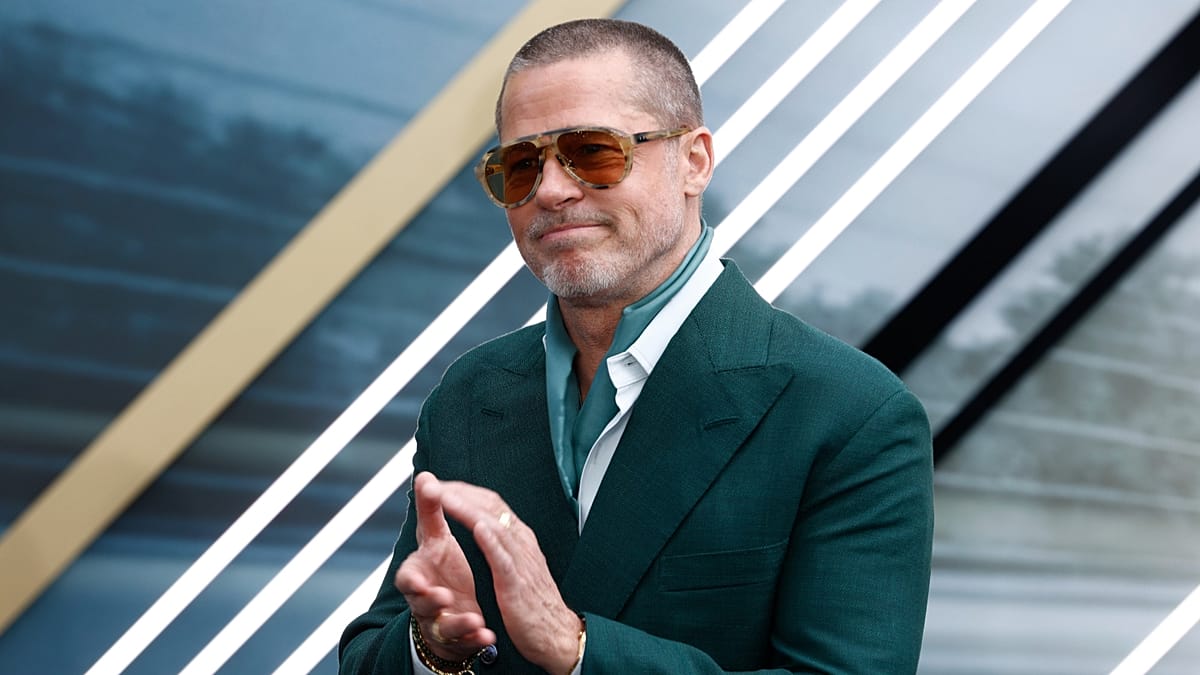
Brad Pitt has weighed in on the contentious debate over artificial intelligence in the arts, arguing that AI could be a crucial tool for the film industry, particularly for mid-budget productions. In an interview with Esquire, the Oscar-winning actor acknowledged the widespread resistance to AI but insisted that, when used as a tool, it could help films in the $40–90 million budget range get off the ground.
“There’s a lot of pushback against AI,” Pitt said. “But it’s going to be the very thing that, if used as a tool, is going to help these mid-budget films get made.” He was referring to the high costs of visual effects, which often force studios to favour big-budget blockbusters over smaller, riskier projects.
A cautious embrace
Pitt, however, drew a clear line when it comes to AI replacing actors. “Well, it depends on who’s creating it, you know? Who’s behind it, who’s telling the story,” he said. “Who’s saying, ‘I want to see this emotion from him,’ and then being able to mine through whatever AI provides and going, ‘More in this direction,’ and tailoring it in that way. So they could, but the final product might not be my choices and what I found and discovered in the thing.”
The actor also revealed that he has been scanned for digital use for the past two decades, but has always insisted on owning and destroying those scans. “I’ve been scanned for the last 20 years, and I’ve always put in my contract: ‘I own them and I destroy them.’ I should have kept them!” he said. “All this time I’ve always had them destroyed, because I’m paranoid Ozark boy.”
Pitt’s comments come as Hollywood grapples with the existential questions AI poses for creatives. The technology has divided the industry, with directors like Martin Scorsese and George Lucas facing backlash for their endorsement, while Guillermo del Toro remains firmly opposed. Pitt described the growing use of AI in filmmaking as “a very interesting experiment.”
He also touched on generative AI in music, saying he recently heard an AI-generated song that was “pretty damn good,” but noted its limitations. “It had a repetitive nature to it. It’s not going to be the same as hearing her voice - a woman’s voice, a person’s voice.”
Personal struggles
Elsewhere in the interview, Pitt opened up about his mental health following his divorce from Angelina Jolie and the family turmoil that has seen several of his children change their surnames. He said that while he is generally a positive person, there have been dark moments.
“I’ve never been suicidal except for one little period. And in that one little period, I just thought – I just couldn’t – just didn’t see a way out,” Pitt shared. “The pain was so oppressive that – I wasn’t going to act on this, but I could feel – I could feel the cold steel of the bullet in my head, and it felt like relief.”
He added: “And I thought, ‘Oh, okay, now I understand.’ I understand suicide, in the sense that it’s just relief. It’s just looking for relief from the pain. But I also think we have incredible survival instincts. And for me, that immediately kicked in, but it was just...”
When asked what sparked those feelings, Pitt replied: “Family stuff.” He added, “We could leave it at that.”
Pitt and Jolie share six children. Their daughter Shiloh, 20, was the first to legally drop “Pitt” from her name in 2024, now going by Shiloh Jolie. Reports have indicated that Zahara, 21, and Maddox, 24, have also filed to remove the surname. The family rift is believed to stem from a 2016 altercation on a private flight, after which Jolie filed for divorce.
As the debate over AI in the arts continues across Europe and beyond, Pitt’s stance offers a nuanced perspective: embrace the technology where it can help, but guard against its potential to undermine human creativity. His comments resonate with ongoing discussions in the EU about regulating AI, where the bloc has been working on comprehensive rules to balance innovation with fundamental rights.