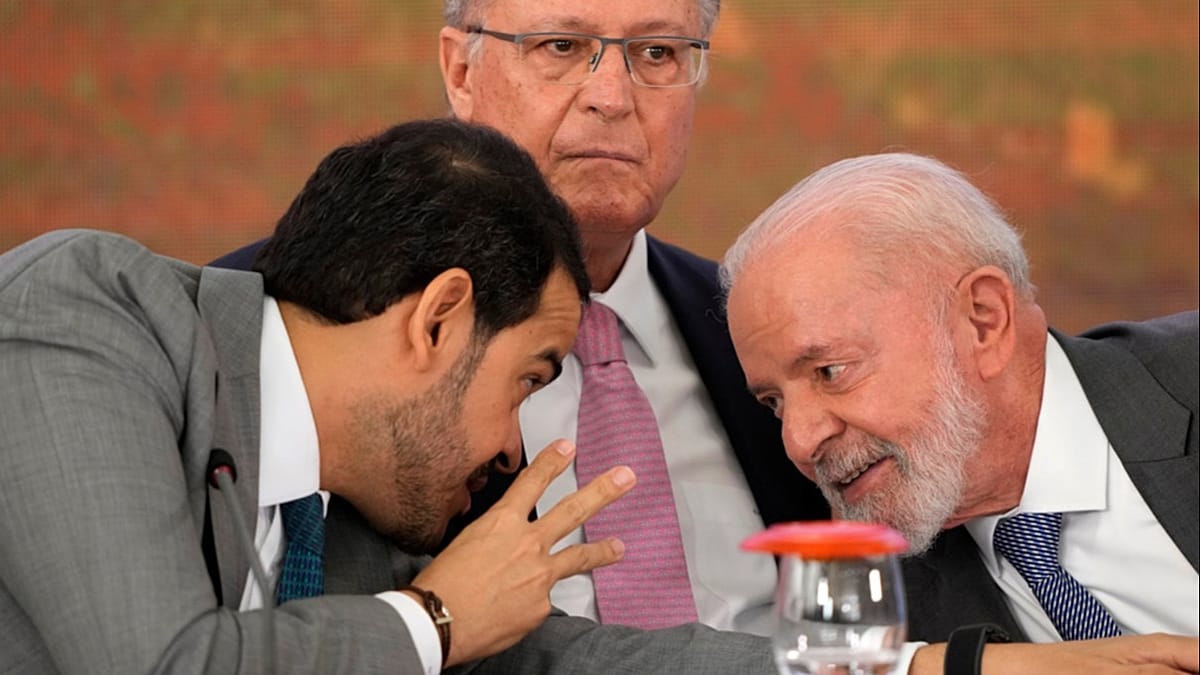
Brazil's attorney general, Jorge Messias, has formally requested a police investigation into allegations that the administration of US President Donald Trump planned to use government funds to promote a far-right agenda in Brazil. The request, made public on Thursday, follows a report in the British newspaper The Guardian claiming that Washington intended to award $1 million (€888,800) to civil society groups opposed to Brazil's Supreme Court.
In a post on X, Messias described the report as “a serious red flag regarding Brazilian sovereignty” and insisted that any attempt to meddle in the country's institutions “cannot be tolerated.” His office issued a separate statement noting that the allegations were “particularly serious, given the ongoing Brazilian electoral process and recent episodes of external pressure on the country's institutions.”
The development comes just three days before a fiercely contested presidential election that pits incumbent leftist Luiz Inácio Lula da Silva against Flavio Bolsonaro, a right-wing senator and the son of former President Jair Bolsonaro. Lula has made national sovereignty a central theme of his campaign, warning against interference by Trump, who has backed several right-wing candidates in recent Latin American elections.
The alleged US funding plan would target groups that oppose Brazil's Supreme Court, which has been a key actor in the country's recent political battles. The court, led by Justice Alexandre de Moraes, oversaw the trial that resulted in Jair Bolsonaro's conviction and 27-year prison sentence for attempting to stage a coup after his 2022 election defeat. Trump, a close ally of the elder Bolsonaro, has repeatedly denounced the trial as a “witch hunt” and previously imposed sanctions on Moraes.
Flavio Bolsonaro has sought to distance himself from his father's legal troubles while embracing Trump's endorsement. He has promised to pardon his father if elected, a move that would likely deepen the country's political divide. Lula, meanwhile, has framed the election as a choice between democracy and authoritarianism, pointing to the alleged foreign interference as evidence of the stakes.
The investigation adds another layer of tension to an already volatile electoral environment. Brazil's Supreme Court has been a frequent target of far-right criticism, and the Guardian report suggests that foreign actors may be seeking to exploit that discontent. The attorney general's office said it would work with federal police to determine whether any crimes were committed, including violations of campaign finance laws or laws against foreign interference.
This is not the first time that allegations of external meddling have surfaced in Brazil. In recent years, there have been accusations of disinformation campaigns and covert funding aimed at influencing elections across the region. The European Union has also grappled with similar concerns, as seen in Finland's investigation into break-ins at MPs' homes, which its president linked to threats against democracy.
The timing of the probe is significant, as it could influence voter perceptions in the final days of the campaign. Lula's supporters are likely to seize on the allegations as proof of foreign interference, while Bolsonaro's camp may dismiss them as a political maneuver. The attorney general's office has stressed that the investigation is independent and based solely on the evidence presented in the Guardian report.
Analysts note that the outcome of Brazil's election will have far-reaching implications for the region and beyond. A victory for Lula would consolidate leftist governance in South America, while a win for Bolsonaro would mark a return to the conservative populism that defined his father's tenure. The alleged US funding plan, if proven, could also strain relations between Brasília and Washington, adding to the already tense diplomatic climate.
For now, the investigation is in its early stages, and no formal charges have been filed. The federal police will need to gather evidence and determine whether any Brazilian laws were broken. The case also raises broader questions about the limits of foreign influence in sovereign democracies, a topic that resonates across Europe, where concerns about external interference have grown in recent years.
As Brazilians prepare to cast their votes, the spotlight remains on the integrity of the electoral process. The attorney general's swift response to the allegations signals that Brazilian institutions are on high alert. Whether the investigation yields concrete findings remains to be seen, but its very existence underscores the fragility of democratic norms in an era of global disinformation.