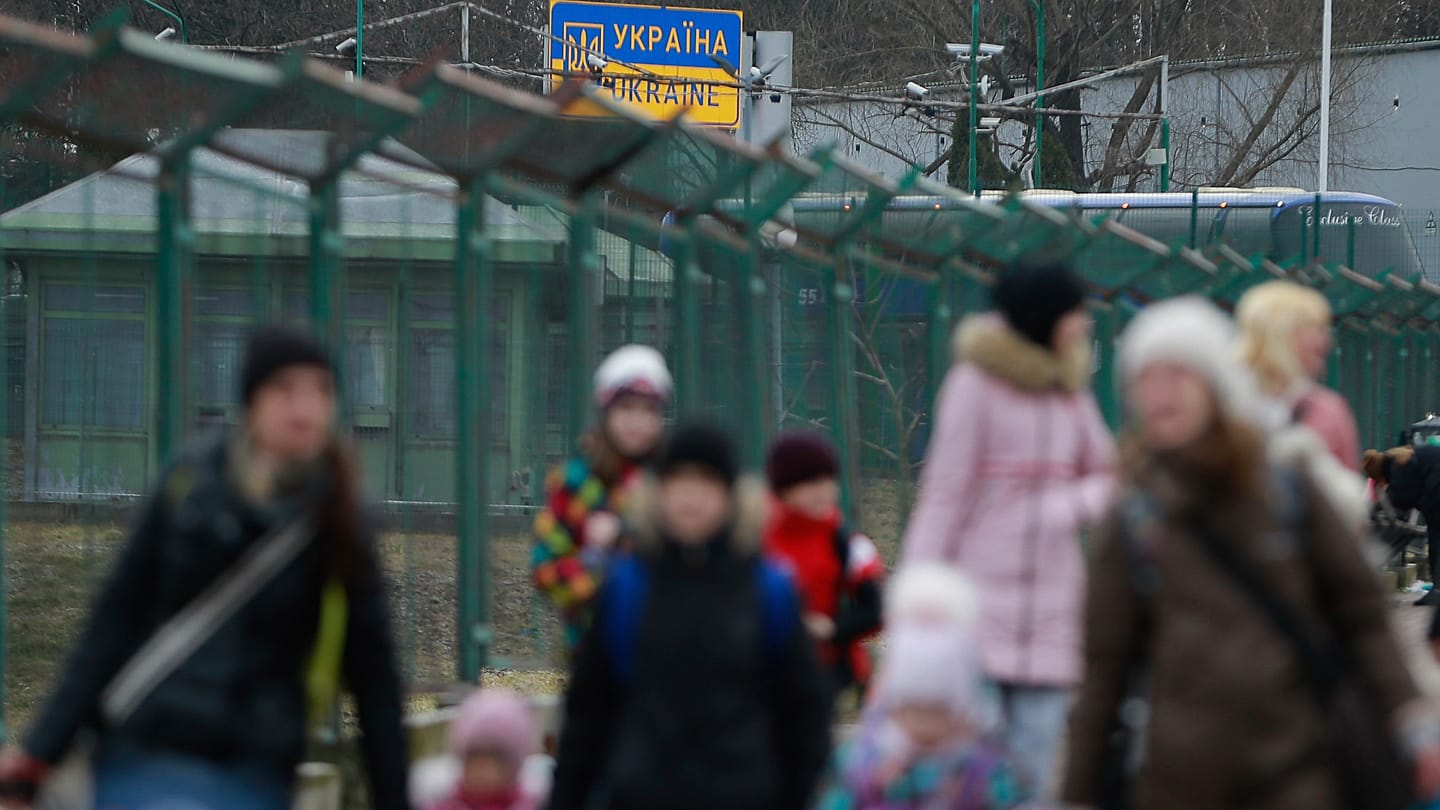
The European Commission is preparing to tighten the rules of its Temporary Protection Directive, proposing to exclude Ukrainian men of military age—those between 18 and 60—who entered the European Union illegally. The measure, expected to be formally tabled in the coming weeks, responds to growing concerns that some draft-age Ukrainian men have been exploiting the bloc's asylum framework to avoid conscription back home.
Under Ukraine's martial law, which has been in force since Russia's full-scale invasion in February 2022, men in that age bracket are generally prohibited from leaving the country. Yet thousands have crossed into EU member states through irregular routes, often via Moldova or the Balkans, and subsequently received temporary protection—a status that grants residency, work rights, and access to healthcare and education across the bloc.
According to EU diplomats familiar with the proposal, the new rules would require national authorities to verify the age and legal entry status of Ukrainian applicants. Those found to have entered illegally and who are of military age would be denied protection and could face return procedures. The Commission argues that the change is necessary to preserve the integrity of the temporary protection scheme, which was activated for the first time in 2022 to handle the mass displacement of Ukrainian civilians.
Legal and Political Tightrope
The move places Brussels on a delicate legal and political tightrope. On one hand, the EU has a humanitarian obligation to protect those fleeing war. On the other, it must respect Ukraine's sovereign right to enforce its own conscription laws—a point Ukrainian officials have repeatedly raised in private and public discussions with EU counterparts. Kyiv has long complained that some men of fighting age are using EU protection to shirk military service, weakening Ukraine's defence efforts.
“This is not about punishing individuals but about aligning our policies with the realities of a country at war,” a senior Commission official told European Pulse, speaking on condition of anonymity. “Ukraine needs its soldiers, and we cannot be seen as undermining that.”
The proposal has already drawn criticism from human rights groups, who argue that it could force men back into a war zone against their will. Amnesty International's EU office warned that the plan “risks creating a two-tier protection system” and could lead to arbitrary returns. Some member states, particularly those on the eastern flank like Poland and the Baltic states, have expressed caution, fearing that the measure could strain bilateral relations with Kyiv.
Poland, which hosts the largest number of Ukrainian refugees in the EU—over 950,000 as of early 2025—has been a key advocate for stricter rules. Warsaw has argued that the current system creates perverse incentives and has already begun conducting its own checks on new arrivals. The Commission's proposal would harmonise these practices across the bloc, preventing a patchwork of national approaches.
The timing of the announcement is notable. It comes as Europe's top military powers convene in Berlin ahead of a NATO summit focused on Ukraine, where defence ministers are expected to discuss further arms deliveries and training missions. The EU's decision to tighten protection rules is seen by some analysts as a signal of solidarity with Kyiv's war effort, even as the bloc grapples with internal divisions over migration policy.
Yet the proposal also risks reopening old wounds within the EU. The temporary protection scheme, while widely praised for its swift activation in 2022, has always been a political compromise. Some southern member states, notably Italy and Greece, have long argued that the scheme should be extended to other nationalities fleeing conflict, such as Syrians or Afghans. The Commission's focus on Ukrainian men alone could reignite those debates.
“This is a very specific measure for a very specific situation,” said a diplomat from a Nordic member state. “It should not be seen as a precedent for other crises.”
The Commission is expected to publish the draft regulation in early April, after which it will need approval from the European Parliament and a qualified majority of member states. If adopted, the rules would apply retroactively to new applications but not to those already granted protection—a concession to legal certainty.
For now, the proposal underscores the EU's evolving approach to the war in Ukraine: balancing humanitarian openness with the hard realities of a conflict that shows no signs of abating. As the bloc's leaders prepare for a series of high-stakes summits, the fate of thousands of Ukrainian men hangs in the balance.