Ukrainian President Volodymyr Zelenskyy has warned that Russia is preparing to deploy additional North Korean troops on its soil and has received further ballistic missiles from Pyongyang, as Moscow's reliance on foreign military support deepens.
In his nightly address on Monday, Zelenskyy said that for the first time, Russian forces cannot sustain their war effort without supplements from North Korea. "They are now preparing to deploy an additional contingent of Koreans on their territory. They have received, just imagine, additional ballistic missiles from North Korea," he said.
The Ukrainian leader did not provide evidence or a timeframe for the claim, but he used the moment to renew his appeal for Western air-defence systems, specifically urging Japan and South Korea to step up assistance. He argued that such aid is essential to counter a North Korean force that is gaining combat experience while fighting alongside Russian troops.
Over the weekend, Zelenskyy said a decision had been taken for 30,000 to 50,000 North Korean soldiers to be stationed in Russia, though he did not explain how he arrived at those figures.
Deepening Moscow-Pyongyang ties
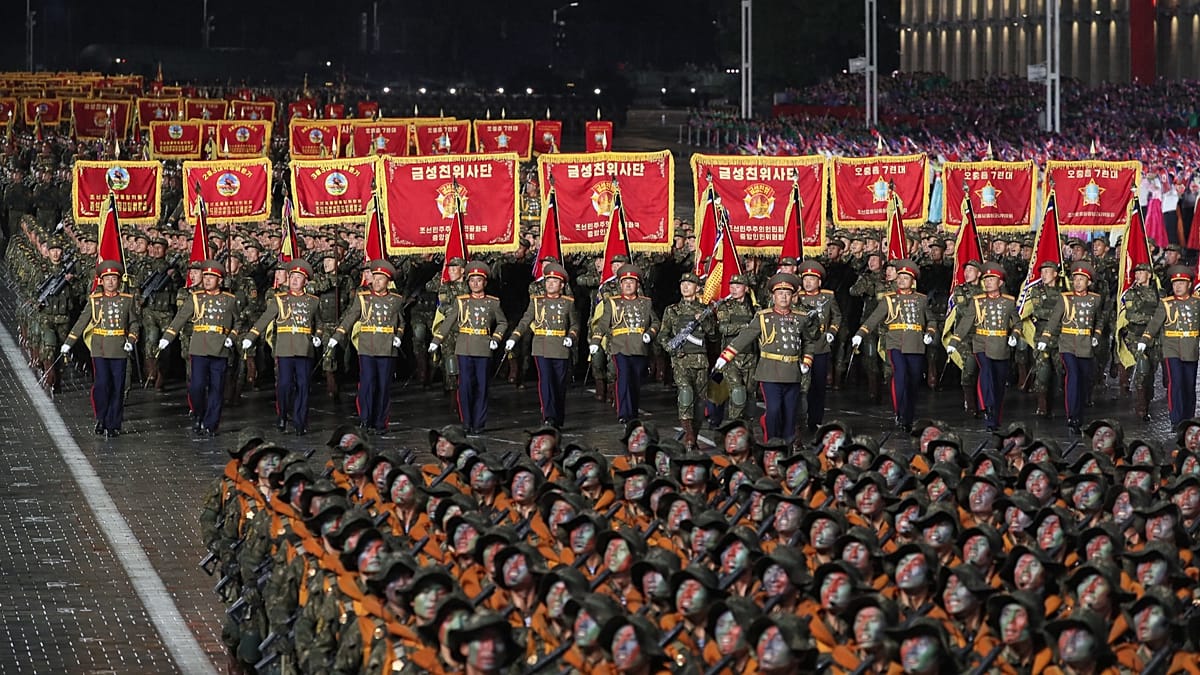
North Korea has become one of Russia's closest military partners since President Vladimir Putin and leader Kim Jong Un signed a mutual defence pact in June 2024. Moscow has used North Korean troops in counteroffensives, including the operation that pushed Ukrainian forces out of the Kursk region last year.
South Korea's National Intelligence Service (NIS) told lawmakers that around 600 North Korean soldiers were killed fighting for Russia against Ukrainian forces. The agency also reported that Pyongyang has suffered roughly 4,700 casualties, including deaths and injuries, with about 2,000 wounded soldiers repatriated by air or train between January and March. The dead were cremated in Russia before their remains were sent home, the NIS said.
The assessment came after Pyongyang confirmed for the first time that it had sent troops to help Russia recapture parts of Kursk, which Ukraine seized in a surprise incursion in August 2024.
Meanwhile, South Korea's unification ministry reported in April that North Korea's economy is showing signs of recovery as it deepens trade and diplomatic ties with both Russia and China. Years of rigid socialist planning, high military spending, and sweeping international sanctions had long suppressed growth in the isolated state.
China remains North Korea's main economic backer, but Pyongyang has drawn closer to Moscow since Russia launched its full-scale invasion of Ukraine in 2022. Analysts say Russia is providing economic and military technology assistance in return for North Korean troops and ammunition.
The warning comes as Ukraine faces intense Russian missile and drone attacks. In recent weeks, Kyiv's drone chief warned of planned 200-missile salvos, and overnight strikes have killed civilians in multiple regions. The EU has responded by targeting more Russians over attacks on Ukrainian cities, while the US Senate passed sweeping sanctions on Russian energy revenues.
Zelenskyy's latest appeal underscores the urgency of bolstering Ukraine's air defences, as Russia's ability to sustain its campaign increasingly depends on external support from Pyongyang.