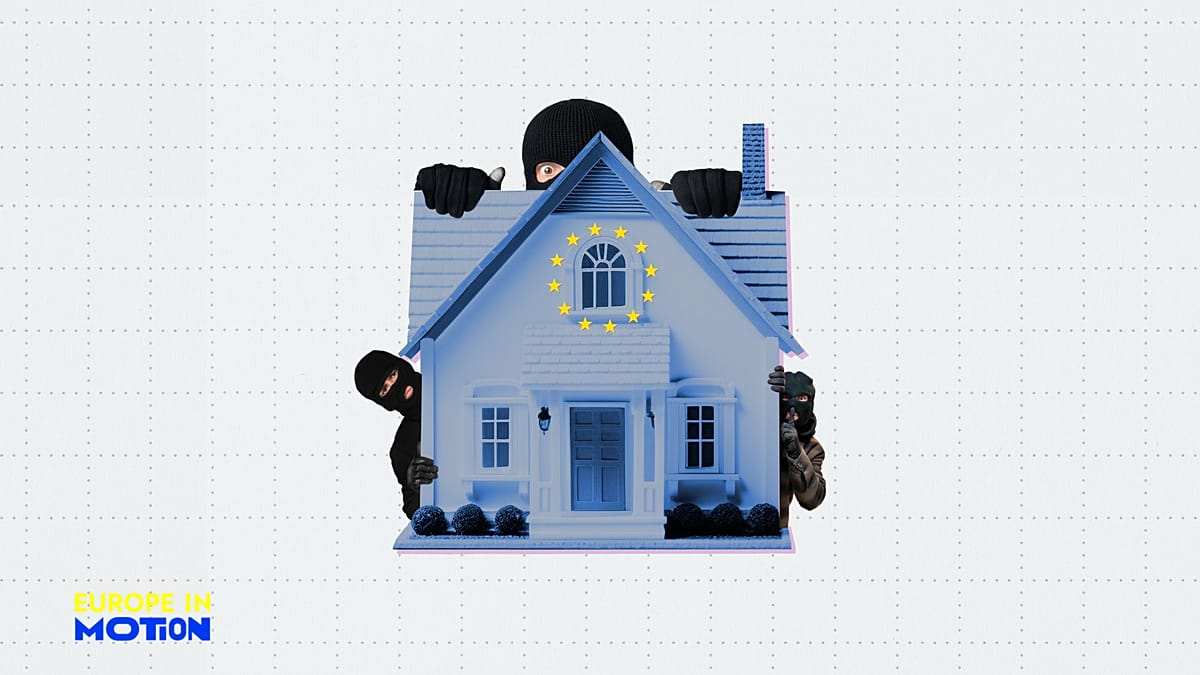
Burglary rates across the European Union have fallen by more than a third over the past decade, according to fresh data from Eurostat. Between 2014 and 2024, the number of break-ins reported in the bloc dropped by 35%, from around 1.85 million to 1.2 million. The figures cover both residential and commercial properties, offering a broad picture of how security has evolved across the continent.
Yet the decline is not uniform. In several member states, the risk of a break-in remains strikingly high, and the gap between the safest and most vulnerable countries is wide. Austria recorded the highest burglary rate in the EU in 2024, with 700 incidents per 100,000 inhabitants. Sweden followed with 601, and Luxembourg with 568. These numbers stand in sharp contrast to the bloc's safest nations.
Where break-ins are rare
Lithuania reported just 24 burglaries per 100,000 people in 2024, the lowest rate in the EU. Bulgaria (46) and Slovakia (also below 100) complete the bottom of the table. The Baltic state has also seen the steepest decline since 2014, with break-ins falling by 79%. Bulgaria followed with a 78% drop, while Greece recorded a 71% reduction from its 2015 peak.
At the other end of the spectrum, Spain saw the smallest improvement, with burglaries down only 21% over the decade. France fared slightly better, with a 23% decrease, yet it remains the country with the highest absolute number of break-ins—more than 300,000 annually. Germany is close behind, and Spain, with roughly 143,000 incidents per year, trails at a considerable distance.
Europeans turn to technology
As the threat persists, Europeans are increasingly investing in security technology. EU production of security alarms more than doubled between 2015 and 2025, from 30.1 million units to 68.3 million, according to the EU Trade Explorer. Ireland offers a striking example: the Central Statistics Office reports that the share of households using alarms, CCTV, video intercoms, or reinforced doors and windows rose from 17% in 2022 to 30% in 2024.
Across the EU, the UK, Switzerland, and Norway, roughly 20 million alarm systems are now installed in private homes and small businesses, according to consultancy Berg Insight. That translates into a global penetration rate of about 8%. In North America, by contrast, the concentration is three times higher, at 24%.
The growing reliance on alarms reflects a broader trend of citizens taking security into their own hands, even as official statistics point to a safer continent overall. The disparity between countries also underscores how local conditions—urban density, policing, and economic factors—shape the risk of burglary.
For those concerned about home security, the data offers a clear takeaway: while the overall trend is positive, the risk varies enormously depending on where you live. In Austria or Sweden, a break-in is far more likely than in Lithuania or Bulgaria. And with alarm systems becoming more common, the market for security solutions is likely to keep expanding.