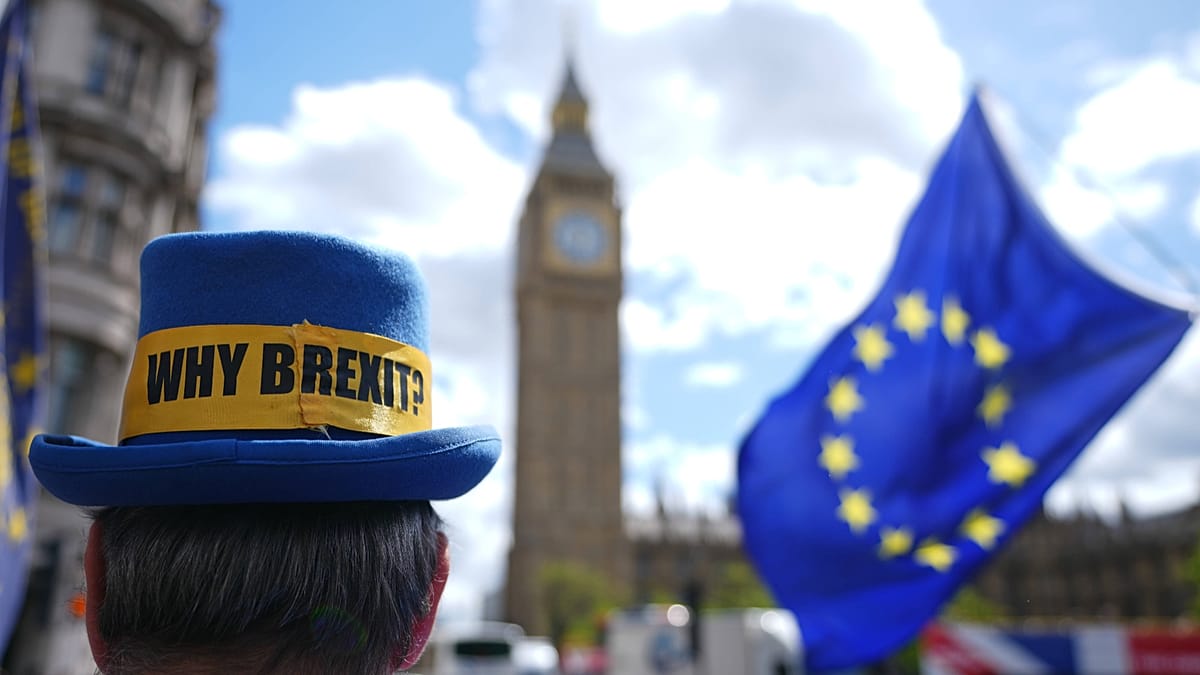
British Prime Minister Andy Burnham declared on Monday that Brexit has not delivered for the United Kingdom and that the country must forge a far closer partnership with the European Union to counter a global drift toward isolationism. Speaking at the Lord Mayor’s Banquet in London’s financial district, he invoked Hans Christian Andersen’s tale of the emperor’s new clothes, suggesting that for too long British leaders had refused to acknowledge an uncomfortable truth.
“Well, I do try to say things as I see them,” Burnham said. “The Brexit we were given has not worked. We have lost more than we gained.”
His remarks come as he prepares to host a UK-EU summit in Brussels on Friday, a central element of his pledge to reset relations with the 27-nation bloc a decade after the 2016 referendum and six years after the formal departure in 2020. The summit is expected to finalise a trade agreement covering food and drink, cooperation on energy and emissions trading, and a scheme allowing young people to work for limited periods across Britain and the EU.
Burnham argued that the central promise of the pro-Brexit campaign—that Britain would “take back control” of its borders, laws, and economy—had not been fulfilled. Trade with EU countries has fallen sharply, and estimates of the economic cost range from 4% to 8% of the UK’s gross domestic product, he noted.
A decade of turmoil
Burnham, who became the UK’s seventh prime minister since 2016, sought to draw a line under a decade of political instability. He insisted that Britain was “back on the world stage” and well placed to lead in an era of renewed international cooperation, drawing on its experience since the referendum.
“Brexit was the first domino to fall in a global move toward more isolationism and protectionism,” he said. “It was exactly what our enemies wanted. Russia wanted disunity within NATO and a weaker Europe.”
His blunt assessment contrasts with the caution of most British politicians, who have been wary of reopening a debate that deeply divided the country. The 2016 referendum saw 52% vote to leave and 48% to remain, and the issue remains sensitive.
Burnham, however, said he would soon launch a national conversation on Britain’s long-term relationship with the EU. His spokesperson, Tom Wells, said on Monday that “no assumptions are being made” and that “the British public will be the boss of any outcome.”
Until the next general election, Burnham remains bound by the pledge of his predecessor, Keir Starmer, whom he replaced as Labour leader and prime minister, not to rejoin the EU’s tariff-free customs union or the single market for goods, services, and workers. Erasing that pledge would reignite a bitter national debate.
Former Conservative Prime Minister Boris Johnson, a leading Brexit advocate, warned that if Burnham attempted to take Britain back into the EU, “people will wake up to what is going on. They won’t want it and he won’t succeed.”
The summit in Brussels is a key step in Burnham’s reset agenda, but the path to a closer relationship remains fraught. While many economists agree that Brexit has hurt the British economy, the political will to reverse it is far from certain. As Burnham himself acknowledged, the debate is only just beginning.