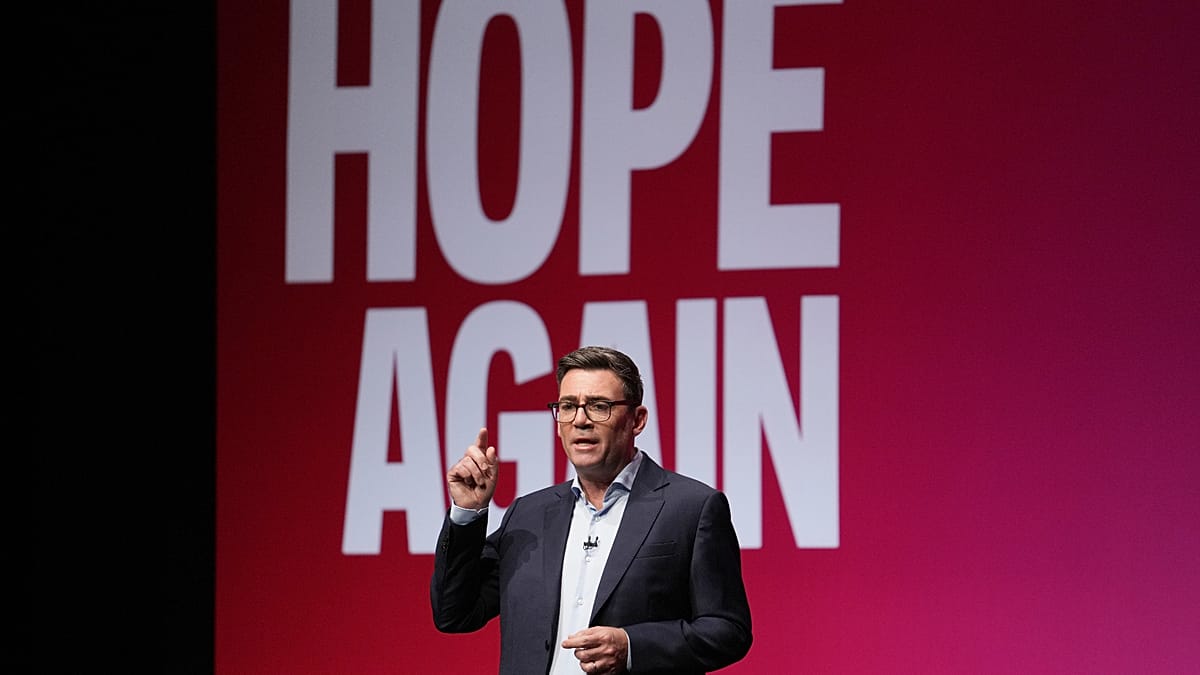
British Prime Minister Andy Burnham used his party's annual conference in Liverpool on Tuesday to signal that he will present a set of alternative visions for the United Kingdom's long-term relationship with the European Union, timed to coincide with a planned UK-EU summit later this year.
Addressing Labour members, Burnham argued that the 2016 referendum had "done more harm than good" and that Britain cannot chart a stable course for the coming decades without settling its ties to what remains its largest trading partner. "We will not give Britain the clear path we need into the rest of this century until we decide on a long-term relationship with what is still our largest market," he said, drawing applause from the hall.
The prime minister, who took office in late July, has moved quickly to deepen engagement with Brussels. He has already signalled that he will deepen UK-EU ties and is expected to press European Commission President Ursula von der Leyen on British access to EU procurement programmes. His remarks in Liverpool suggest those efforts will now be framed within a broader strategic review.
A question of consensus
Burnham was careful not to commit to a single outcome. "I will take the opportunity around the summit to lay out to you, to lay out to the country, what I believe the different options are for Britain's long-term relationship with our European partners," he said. "There are different options, and I will see if we can find consensus around one, which will give us clarity about our position and the future of the continent that we live in."
He added: "I cannot say to you truthfully that where we are is good enough."
The prime minister has previously expressed sympathy for rejoining the bloc, though he moderated that language during May's Makerfield by-election campaign. His allies insist the immediate priority is economic: restoring higher growth and prosperity for a country still adjusting to life outside the single market and customs union.
Opposition from the right
The prospect of reopening the Brexit debate has drawn sharp criticism from Britain's right. Conservative leader Kemi Badenoch accused Labour of risking "restarting the Brexit wars," while Richard Tice, the Reform UK MP for Boston and Skegness, characterised the move as "a new Battle of Britain."
For Burnham, the political calculation is delicate. Polling suggests a slim but persistent majority of Britons now regard departure as a mistake, yet the issue remains capable of inflaming passions across the electorate. His approach — laying out options rather than endorsing one — appears designed to test whether a durable cross-party consensus can be built without triggering another period of bitter division.
The timing matters beyond Westminster. The EU is navigating its own debates over enlargement, defence spending and industrial policy, and any British request for closer alignment would land in a crowded inbox in Brussels. Von der Leyen has shown willingness to engage London pragmatically, but member states — from Paris to Warsaw — will want to know what Britain is prepared to offer in return.
Burnham's speech also fits a wider pattern of re-engagement. He has met US President Donald Trump in New York and stressed personal rapport, even as his government suspended Chagos payments under American pressure. Closer to home, he has kept the door open to rejoining the EU in a future manifesto, a signal that the long-term direction of travel may be clearer than Tuesday's cautious wording suggested.
What remains unclear is the substance of the "options" themselves. They could range from a modest upgrade of the existing Trade and Cooperation Agreement to a bespoke customs arrangement or, at the far end, a pathway back toward the single market. Each carries distinct costs — regulatory alignment, budget contributions, freedom of movement — that Burnham will eventually have to spell out.
For now, the prime minister has bought himself time and framed the debate on his own terms. Whether he can convert that opening into a settled national position will depend on a summit still months away, and on a continent whose own priorities are shifting fast.