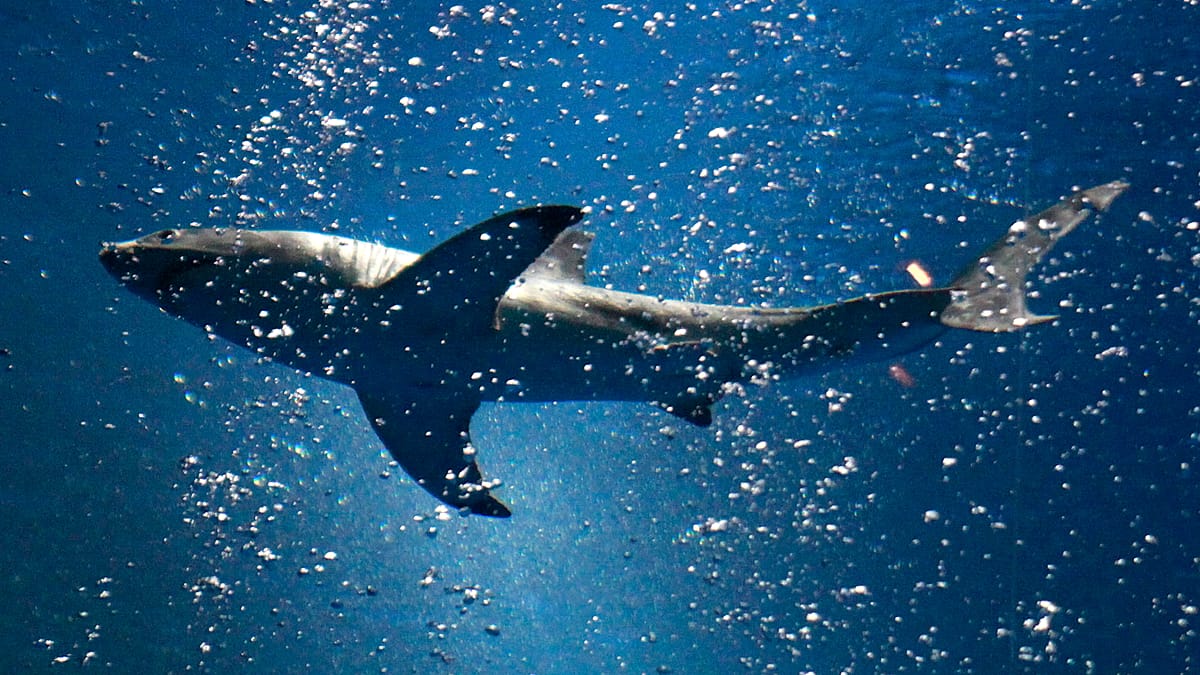
In the South Korean port city of Busan, a bull shark that wandered into a narrow canal has become an unlikely celebrity, drawing an estimated one million curious onlookers since it was first spotted. The shark, nicknamed 'Bukhangi' by locals, has turned a routine waterway into a makeshift aquarium, but the spectacle has also ignited a debate about animal welfare and public safety.
The shark, believed to be a juvenile bull shark, was first noticed in the Suyeong River canal, a man-made waterway that runs through the city. Its presence quickly went viral on social media, with crowds gathering on bridges and embankments to catch a glimpse of the predator. Local authorities have cordoned off areas to manage the crowds, but the sheer number of visitors has overwhelmed the neighborhood.
A tourist boom with a sting
The influx of visitors has been a boon for local businesses, from street vendors to convenience stores, which have seen a surge in sales. 'We've never seen anything like this,' said a shopkeeper near the canal, speaking to local media. 'People come for the shark, but they end up buying snacks and drinks, so it's good for us.'
However, marine biologists and animal rights groups have expressed concern about the shark's well-being. Bull sharks are typically found in warm, coastal waters and can tolerate freshwater, but the canal is not a suitable long-term habitat. 'This is a stressful environment for the animal,' said Dr. Kim Min-ji, a marine biologist at the National Institute of Fisheries Science in Busan. 'The noise, the crowds, and the shallow, polluted water are not what a shark would naturally choose.'
Some experts have also warned that the shark could pose a risk to the public. While bull sharks are responsible for a number of unprovoked attacks worldwide, the likelihood of an incident in this setting is low, but not impossible. 'The shark is likely disoriented and stressed, which could make it more unpredictable,' added Dr. Kim.
Local authorities have been monitoring the shark and have so far ruled out intervention, saying they will let nature take its course. 'We are observing the situation closely,' a city official said. 'If the shark shows signs of distress, we will consider a rescue operation.'
The phenomenon has drawn comparisons to other animal spectacles that have captured public attention, such as the Feast of Saint Francis drawing pets to churches across Europe, but the stakes here are higher. The shark's fate remains uncertain, and the ethical implications of turning a wild animal into a tourist attraction are being questioned.
Some residents have called for the shark to be relocated to a sanctuary or released into the open sea, but others argue that the animal should be left alone. 'It's a wild animal, and we should respect that,' said one local resident. 'But it's also a once-in-a-lifetime opportunity to see a shark up close.'
The situation has also drawn international attention, with news outlets from around the world covering the story. For South Korea, which has seen a surge in domestic tourism during the pandemic, the shark has become an unexpected draw, much like the Oktoberfest attendance record in Munich, though on a smaller scale.
As the crowds continue to flock to the canal, the debate over the shark's fate is likely to intensify. For now, Bukhangi remains a symbol of both nature's unpredictability and humanity's fascination with the wild. Whether the shark will survive its ordeal is unclear, but its story has already left a mark on the city.
In the meantime, authorities are urging visitors to maintain a safe distance and to respect the barriers. 'We understand the excitement, but safety comes first,' the city official said. 'Please enjoy the spectacle from a distance.'