A plagiarism scandal has erupted at the University of Cambridge, leading to the resignation of a prominent sociology professor and igniting a fierce debate about academic integrity, hiring practices, and the role of diversity initiatives in British higher education.
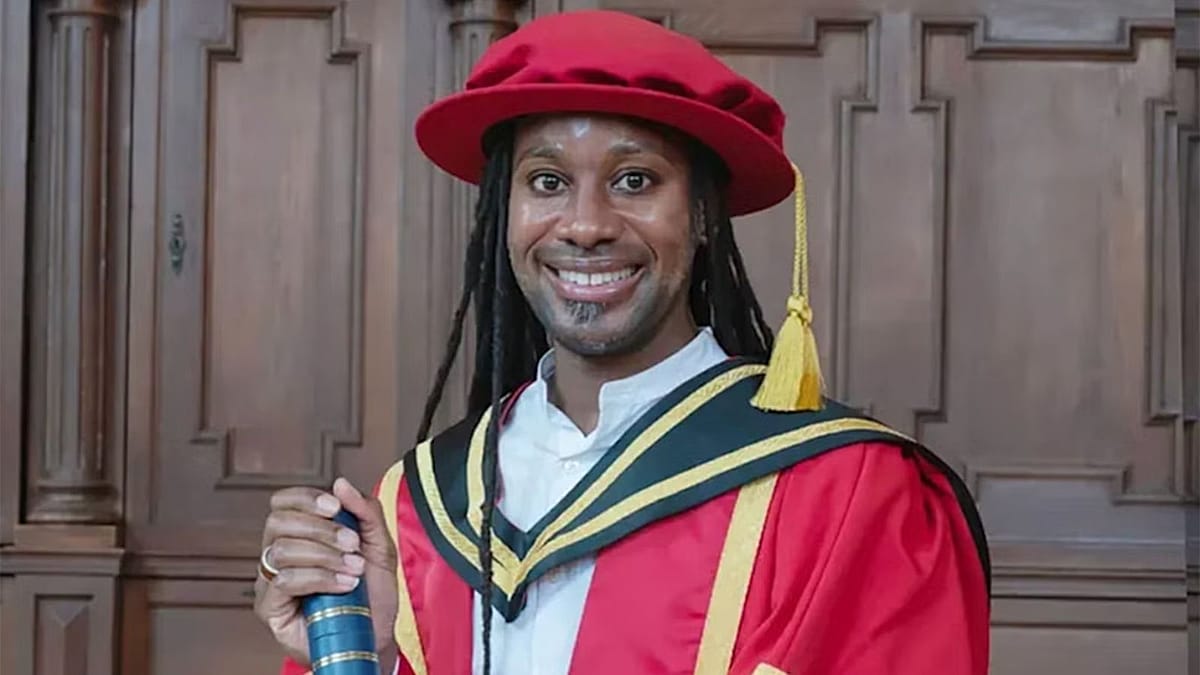
Jason Arday, who in 2023 became Cambridge's youngest Black professor at age 37, stepped down after the university launched an inquiry into his academic qualifications and honorary appointments. The institution said it was investigating “new information” and would not comment further until the process concluded. Separately, it acknowledged ongoing complaints regarding research misconduct.
The controversy has become a flashpoint in the UK's culture wars, with critics using Arday's case to attack diversity, equity, and inclusion (DEI) programs, while supporters argue he is being targeted for his race and background. The debate is unlikely to subside, as Arday's memoir, Great And Unfortunate Things, co-authored with Eve Claxton, is scheduled for publication on 27 August despite the turmoil.
From council estate to Cambridge
Arday was born in 1985 to Ghanaian parents and grew up on a council estate in Clapham, south London. He earned a PhD from Liverpool John Moores University in 2015, then taught sociology at Durham and Glasgow before his landmark appointment at Cambridge. At the time, the university hailed him as an “exceptional scholar of race, inequality and education,” with pro-vice-chancellor Bhaskar Vira praising his potential to address under-representation of Black and minority ethnic academics.
Arday quickly became a media figure, appearing on television and receiving honorary doctorates. But his rapid rise also invited scrutiny. In July, philosopher Nathan Cofnas, a self-described “race realist” who was dismissed from Cambridge's Emmanuel College in 2024, published a Substack post claiming that Arday's PhD thesis contained plagiarized passages. The Telegraph reported that analysis found more than 100 similarities with a thesis by Paula Zwozdiak-Myers, written six years earlier at Brunel University.
Dave Harris, emeritus professor at Plymouth Marjon University, had alerted both Cambridge and Liverpool John Moores to his concerns in 2023. He told the Telegraph: “In my opinion, important sections of the work of Professor Jason Arday, both his PhD thesis and some subsequent published articles, solo and jointly written, seem to display indications of serious plagiarism. I can think of no other plausible explanation for what I have read.”
Cambridge initially dismissed the allegations as part of a “vile campaign” against Arday, but the university later opened a formal investigation. The case has also drawn attention to the treatment of journalists. Times Higher Education reporter Jack Grove had investigated the plagiarism claims in September 2025 but did not publish after Arday sent a legal letter from Carter-Ruck. Arday also filed a complaint with London's Metropolitan Police, which investigated Grove for four months before Commissioner Mark Rowley admitted the force had “dropped the ball” and should have screened out the complaint earlier.
The scandal has broader implications for European academia, where questions about merit, diversity, and accountability are increasingly contested. Some see Arday as a symbol of progress, while others view his case as evidence of lowered standards. The truth likely lies somewhere in between, but the damage to Cambridge's reputation is already significant.
As the university navigates this crisis, it faces a delicate balancing act: maintaining rigorous academic standards while continuing to address historical inequalities. The outcome of the investigation will be closely watched, not just in the UK but across Europe, where similar debates are unfolding.
For now, the focus remains on Arday, whose memoir promises to offer his side of the story. Whether it will clarify or further muddy the waters remains to be seen.