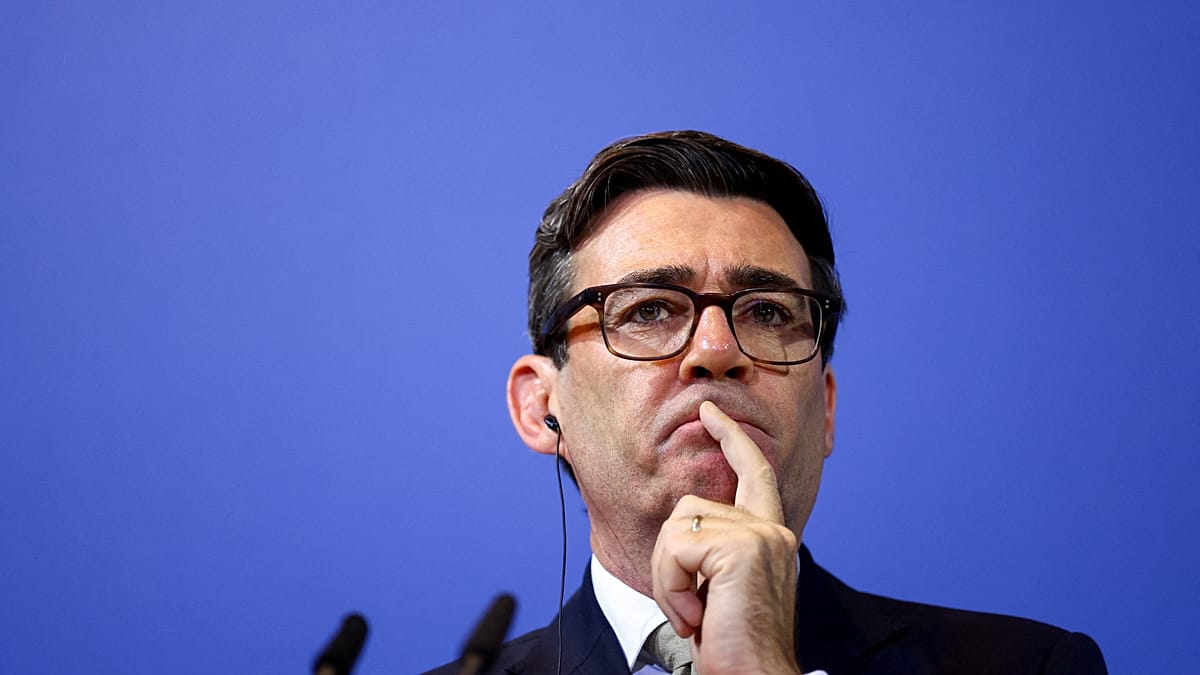
Britain's back—at least for a day. Andy Burnham arrived in Brussels on Friday for his first EU-UK summit since becoming prime minister in July, with a clear mission: to reset relations more than a decade after the Brexit referendum. His tone marks a sharp departure from his predecessor, Keir Starmer, who never dared to question the Brexit settlement. Burnham has openly declared that Brexit hasn't worked, floated the possibility of Britain rejoining the EU, and promised a national conversation about the country's European future—words that would have been political heresy only months ago.
The summit, the second of its kind, brings Burnham together with European Commission President Ursula von der Leyen and European Council President António Costa. The agenda is packed with agreements designed to mitigate some of Brexit's economic damage. The headline deliverables have been trailed for months: a deal to slash paperwork and border checks on food and agricultural products, a plan to link the EU and UK carbon emissions trading systems, and a youth mobility scheme that would allow up to 100,000 young people from each side to live, work, and study across the Channel. There's also closer cooperation on migration, including a proposed Channel action plan, and promises to work together on security, technology, and energy.
But this is Brexit we're talking about. Negotiations went down to the wire, with EU ambassadors called into a special meeting to resolve disputes that threatened to overshadow the diplomatic love-in. One particularly thorny question was whether British officials could help shape EU regulations that London would subsequently have to follow. France initially resisted granting Britain special treatment, before a late compromise appeared to give UK officials a consultative role—but no vote.
Then came university tuition fees. Brussels wanted EU students to pay the same as British students, while London resisted. An emerging compromise involves discounted fees, with details to be settled over the coming months. And the elephant in the room? Britain's demand to be included in the EU's forthcoming Made in Europe industrial programme, which would protect manufacturers from foreign competition. Brussels is broadly sympathetic, but wants London to align with EU trade policies, notably towards Chinese electric vehicles. No definitive deal on that today.
A cautious second date
Burnham sees today's agreements as a first step towards something much more ambitious. He has suggested that Britain could eventually rejoin the EU, although he has postponed setting out the options until after further discussions with Brussels. Brussels, for its part, welcomes the warmer language but isn't exactly throwing itself into Britain's arms. Memories of Brexit remain fresh, and EU governments want to know whether London is serious about a lasting rapprochement. So today's summit is less a remarriage than a cautious second date. The chemistry may be improving, but nobody is moving back in just yet.
On Europe Today later this morning, we'll be speaking to Nigel Farage, leader of Reform UK and still the loudest anti-EU voice in British politics, as well as Peter Wilding, founder of British Influence and the man who coined the term Brexit.
Global Europe: Three men in a room
Meanwhile, in Shenzhen, the historic meeting between Donald Trump, Vladimir Putin, and Xi Jinping produced plenty of photographs, a few warm words, and precious little substance. The three leaders emerged with a grandly titled "peace declaration," pledging cooperation on nuclear risks, UN reform, and oil supplies. Conspicuously absent were the two wars dominating international diplomacy: Ukraine and Iran. So who won? Trump got his moment on the world stage after a bruising midterm election defeat. Putin got to reinforce his claim to great-power status. But the real winner looks like Xi, who played host and presented China as the indispensable convenor of global diplomacy.
As for Europe, it wasn't invited. The spectacle revived uncomfortable memories of the 1945 Yalta Conference between Roosevelt, Stalin, and Churchill, and fears that the big powers might carve up the world over smaller countries' heads. But there was no grand bargain, no breakthrough on Ukraine, and little sign the three agree on much beyond the value of a good photo op.
Forget Yalta: European leaders were having none of it. Just hours after the Shenzhen summit, they rejected any attempt to carve up the continent into spheres of influence at a Coalition of the Willing meeting in Berlin, Jorge Liboreiro writes. "A Yalta-style format will not bring peace," German Chancellor Friedrich Merz declared. "At Yalta, Europe was divided up. It was parcelled up. And we won't allow anything like that to happen again." To drive the point home, Merz gifted the more than 40 delegations pieces of the Berlin Wall, a reminder of what Europe's division meant.
French President Emmanuel Macron dismissed comparisons with Yalta, insisting that Europeans had decided to determine their own fate. He also urged NATO to reopen the question of Ukraine's membership to counter Russia's demands to redraw Europe's security architecture. But there's one rather important catch: Moscow. Putin reiterated his opposition to military cooperation between Ukraine and Europe, despite US envoy Jared Kushner's suggestion that Russia might accept NATO-style security guarantees for Kyiv. Instead, Putin invited European representatives to Moscow for talks, just as he had previously invited Volodymyr Zelenskyy. The message, it seems, remains the same: dialogue is welcome, provided it happens on Moscow's terms.
In other news, while Putin was meeting Trump and Xi, Russian drones struck Kyiv, damaging the Dutch and Austrian embassies. EU foreign policy chief Kaja Kallas condemned the strikes, calling them a violation of international law. The incident underscores the fragility of any diplomatic overtures from Moscow.
For more on the EU's response to Russia's aggression, see our coverage of the €45bn Ukraine loan backed by joint EU debt. And for a look at how Hungary's leadership is being scrutinised in Brussels, read about Péter Magyar's challenge to Orbán.