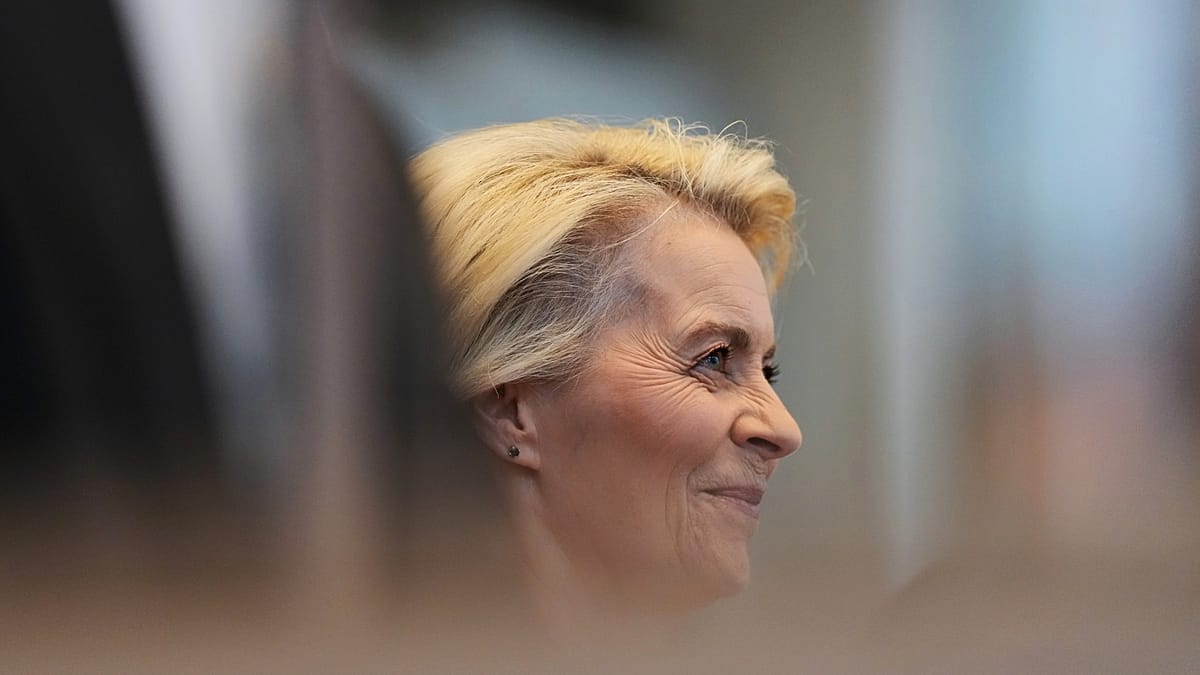
The European Commission is set to unveil a €45 billion support loan for Ukraine, a move that revives the use of Eurobonds as a central financing tool. The proposal, to be presented by President Ursula von der Leyen alongside Economy Commissioner Valdis Dombrovskis and Defence Commissioner Andrius Kubilius, underscores the bloc's determination to sustain Kyiv amid Russia's ongoing war.
Dombrovskis told Europe Tonight that the EU must continue both supporting Ukraine and pressuring Russia. "Russia only understands a position of strength," he said. The loan will be raised through joint debt, meaning member states will cover the annual interest. The principal repayment will be contingent on Kyiv receiving war reparations from Moscow. If Russia fails to pay, the EU reserves the right to use the €210 billion in immobilised Russian sovereign assets held on European soil, as Dombrovskis explicitly noted.
Why another loan?
The new proposal comes on top of a €90 billion loan approved earlier, which was designed under the assumption that the war might end this year. That premise has collapsed as Russia escalates airstrikes, targeting Ukraine's energy infrastructure and economy. The relentless attacks have disrupted business, hampered trade, and caused widespread blackouts, deepening Ukraine's dependence on foreign aid.
Ukraine's 2027 budget now faces a €70 billion hole. The EU's €45 billion loan would cover two-thirds of that shortfall, with the remainder expected from allies like the UK, Norway, Canada, and Japan. An internal document suggests that if all NATO allies deliver on their July summit pledges, the gap could shrink by up to €13 billion.
The loan will be discussed at a special EU summit later this month, alongside the next EU budget. Although technically separate, the two have become de facto linked, as both involve significant financial commitments.
Opt-outs and political headwinds
Not all member states are on board. Slovakia, Hungary, the Czech Republic, and Bulgaria have indicated they will opt out of the joint debt mechanism. Slovak Prime Minister Robert Fico, citing the resumption of peace talks, said he would not support "war loans."
In France, Marine Le Pen has confirmed that, if elected president next year, she would end financial support for Ukraine due to France's high public debt, though she would honour existing commitments. Meanwhile, Paris has dismissed as "absurd" Moscow's claims that French troops are fighting in Ukraine. Deputy Defence Minister Alice Rufo said French soldiers are there for "training and equipment maintenance."
The loan comes as Europe, Ukraine, and the US prepare for multilateral talks with Russia. Moscow, however, continues to stall. Norwegian Foreign Minister Espen Barth Eide stressed that Europe must be at the table: "If anybody's going to talk about European security order, Europe has to be there." He added that Europe already has a security architecture that Russia violated.
Brussels is also preparing a new package of economic sanctions, the 22nd since the war began, to tighten pressure on Moscow. There is a risk that Russia will use the loan and sanctions as a pretext to refuse multilateral negotiations.
The EU's determination to support Ukraine "as long as it takes" reflects a broader strategic calculus: the costs of a failed Ukrainian state would far exceed any financial undertaking. As the bloc navigates borrowing costs that have risen amid energy prices and geopolitical volatility, the move signals a firm commitment to Kyiv's survival and Europe's security order.