The record influx of migrants into the Spanish enclave of Ceuta has prompted calls from several EU governments to consider suspending Spain from the Schengen free-movement area. The proposal, floated by Italy's Prime Minister Giorgia Meloni and backed by Finland and Denmark, would be an unprecedented step under EU law, reserved for cases of persistent failures at external borders.
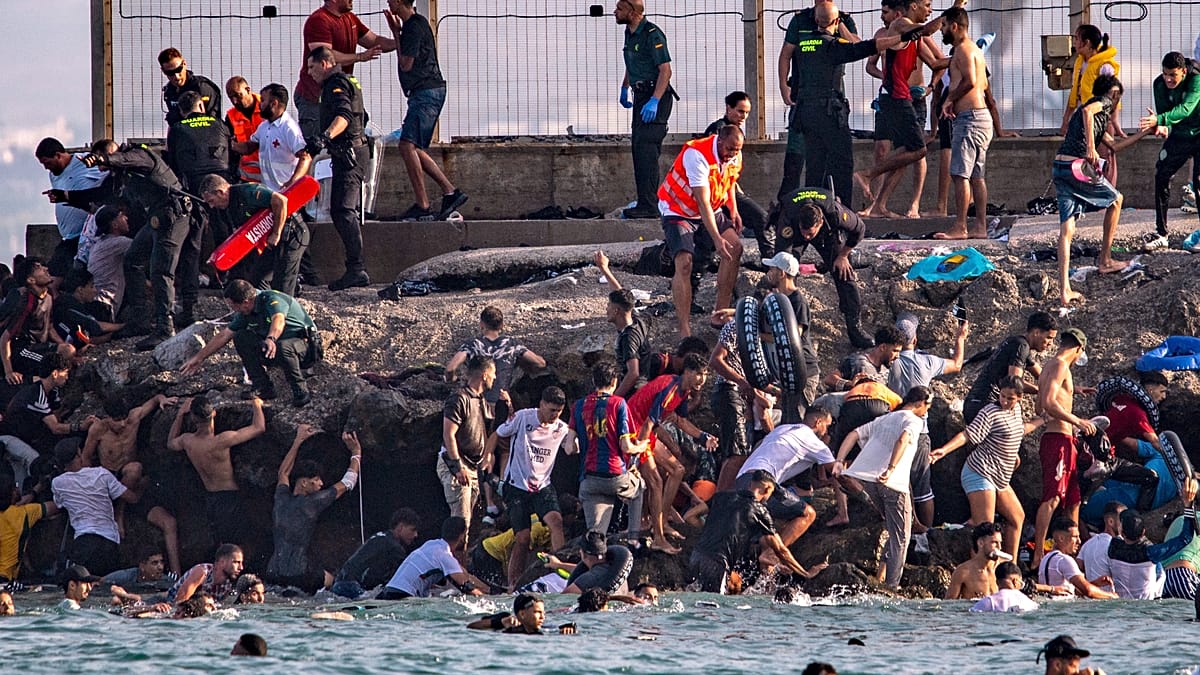
Ceuta, a Spanish territory on the North African coast, saw around 60,000 irregular entries in a single day, the largest such surge ever recorded on EU soil. Although the enclave is geographically in Africa, the event has rattled European capitals, even as the practical risk to mainland Europe remains limited.
What would suspension involve?
Under the Schengen Borders Code, a member state can be suspended only as a last resort, after a formal procedure initiated by the European Commission. The Commission would first need to identify "persistent serious deficiencies" in border management, then issue a report and give the country concerned a chance to respond. Only after that could it propose a suspension, which would require approval by a qualified majority of other member states.
EU officials have been quick to dampen expectations. "There are regular evaluations and in case there are serious deficiencies detected at the border crossing point, we issue a report which is then discussed with the member state first," one official said, declining to speculate on the Ceuta case.
Moreover, the Commission points out that Ceuta and Melilla, Spain's other North African enclave, already operate under special Schengen rules. "There is already border control between Ceuta and Melilla and the rest of the Schengen area," another official noted, meaning that migrants arriving there cannot simply move to the mainland without passing through Spanish police checks.
In practice, any EU country can temporarily reintroduce checks at its internal borders with Spain for renewable periods of up to six months. Italy did exactly that on Friday, reinstating air and maritime controls after a meeting chaired by Interior Minister Matteo Piantedosi. France, meanwhile, has maintained land border controls for reasons unrelated to Ceuta, citing jihadist threats and other security concerns.
The political momentum behind the suspension idea is real, but legal experts say the threshold is high. The procedure has never been used, and the Commission would need to prove that Spain's border management is persistently deficient, not just overwhelmed by an extraordinary event. The fact that Ceuta is not part of the Schengen area in the same way as the mainland further complicates the case.
Some analysts see the calls as more symbolic than practical, aimed at pressuring Madrid to tighten its migration policy. Others note that the EU has been struggling to find a common response to migration, with member states often resorting to unilateral measures. The legal deadlock on returns from Ceuta has already exposed the limits of EU cooperation with Morocco.
Meanwhile, the situation on the ground remains tense. Spanish authorities have been returning migrants to Morocco, but the sheer numbers have overwhelmed local facilities. The strain on Ceuta's infrastructure is evident, and the EU has offered emergency assistance, including Frontex support.
For now, the Commission shows no sign of triggering the suspension procedure. The focus is on managing the immediate crisis and preventing a repeat. As one EU diplomat put it, "We are not in the business of expelling member states; we are in the business of solving problems together."
The debate, however, has opened a new front in the EU's migration politics, with right-of-centre leaders across the continent using the Ceuta crisis to push for stricter border controls. Whether that translates into a formal suspension of Spain remains highly doubtful, but the pressure on Madrid is unlikely to fade quickly.