Canada's retaliatory tariffs on a wide range of American products came into force on Tuesday, intensifying a trade conflict that has now dragged on for 18 months. The measures, which cover C$27.6 billion (€17 billion) worth of US goods, are a direct response to the duties Washington imposed on Canadian exports after negotiations broke down in late August.
The new Canadian tariffs apply rates of 15%, 25%, and 50% to hundreds of products, including steel and aluminium, furniture, clothing, cosmetics, household appliances, electronics, agricultural equipment, and dairy goods such as cheese. Ottawa has said the measures match the US tariffs “dollar for dollar” and “rate for rate,” though some seafood items were removed from the initial list.
According to the Associated Press, the counter-tariffs affect roughly 6% of the goods the United States exported to Canada last year. Beyond tariffs, eight of Canada's ten provinces continue to restrict or ban sales of American alcohol. The Distilled Spirits Council of the United States reports that US spirits exports to Canada have fallen by more than 70% year-on-year since those restrictions were introduced.
Limited macroeconomic impact, but sector pain
Economists at RBC note that Canada's measures are unlikely to have a noticeable effect on overall US growth, although some American businesses could be hit considerably harder. For Canada, the US tariffs pose a modestly negative risk to the broader economy, but analysts point to a sharper impact on Central Canada's manufacturing sector, which is heavily integrated with US supply chains.
The latest escalation follows President Donald Trump's decision on 22 August to impose 50% duties on the same value of Canadian products, citing what Washington described as “discriminatory treatment” of US alcohol, automotive, and dairy industries. Those US measures cover products including wine, furniture, dairy goods, cement, clothing, fishing rods, and hockey equipment, representing approximately 5.5% of Canadian exports to the United States.
Trump targets Bombardier
On Monday, Trump threatened to block sales by Canadian aircraft manufacturer Bombardier in the United States unless the company moved its production there. “No more selling Bombardier in the United States!” he posted on Truth Social, without explaining how such a ban would be implemented. Thousands of Bombardier aircraft currently operate in US airlines' domestic fleets.
In a statement, Bombardier said it supports “tens of thousands of jobs across the United States,” including direct employment in more than 20 states, and spends over $2.5 billion (€2.1 billion) annually with approximately 2,800 US suppliers across 47 states. “Bombardier values its great partnership with American companies and its US employees,” the company said.
Talks remain suspended
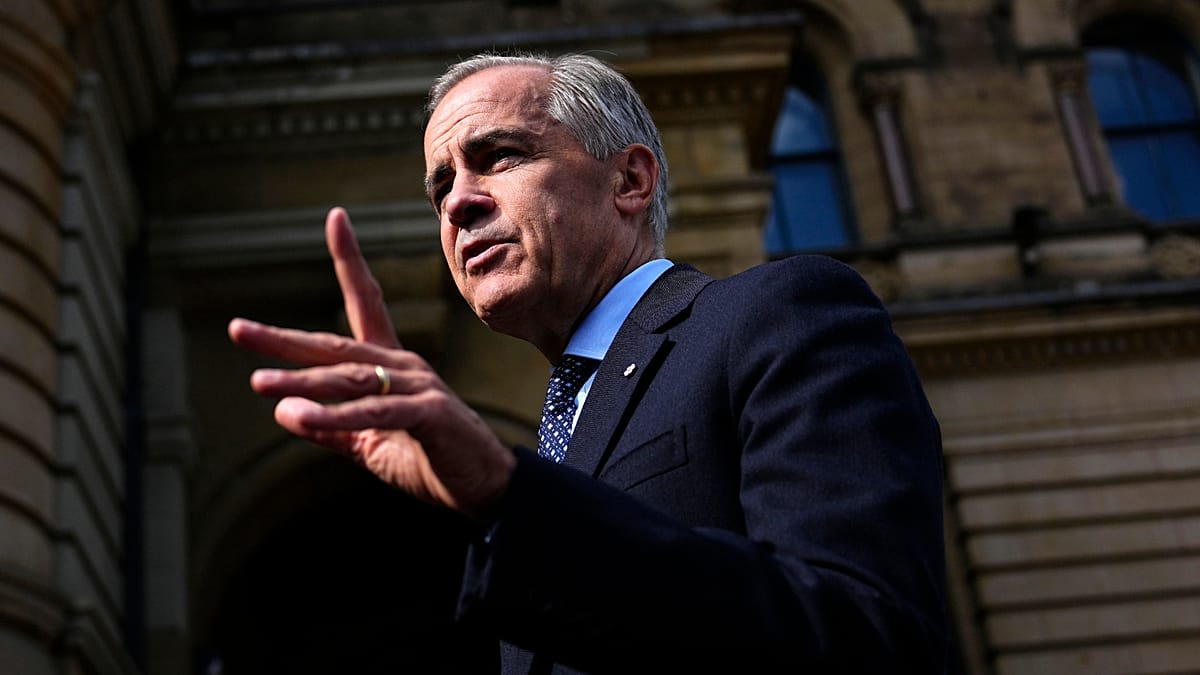
Negotiations collapsed on 21 August after several days of meetings in Washington. Canadian Prime Minister Mark Carney said he suspended the talks because the Trump administration's terms were unacceptable, including last-minute restrictions on Canada's ability to strike trade agreements with other countries.
The dispute has extended beyond trade policy. Trump signed an order in August directing the US government to refer to Lake Ontario, which lies on the border between the two countries, as “Lake America.” Google and Apple subsequently adopted the name for users in the US, although Canada does not recognise the change.
Carney said talks could resume when the Americans “stop doing memes, stop throwing shade, stop trying to be tough” and start being serious. The trade disputes began after Trump returned to office and imposed a series of tariffs on Canadian goods, despite having negotiated and repeatedly praised the North American trade agreement during his first term. Many of those tariffs violate the pact.
The rupture is especially striking given the long-standing closeness of the US-Canada relationship, with deeply integrated economies, close defence and security cooperation, vast cultural ties, and, before relations deteriorated, about 400,000 people crossing the border each day. Although Carney enjoys strong public support in Canada, the country remains heavily reliant on its neighbour: nearly 60% of Canada's imports come from the United States, while about 70% of its exports go to the US market.
As the dispute shows no sign of resolution, European observers may note parallels with the EU's own trade frictions with Washington. The EU trade chief has ruled out mediating between the two North American allies, while Brussels continues to pursue its own trade agenda, including a deadline for China to deliver concrete results. The broader implications for global trade remain uncertain, but the immediate costs are being felt on both sides of the border.