Dubai is making a bold push to embed agentic artificial intelligence—systems that can act autonomously rather than merely respond to prompts—into its private sector. The emirate's chamber of commerce has unveiled a training drive targeting more than 14,000 businesses, delivered through a newly created digital academy.
The Dubai Chambers Academy, launched on 1 September, offers specialised courses in agentic AI alongside other professional development programmes. It is aimed at member companies of Dubai Chambers' Business Groups and Business Councils, which represent a wide swath of the emirate's economy, from finance and logistics to retail and technology.
The initiative is part of a broader strategy, directed by Sheikh Hamdan bin Mohammed bin Rashid Al Maktoum, Crown Prince of Dubai and Chairman of The Executive Council, to transition the private sector towards agentic AI. The goal is to equip firms with the skills to deploy AI that can manage complex tasks, make decisions, and execute actions with minimal human intervention.
From theory to practice
Participants will explore the latest agentic AI tools and learn how to apply them to streamline operations, boost productivity, and support faster, smarter decision-making. The curriculum also covers practical adoption strategies, helping companies identify where the technology can have the greatest impact across their value chains.
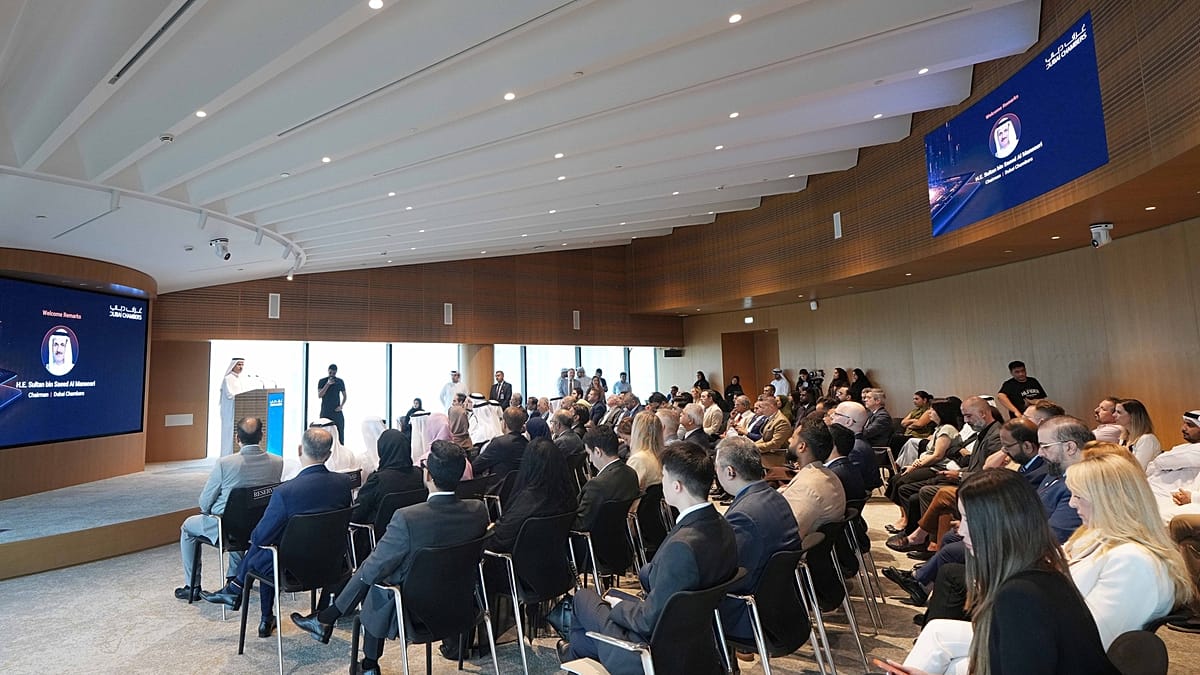
“The programme to transition the private sector towards Agentic AI reflects Dubai’s commitment to advancing the vision of its leadership by preparing the business community to adopt advanced technologies and use them effectively to create sustainable value,” said H.E. Eng. Sultan bin Saeed Al Mansoori, Chairman of Dubai Chambers, at the launch event attended by 90 chairpersons of Business Groups and Business Councils.
“This will strengthen companies’ competitiveness and their ability to innovate and grow in the economy of the future,” he added.
Al Mansoori emphasised that agentic AI is opening new possibilities for how companies operate. “It can help manage complex tasks, enable more effective decision-making, enhance productivity and create new opportunities for growth,” he said. “Through these specialised training tracks, we aim to equip the private sector with the capabilities and expertise needed to understand Agentic AI and translate its potential into practical applications.”
Building an ecosystem
The training tracks are just one element of a wider push to build a robust agentic AI ecosystem in Dubai. The emirate is also establishing incubators for agentic AI startups, supporting companies that develop and deploy such solutions, and promoting knowledge-sharing and capacity-building within Dubai Chambers.
These efforts follow the formation of an Executive Committee for Agentic AI, tasked with accelerating adoption across the private sector, preparing businesses for global technological shifts, and reinforcing Dubai’s position as a hub for the digital economy.
For European observers, Dubai’s aggressive AI strategy offers a contrast to the more cautious approach in many EU member states, where debates over regulation and ethics often slow deployment. While the EU is working on its own AI Act and innovation agenda, Dubai is moving quickly to embed AI into its economic fabric—a reminder that the race for AI competitiveness is global.
The initiative also highlights a growing trend: governments and business associations taking a proactive role in upskilling workforces for an AI-driven future. As European companies grapple with similar challenges, they may look to Dubai’s model of structured, academy-based training as a template—even if the regulatory and social contexts differ markedly.