Canadian Prime Minister Mark Carney sought to steady transatlantic nerves on Tuesday, telling American counterparts that Canada will remain an indispensable partner even as a bitter trade war strains relations between Ottawa and Washington.
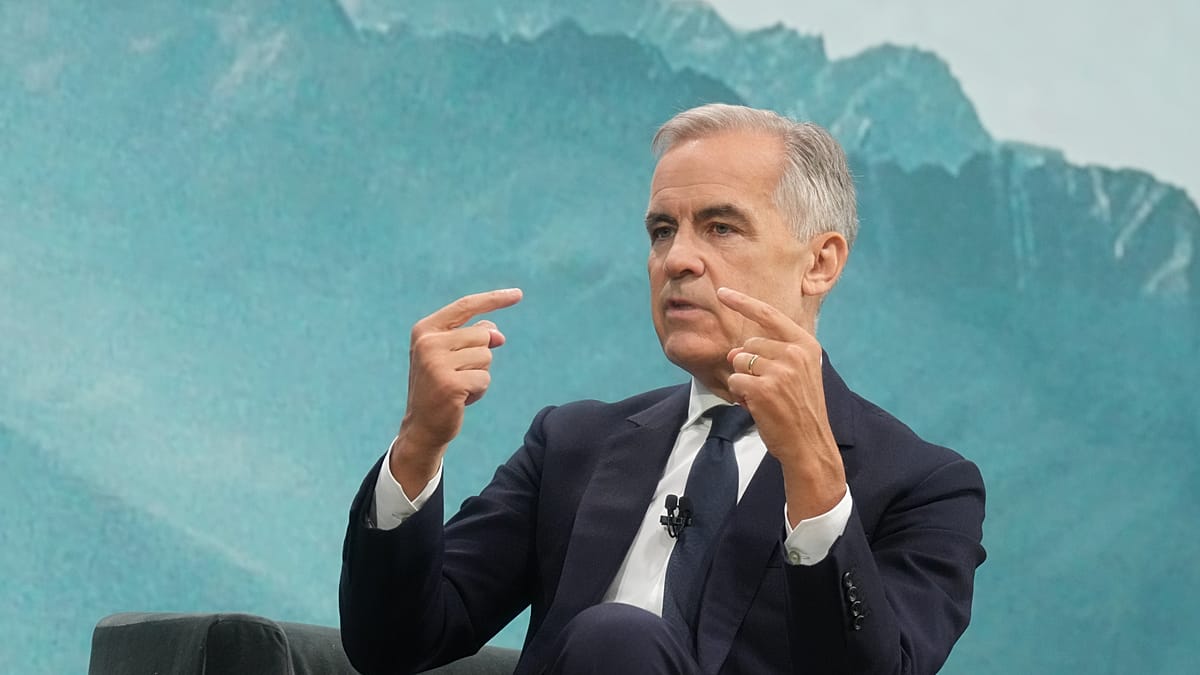
Speaking at the Canada Investment Summit in Toronto, Carney addressed the US directly: "To our American friends, let me say this. We will always be neighbors, and Canada will continue to be the US's most important partner in many key areas."
He acknowledged the current discord but stressed the depth of the bilateral relationship. "Even at times of disagreement over our long-shared history, we have always maintained deep ties," Carney said, adding that Canada would be an "even better partner" once "opportunities return."
The two-day summit, billed as a first-of-its-kind gathering in Canada, brought together global investors, Canadian executives, and public-sector representatives. Ottawa's goal is to attract C$1 trillion in investment over the next five years, a strategy that has gained urgency as trade frictions with the US escalate.
In a statement released after the summit, Carney's office announced nearly C$500 billion in new investment commitments. These include almost C$100 billion in fresh capital for Canadian assets from pension funds, insurers, and institutional investors; C$325 billion in new financing for businesses and infrastructure from banks; and over C$14 billion from investment funds to grow Canadian enterprises and strategic sectors.
Trade war backdrop
The summit unfolded against a sharp deterioration in US-Canada trade relations. Negotiations to avoid hefty duties on certain Canadian goods collapsed last month, triggering 50% US tariffs on approximately C$28 billion worth of Canadian products in late August. Ottawa retaliated with counter-tariffs of up to 15%, 25%, or 50% on roughly C$27.6 billion in US imports.
Carney's outreach comes as Canada actively seeks to diversify its economic partnerships. The country has been courting European allies, with discussions about closer EU ties gaining momentum. Earlier this year, Carney pushed for a "unique alliance" with the EU ahead of a planned trip to Strasbourg, and Ottawa has explored the possibility of EU associate membership as a hedge against US unpredictability.
Analysts note that Canada's investment push is partly a response to the volatile trade environment. "The summit signals that Canada is serious about reducing its reliance on the US market," said trade expert Laura Chen of the Brussels-based European Policy Centre. "But the US remains Canada's largest trading partner, and the two economies are deeply intertwined."
Carney's message was calibrated to reassure American investors and policymakers that Canada is not turning away from its southern neighbor. "Stronger, more resilient, more independent, ready to advance our mutual, economic, and security interests," he told the audience, framing Canada's diversification as a complement, not a threat, to the bilateral relationship.
The investment commitments announced at the summit are a significant boost for Canada's economy, which has faced headwinds from the trade dispute. The pledges span a range of sectors, including infrastructure, technology, and clean energy, aligning with Ottawa's long-term growth strategy.
As the trade war grinds on, Carney's dual message—firm on sovereignty, open to cooperation—reflects the delicate balancing act facing Canadian leadership. With European partners watching closely, the summit offered a glimpse of how Canada intends to navigate an increasingly fragmented global economy.