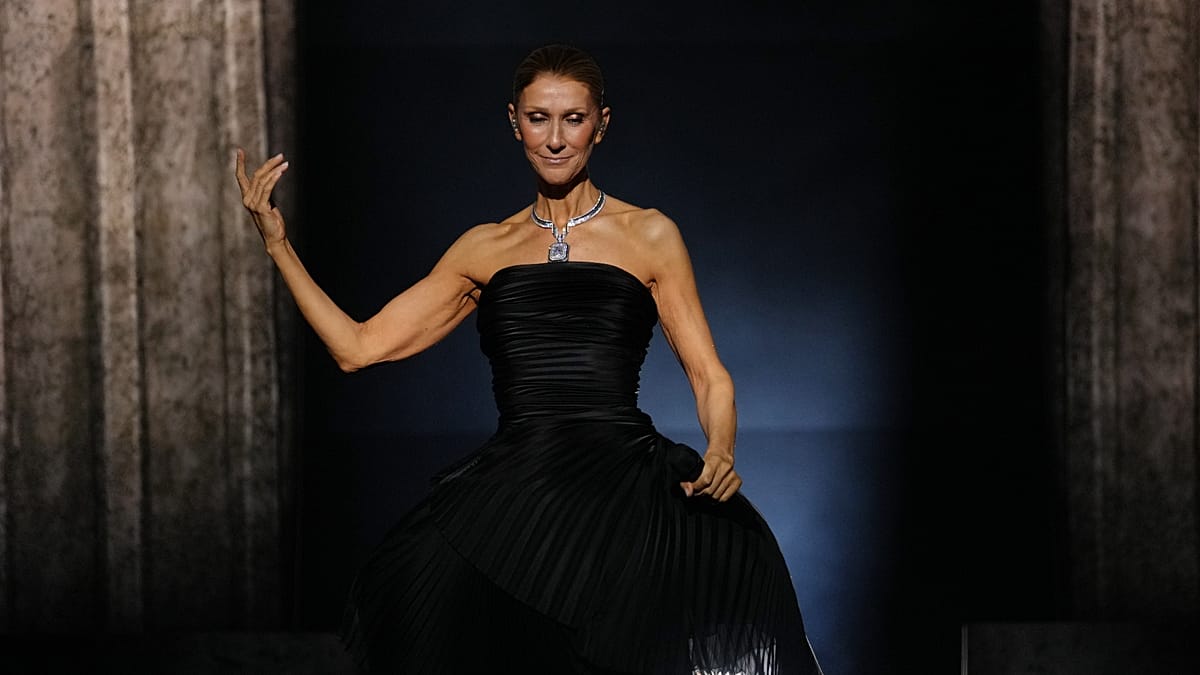
On Saturday night, Céline Dion stepped back into the spotlight at the Plenitude Arena in Nanterre, west of Paris, delivering her first full concert in six years. The Canadian singer, who revealed in December 2022 that she had been diagnosed with stiff person syndrome, was visibly moved as she faced a crowd of 30,000.
“The path was rocky, the journey took longer than expected,” she told the audience, her voice breaking. “But I found myself drawn to a faint beam of light in the distance, deep in the mountains.” She added, “Tonight, I want to sing for you. To sing for myself. To sing for life.”
The performance marked the opening of a 26-night residency at the arena, formerly known as La Défense Arena. Dion’s setlist included some of her most beloved hits, such as “My Heart Will Go On” and “Because You Loved Me,” drawing enthusiastic praise from fans and critics alike.
A triumphant return after a long battle
Dion’s return has been eagerly anticipated since she announced her diagnosis with stiff person syndrome, a rare autoimmune neurological disorder that causes muscle stiffness and spasms. The incurable condition forced her to cancel tour dates and cast doubt on her future as a performer. Her appearance in Paris, therefore, carries profound significance not only for her fans but also for the broader conversation about living with chronic illness.
The concert attracted notable figures, including former U.S. First Lady Michelle Obama and several French politicians, underscoring the event’s cultural weight. Canadian Prime Minister Mark Carney congratulated Dion on social media, calling it “an incredible return to the stage after six long years” and adding, “It’s all coming back.”
Dion’s residency is set to run through 2026, and early signs suggest it is already having an economic impact. According to travel data, the concerts have driven a surge in flight searches to Paris, a boost for the city’s tourism sector. This development aligns with broader trends in European travel, where major cultural events increasingly shape visitor flows.
The choice of Paris as the venue for Dion’s comeback is fitting, given her deep ties to the French-speaking world. The Plenitude Arena, located in the Hauts-de-Seine department, has become a major hub for international performances, and Dion’s residency is expected to draw audiences from across Europe.
For many, Dion’s return is a testament to resilience. Her openness about her condition has resonated widely, and her ability to perform again offers hope to others facing similar challenges. As she continues her run of shows, the spotlight remains on her remarkable journey back to the stage.