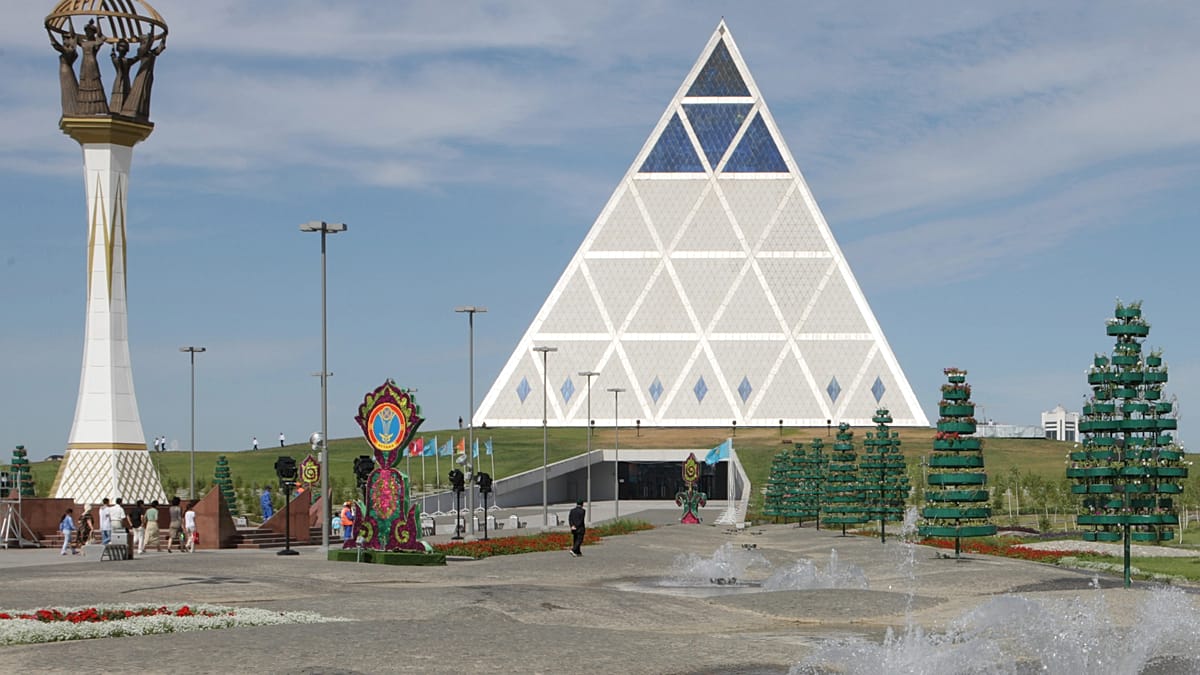
The first-ever Regional Ecological Summit (RES) began today in Astana, Kazakhstan, drawing leaders from across Central Asia to confront the region's escalating environmental crises. With rising temperatures threatening public health and degraded land jeopardizing food supplies for millions, the summit aims to transform commitments into concrete action while deepening regional cooperation.
Hosted by Kazakhstan's President Kassym-Jomart Tokayev, the summit runs through Friday and features over 60 thematic sessions. Tokayev first proposed the gathering at the UN General Assembly three years ago, extending a formal invitation last year at the Third UN Conference on Landlocked Developing Countries in Avaza, Turkmenistan. “I believe that climate action should remain balanced and inclusive matching the legitimate development needs of nations,” he said at the time.
Water Security Takes Centre Stage
Water scarcity dominates the agenda, with the Aral Sea serving as a stark symbol of environmental collapse. Once the world's fourth-largest inland body of water, the sea has lost more than 90 per cent of its volume since the 1960s due to river diversion projects for irrigation. What was once a thriving fishing economy has largely become desert. However, restoration efforts—including a dam built by Kazakhstan in 2005—have brought cautious optimism. According to a February report, the Northern Aral Sea's water volume has risen to 24.1 billion cubic metres, with World Bank data showing levels 50 per cent higher than their lowest point.
The Caspian Sea is also in decline, dropping by roughly ten centimetres annually, threatening biodiversity and international shipping routes. Yerlik Karazhan, CEO of the Central Asia Climate Foundation, noted that “Central Asian countries often operate in isolation, even as these challenges call for a coordinated approach.”
Proposal for a UN Water Agency
On the sidelines, President Tokayev is pushing for the creation of an international water organisation. He first floated the idea in Ashgabat last December, arguing that “there is currently no specialised UN agency focused exclusively on water.” Ahead of the summit, he met with the UN Secretary-General’s Special Envoy on Water, Retno Marsudi, at the Akorda, stressing the need to “build a more effective system of international cooperation in the water sector.”
This initiative has broader European resonance, as water scarcity in Central Asia can affect migration patterns and energy markets that intersect with European interests. The proposed agency could also complement existing EU water governance frameworks, as noted in related discussions on Central Asian Summit Advances Proposal for UN Water Agency Amid Regional Crises.
Climate Risks and Green Financing
Central Asia is experiencing some of the world's most acute climate risks, with average temperatures rising faster than the global average—from +2.1°C in Kyrgyzstan to +1.5°C in Turkmenistan over the past 115 years. Glacier coverage in Kyrgyzstan has shrunk by 16 per cent in 70 years, while Tajikistan has lost over a thousand glaciers in three decades. More than 20 per cent of the region's land—roughly 80 million hectares—is degraded, affecting about 30 per cent of the population.
The summit's agenda has expanded beyond climate change to encompass broader environmental challenges. Green financing is a key topic, with leaders expected to adopt a joint declaration outlining each country's needs. Mansur Oshurbaev, Kazakhstan’s Vice-Minister of Ecology and Natural Resources, stated that “the upcoming summit will be a key platform for the region to assert its voice and demonstrate its readiness to tackle environmental challenges.” In Kazakhstan's case, signed agreements are expected to channel over €1.5 billion in investment.
This summit also highlights cultural and economic ties between Europe and Central Asia, as seen in events like the Francophonie Spring Festival Expands Cultural Ties Between Europe and Central Asia. The outcomes in Astana could influence European policies on climate adaptation and water security, particularly as the EU seeks to strengthen partnerships with Central Asian states.