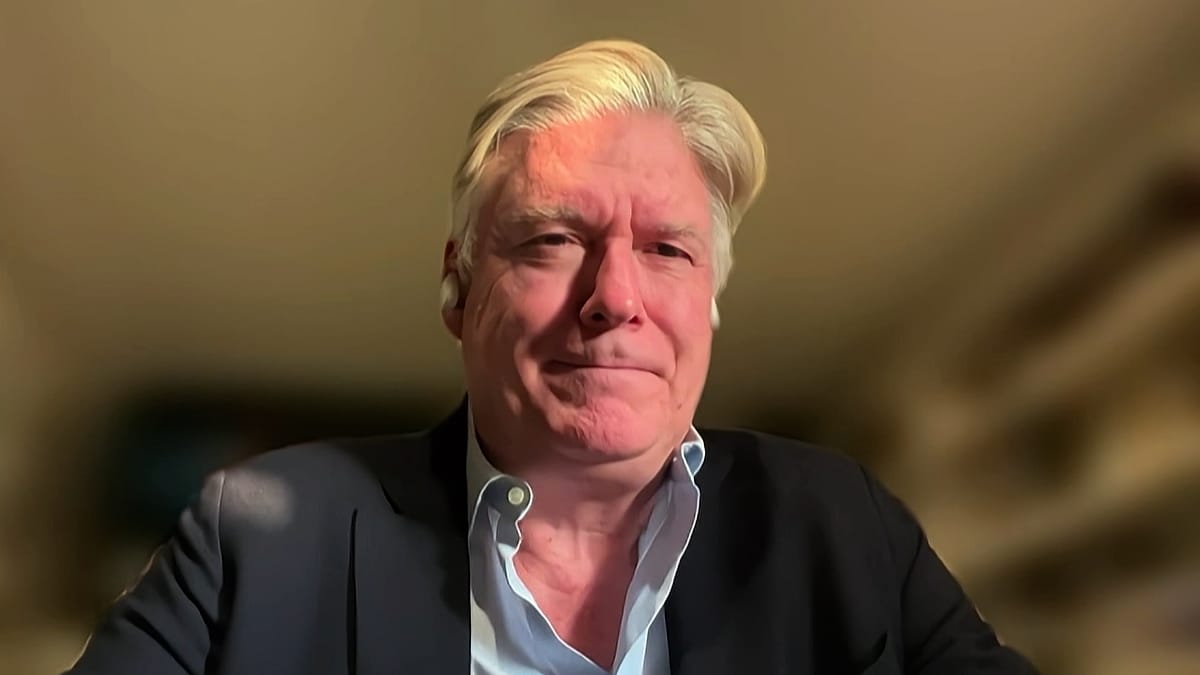
Speaking on Euronews' morning programme Europe Today on Friday, Spanish MEP Antonio López-Istúriz (EPP) accused the government of Pedro Sánchez of being “weak” in its handling of the ongoing migration crisis in Ceuta. The MEP argued that Madrid should have acted much earlier on warnings from national police and intelligence services, which had flagged that thousands of irregular migrants were preparing to enter the Spanish enclave on Morocco's northern coast.
López-Istúriz, a veteran of the European Parliament and former secretary-general of the EPP, said the Sánchez administration had failed to take the threat seriously. “The government was warned, and it did nothing,” he said. “That is not strength; that is weakness.” His comments come as the crisis deepens, with hundreds of migrants having crossed the border in recent days, overwhelming local reception facilities and sparking a political firestorm in Madrid.
A pattern of pressure from Rabat
The MEP also suggested that Morocco could be behind the irregular crossings, despite Sánchez insisting there is no evidence to support such a claim. López-Istúriz said the authenticity and significance of any material pointing to Moroccan involvement would have to be determined through a judicial investigation. “We need to know the truth,” he said. “If Morocco is using migration as a lever, that is a serious matter for Spain and for the European Union.”
This is not the first time Ceuta has been at the centre of a diplomatic standoff between Madrid and Rabat. In 2021, thousands of migrants surged across the border in a similar episode, which many observers interpreted as a deliberate signal from Morocco to pressure Spain over Western Sahara policy. López-Istúriz said the current events fit a recurring pattern in which Morocco tests Spain's resolve on border security. “We have seen this before,” he said. “The question is whether Spain will finally learn the lesson.”
The dispute comes against a backdrop of already strained relations between the two countries. Spain has sought to maintain a pragmatic partnership with Morocco on migration and counter-terrorism, but critics argue that Sánchez has conceded too much without receiving firm guarantees on border control. The leaked police report alleging Moroccan involvement has only intensified the political pressure on the prime minister.
Political fallout in Madrid
The crisis has quickly become a domestic political issue for Sánchez, who faces a fragile coalition government and a resurgent opposition. The conservative Popular Party (PP) has seized on the leak to accuse the prime minister of negligence, while left-wing partners in the coalition have urged caution. The parliamentary session scheduled for next week is expected to be dominated by the crisis, with Sánchez likely to face tough questions from all sides.
López-Istúriz's remarks reflect a broader concern among European lawmakers about the security of the EU's external borders. Ceuta and Melilla, Spain's two North African enclaves, are the only land borders between the EU and Africa, making them a flashpoint for migration and a test case for European solidarity. The MEP called on the EU to take a more active role in supporting Spain, arguing that the bloc cannot afford to leave member states to deal with such challenges alone.
“This is not just a Spanish problem,” he said. “It is a European problem. The EU must stand with Spain and ensure that our borders are protected.” His comments echo those of other European leaders who have warned that the bloc's credibility depends on its ability to manage its external frontiers effectively.
The situation in Ceuta has also raised concerns about the spread of disinformation. The Red Cross has been targeted by fake posts related to the crisis, highlighting the difficulty of verifying information in real time. López-Istúriz said that a judicial investigation would help establish the facts and counter false narratives.
As the crisis continues to unfold, the political stakes for Sánchez are high. The leak has deepened the political crisis for his government, and the coming weeks will test his ability to manage both the border and his coalition. For the EU, the episode serves as a reminder that migration remains a volatile and politically charged issue, one that requires coordinated action and clear-eyed leadership.