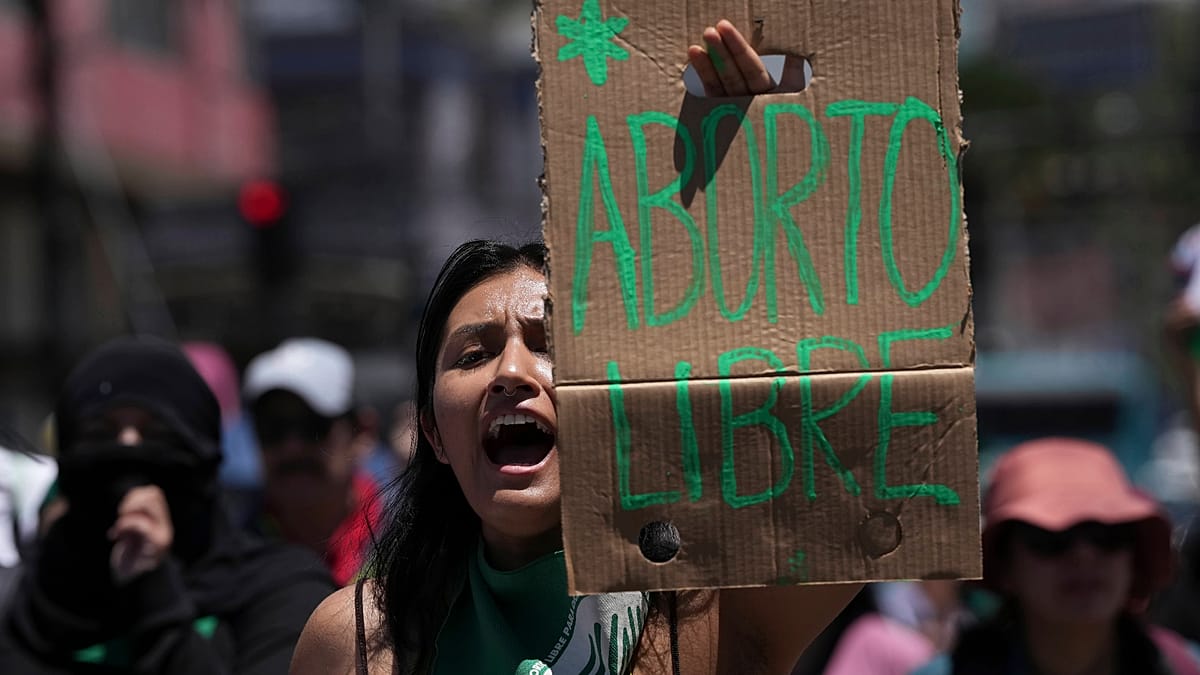
Thousands of demonstrators took to the streets of Santiago and Bogotá on 28 September, marking International Safe Abortion Day with demands for broader and more equitable access to terminations. In Chile, marchers converged on the capital's central arteries, while in Colombia crowds gathered in Bogotá to press for the full implementation of recent legal advances.
The timing is deliberate. The date, observed across Latin America and beyond, draws attention to the gap between legal recognition and practical access. In both countries, activists argue that formal rights mean little if clinics are scarce, waiting times are long, or health workers invoke conscientious objection.
Chile: from total ban to contested reform
Chile permits abortion only on three grounds — rape, fatal fetal anomaly, and risk to the woman's life — under a 2017 law that ended one of the world's most restrictive regimes. Protesters in Santiago want that framework replaced with broader access, arguing that the current rules leave most women without a lawful option.
The issue remains politically charged. Conservative and religious groups have repeatedly challenged the three-ground law, and any attempt to expand it would face stiff opposition in Congress. Yet the marchers framed their demand as a matter of public health rather than partisan preference, pointing to data on clandestine procedures and their consequences.
Chile's debate echoes broader regional tensions over reproductive governance, a theme that also surfaces in European policy fights over health rights and bodily autonomy.
Colombia: implementing a landmark ruling
Colombia's Constitutional Court decriminalised abortion up to 24 weeks in 2022, a decision that made the country one of the most permissive in the region. Beyond that threshold, terminations remain permitted in limited circumstances. Demonstrators in Bogotá say the ruling has not translated into uniform service provision.
Access varies sharply between cities and rural areas. Activists report that some hospitals and clinics still turn women away, while others impose unnecessary requirements. The protest called on the national government to issue clearer protocols, fund services, and hold institutions accountable.
Colombia's health ministry has signalled support for stronger implementation, but bureaucratic and cultural obstacles persist. The march was as much about enforcement as about law.
A regional and global conversation
Latin America has seen a wave of liberalisation in recent years, with Argentina, Mexico, and Colombia expanding access, even as parts of Central America and the Caribbean maintain near-total bans. The patchwork nature of these rules keeps the issue alive across borders.
The protests also resonate beyond the Americas. In Europe, reproductive rights remain contested in several states, and cross-border activism has grown. Debates over asylum and migration policy, such as Greece's proposal to suspend asylum rights, can intersect with access to sexual and reproductive healthcare for displaced women.
Meanwhile, the digital sphere has become a battleground. Researchers have documented fake AI protest videos spreading across Europe, a reminder that imagery from demonstrations can be manipulated to inflame opinion. Accurate reporting from the ground matters more than ever.
What the marchers want
- In Chile: replacement of the three-ground law with broader legal access, plus public funding for services.
- In Colombia: full enforcement of the 24-week ruling, clear protocols, and penalties for institutions that obstruct access.
- Across the region: an end to stigma, better training for health workers, and reliable data on abortion incidence and outcomes.
Organisers described the marches as peaceful and family-friendly, with cultural performances and speeches from health professionals and legal experts. Police reported no major incidents in either capital.
The demonstrations are unlikely to change laws overnight. But they keep pressure on governments and signal that the fight over reproductive rights is far from settled — in Latin America, in Europe, and wherever access remains uneven.